Philadelphia College of Osteopathic Medicine, Meta Christy House
November 17th, 2021

The Philadelphia College of Osteopathic Medicine (PCOM) teaches graduate students holistic approaches to medicine — utilizing a whole person approach, “treating people, not just symptoms.” Lacking on-campus housing since the school moved to its present location on Philadelphia’s City Line Avenue in 1957, PCOM existed as a commuter school with limited campus life accommodations.
The school understood a longstanding need for student housing on campus. Busy medical students have limited time and must focus on studies: living on campus allows more concentrated academic time while promoting collaborative learning. And PCOM’s peer schools can provide housing that enriches campus life. So when Overmont House — a 1971 apartment building for elderly residents at the edge of PCOM’s campus — became available, the College purchased the building to convert it into the campus’s first residential hall.
VSBA was retained to design this transformation. The structure is a 12-story tower with a masonry envelope and repetitive interior layout. Built with a modest budget, it was highly efficient but spartan in its allocation of space, quality of construction, and finishes. The building hadn’t been well maintained, the exterior envelope needed repair, building systems needed replacement, and small apartments were cramped with low floor to ceiling heights. How could VSBA — working with these constraints and a tight budget — transform the building into a modern, gracious campus facility?
We started by rethinking the residential units. We reimagined them as studio and one-bedroom apartments with different configurations. We opened up their layouts to create more airy, light-filled spaces. The new fully-furnished units included contemporary kitchens, plenty of storage space, and many modern amenities.
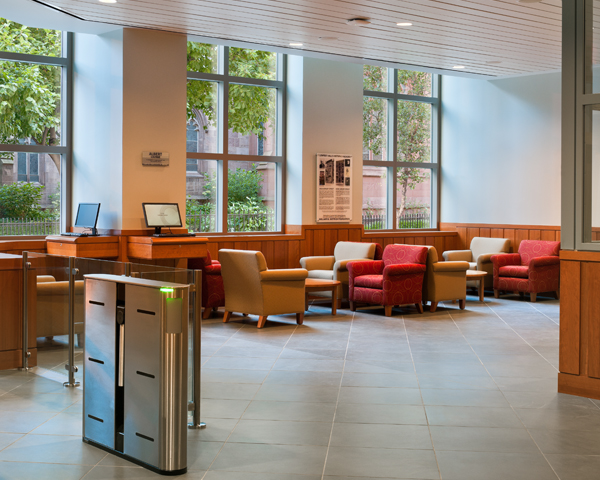
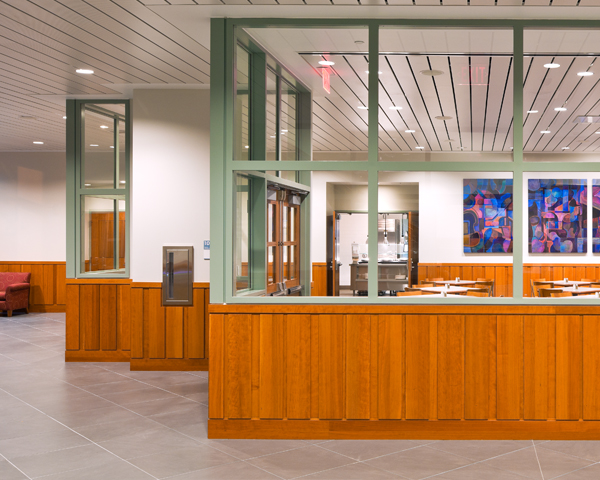
Beyond the units, every floor includes laundry facilities and shared study spaces. The building’s lower level and first floor offer a commons with student lounges, mail room, package retrieval system, and individual and group study rooms (some with integrated audiovisual tech).
We renovated the building’s exterior masonry, replacing flashings and damaged masonry at relieving angles, and replaced the roofing (adding insulation). A new free-standing entry canopy serves as a portico for the renewed building and link to the rest of campus. The canopy announces the building’s title — Meta Christy House — named for Meta L. Christy, DO, PCOM Class of 1921, the first African American osteopathic physician in the nation.
April 19th, 2017

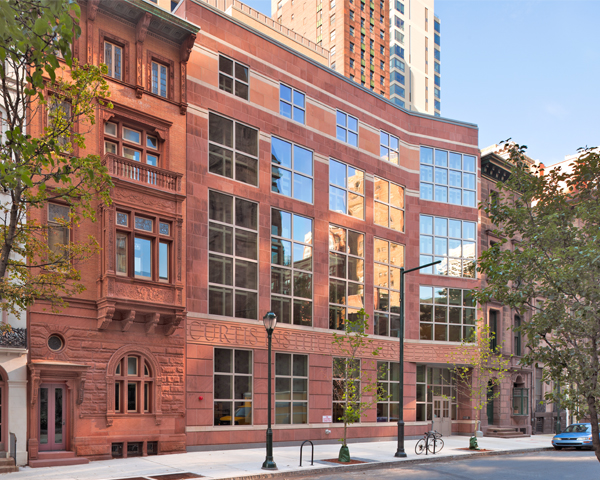
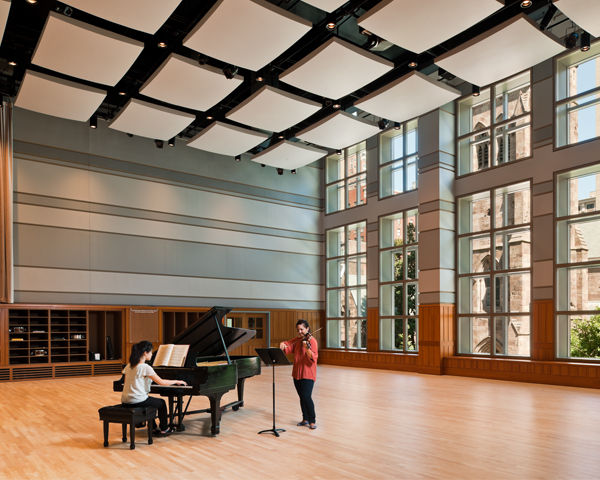
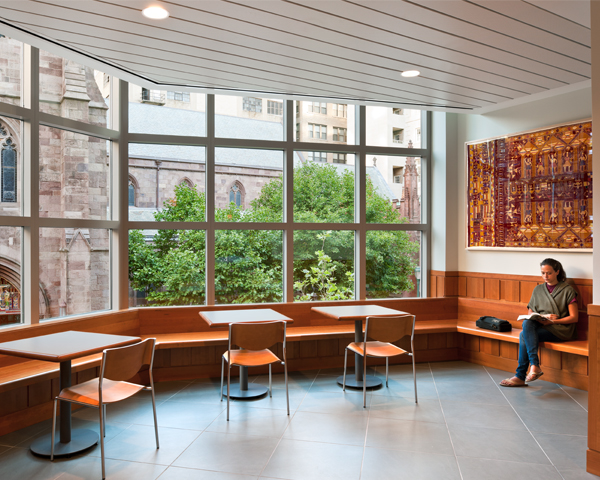
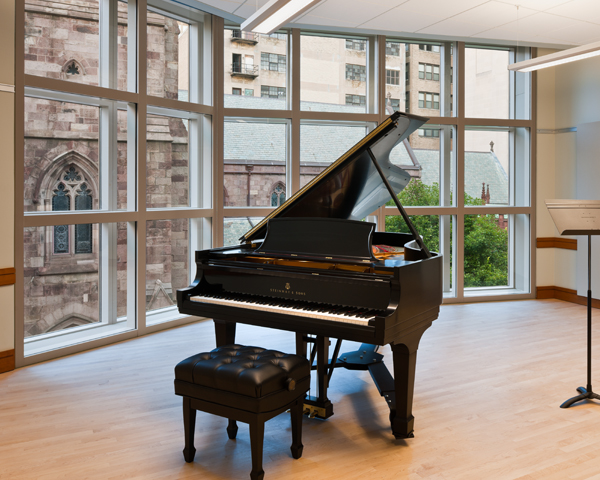
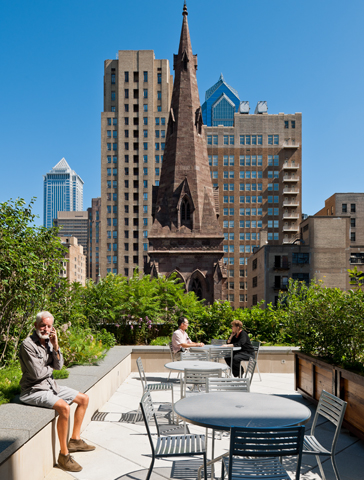
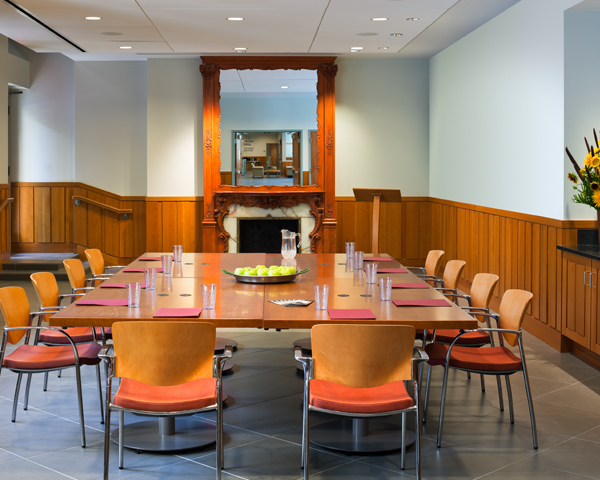
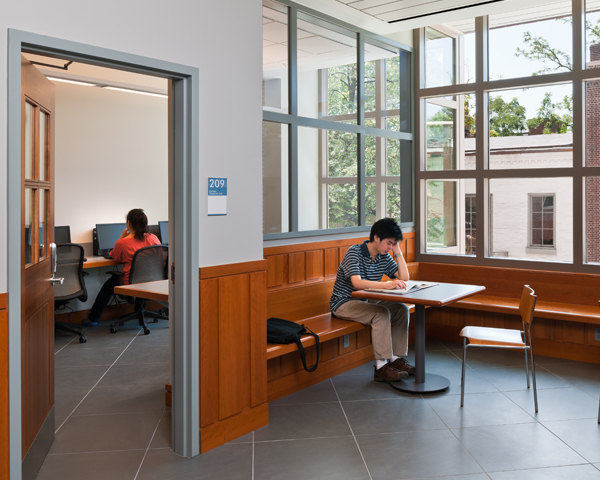
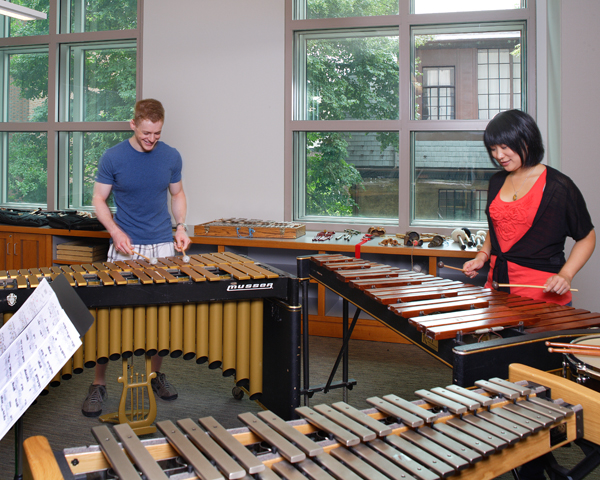
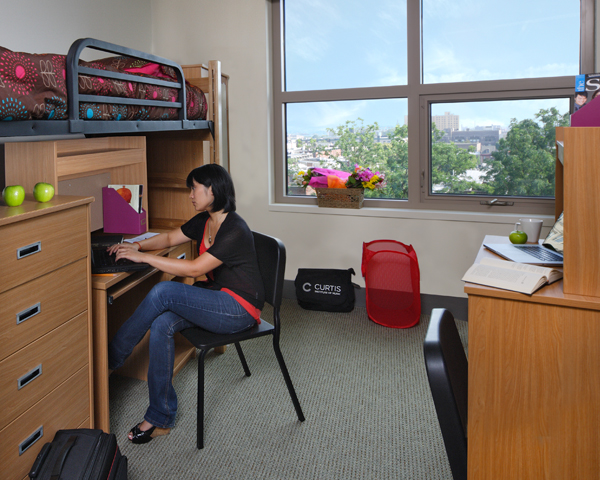
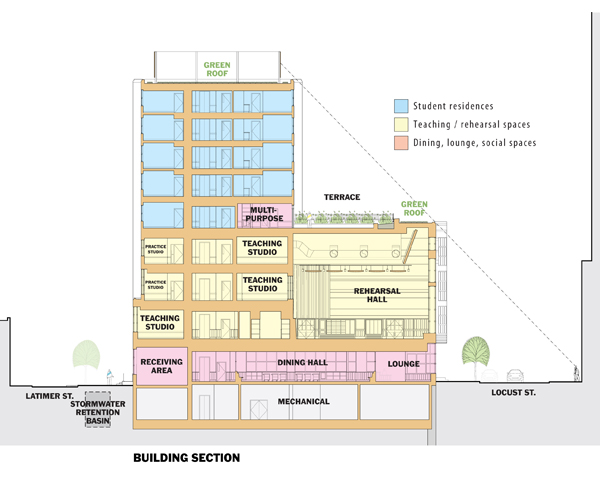
VSBA designed this major new multi-use music education and student residence building for the renowned Curtis Institute of Music. The expansion — on a historic block of Philadelphia’s Locust Street — provides state-of-the-art facilities for practice and teaching, an orchestral rehearsal room, and student residences, all in close proximity to existing facilities on Rittenhouse Square. Amenities include dining and social spaces and an outdoor terrace shared by students, faculty, and staff. The project has achieved LEED Gold certification.
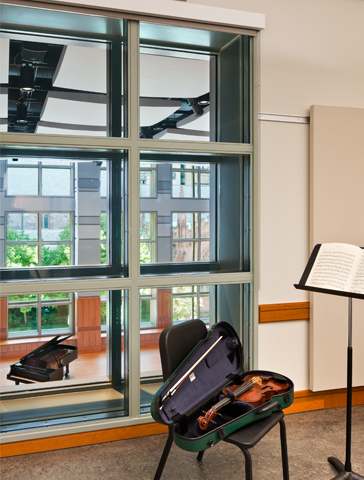
The building incorporates box-in-box construction to provide appropriate acoustical isolation of all music spaces. The rehearsal hall is designed for flexible use with adjustable acoustics and is equipped with separate audio and visual recording studios. All teaching spaces and studios have recording/playback systems. Structural and mechanical systems were carefully designed to meet demanding acoustical requirements.
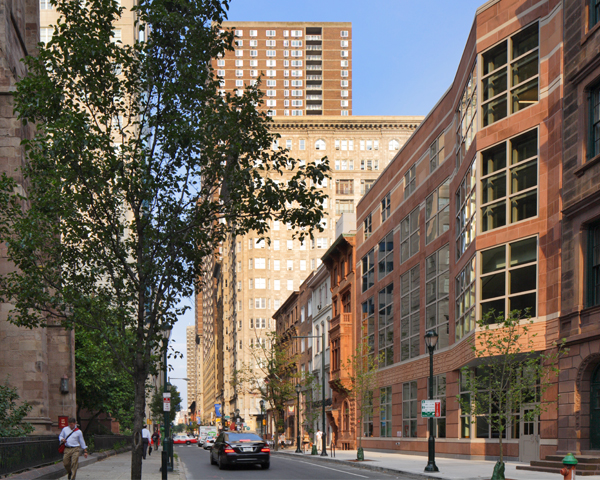
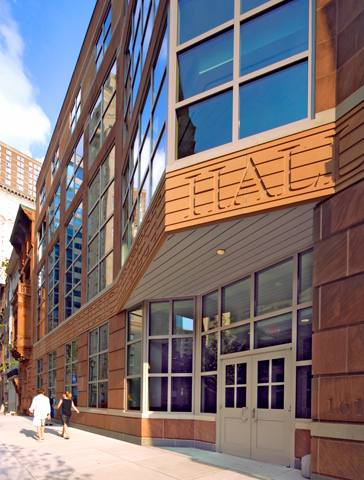
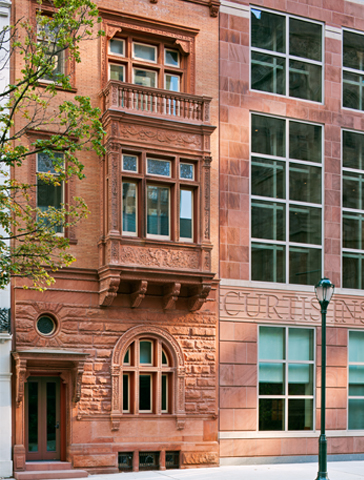
Our design responds to the scale and character of the historic streetscape. A four-story façade on Locust Street is clad in brown sandstone with window groupings and horizontal accents that relate to the rhythm of neighboring townhouses. To either side we preserved and restored existing historic façades, incorporating them into the design to help preserve the character of the street. Yet our work concurrently promotes the new, 21st century identity of the expanded institution: a carved frieze across the façade identifies the building with a bit of civic flair, a projected bay window highlights the entry, and generous windows express the 30′ high rehearsal hall.
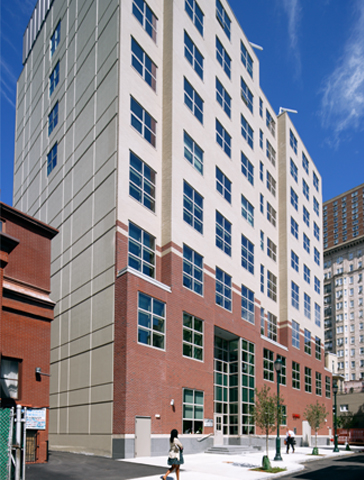
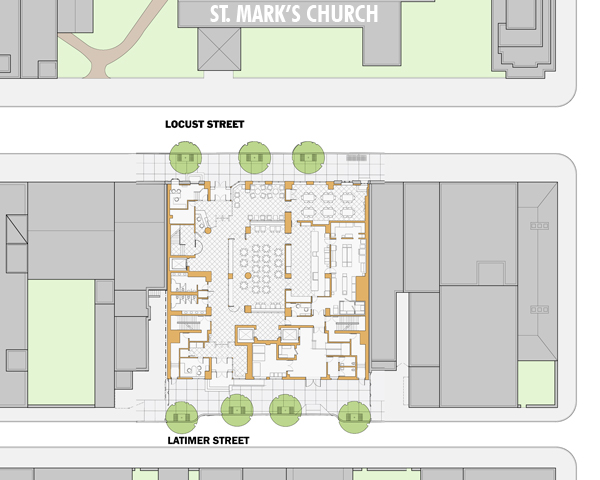
We worked closely with near neighbors, community groups, and other stakeholders to build consensus for the design and secure approval from the Philadelphia Historical Commission. Of particular note, student residences are located in a tower set far back from Locust Street and clad in a beige-gray brick; this renders it minimally visible from Locust Street and apparently a separate building. We created a series of sun-shadow studies to visualize the impact of the tower’s shadow throughout the year to ensure minimal shading of historic St. Mark’s Church across the street. On the building’s other side, a setback the use of red brick continues the scale of Latimer Street’s buildings while beige brick above reflects sunlight into the narrow street.
Photos by Tom Crane and Matt Wargo
April 19th, 2017

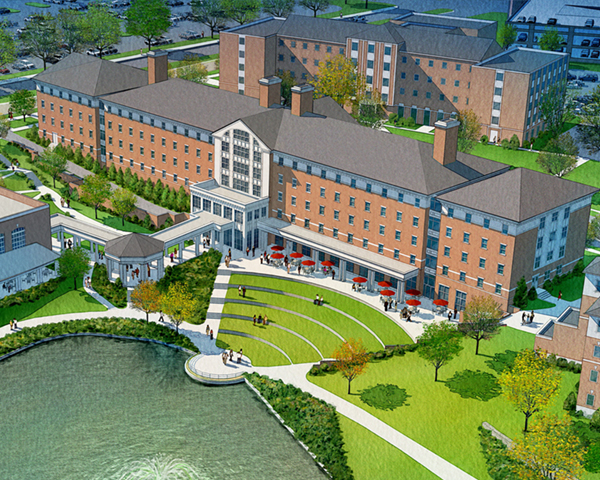
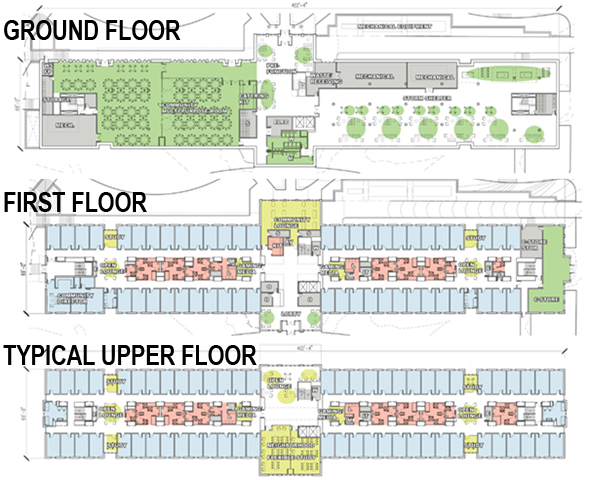
VSBA was retained to provide program validation and schematic design for a new 5-story, 400-500 bed freshman residence hall at the University of Alabama A major goal was to promote social integration among first year students living on campus.
We began by reviewing UA’s preliminary building arrangement concepts. We validated residential unit plans by testing issues such as HVAC system functionality, furniture quantity and size, and student movement and flexibility. We designed several options for typical residential units and worked with an estimator to develop benchmark cost estimates. Then we completed schematic design for the project.
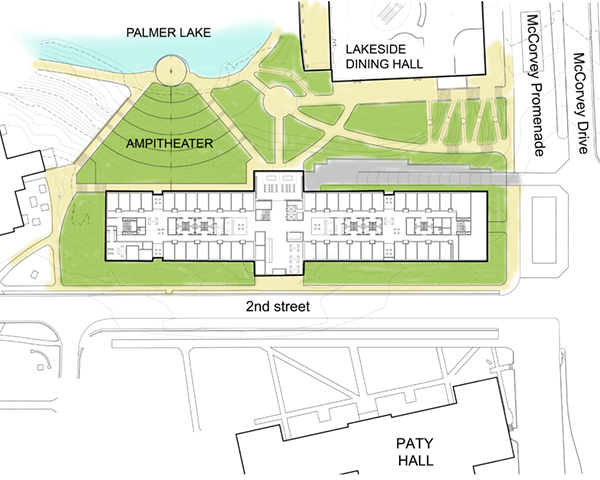
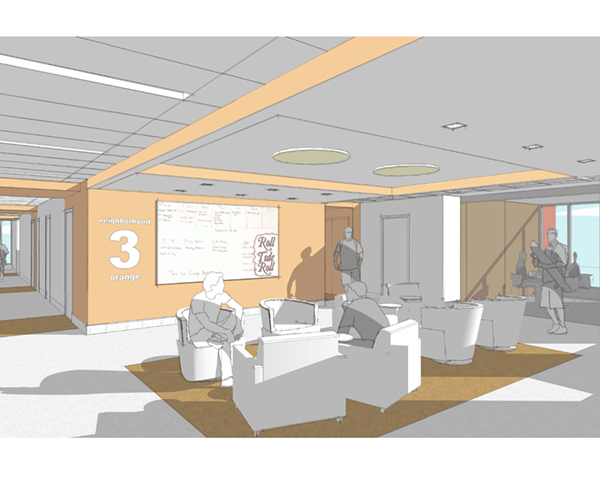
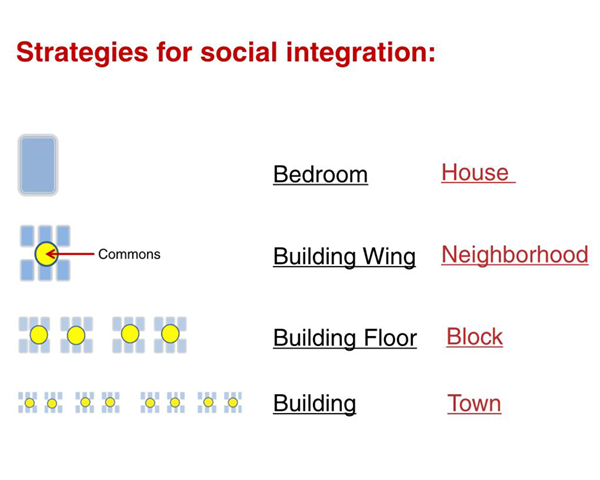
As we designed, we thought of bedrooms like houses along corridor streets, each wing like a neighborhood. To encourage students to socialize outside their rooms, we fashioned communal spaces such as open lounges, flexible study areas, shared washrooms, and a game / media room. The building will also feature three major public spaces: a multipurpose room, a convenience retail store, and a storm shelter with recreation amenities, each of which can be accessed securely and independently of the residential units. A kitchen and community lounge on the first floor serves as town square.
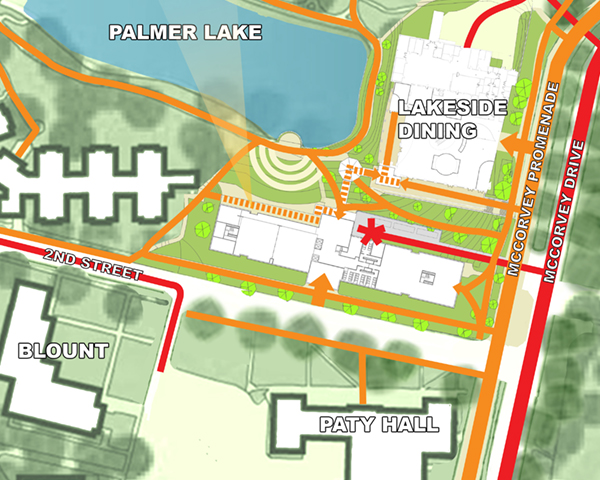
The building’s site is near UA’s residential and student life precinct, in close proximity to dining and student center facilities. We helped create and strengthen pedestrian connections to student life amenities, especially through the incorporation of a new covered plaza and outdoor meeting area. As the university plans a nearby outdoor amphitheater, the residence hall was designed with community functions located directly adjacent and accessible at the ground level.
VSBA’s design also responds sensitively to UA’s Classic Revival architectural character, utilizing campus standard brick and other traditional campus materials.