Harvard University, Radcliffe Institute for Advanced Study, Schlesinger Library
April 19th, 2017

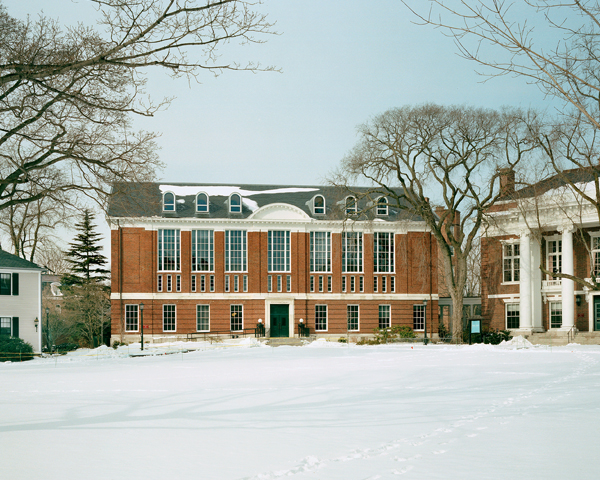
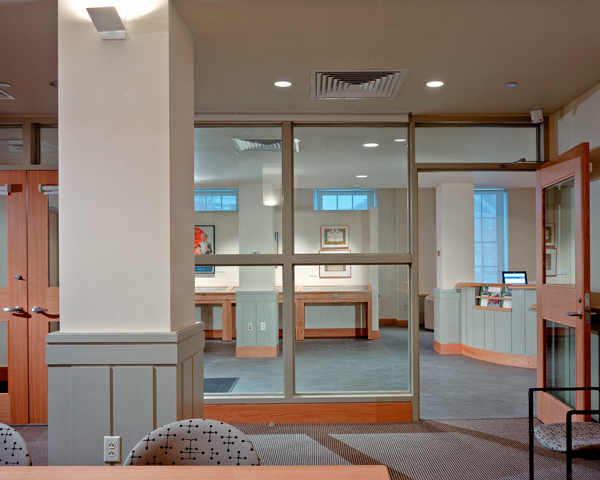
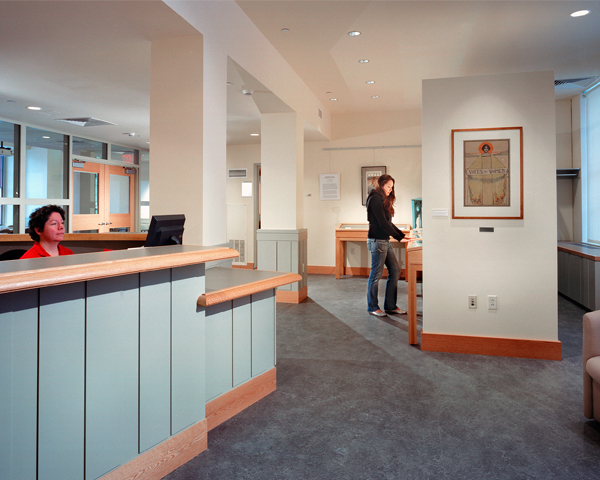
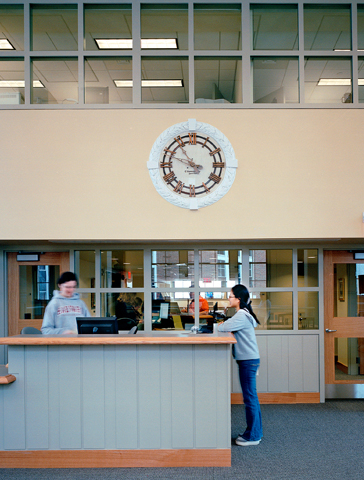
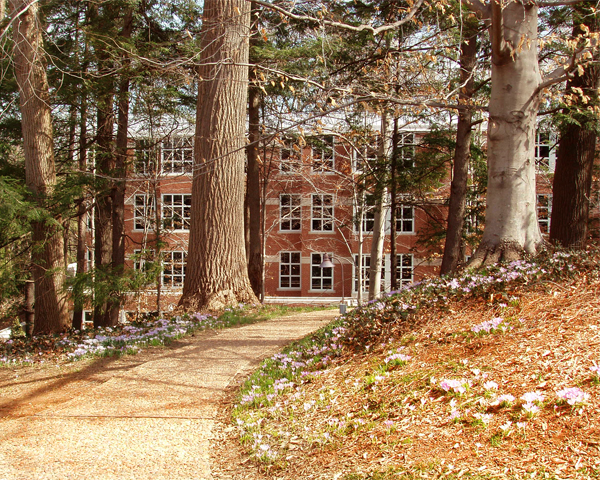
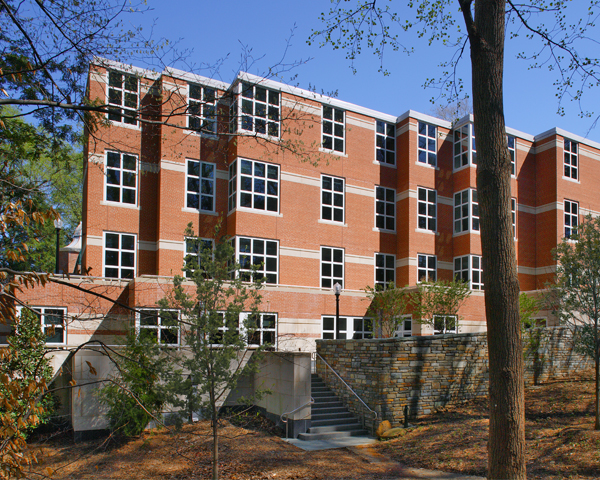
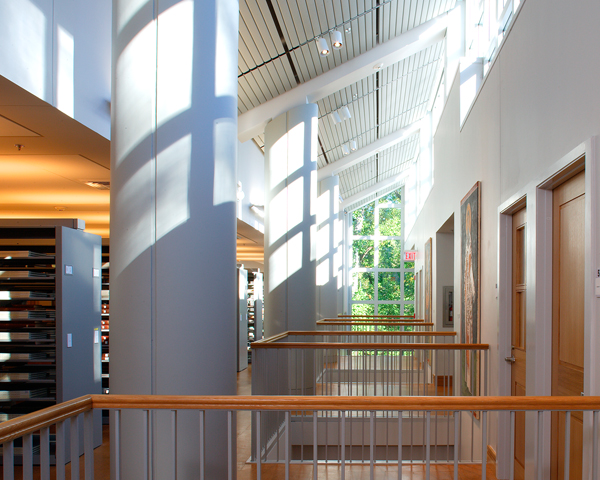
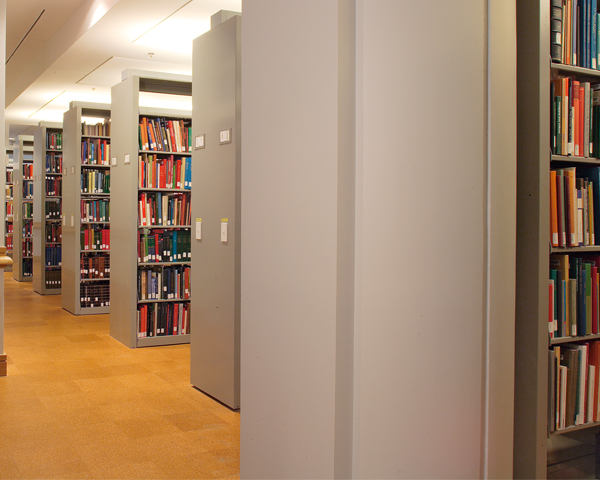
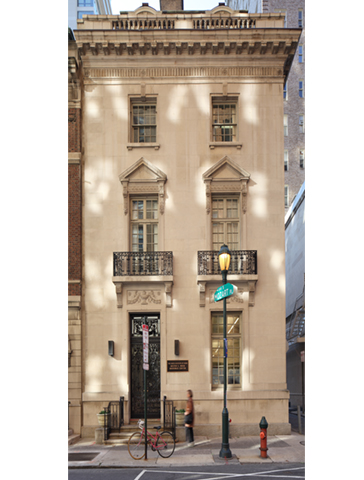
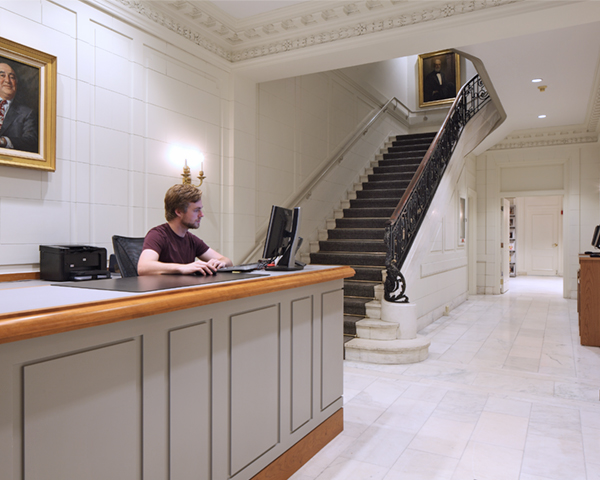
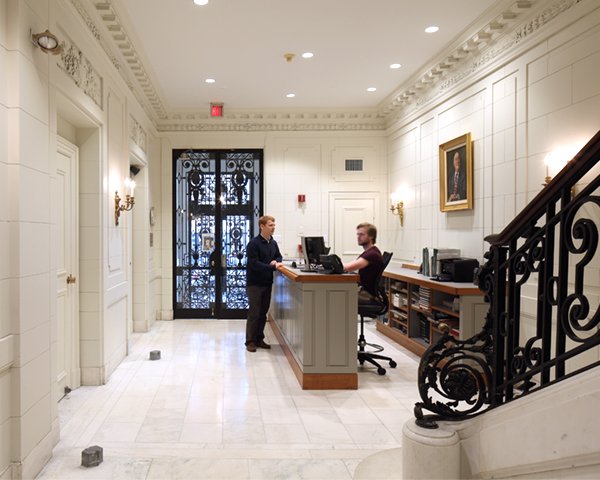
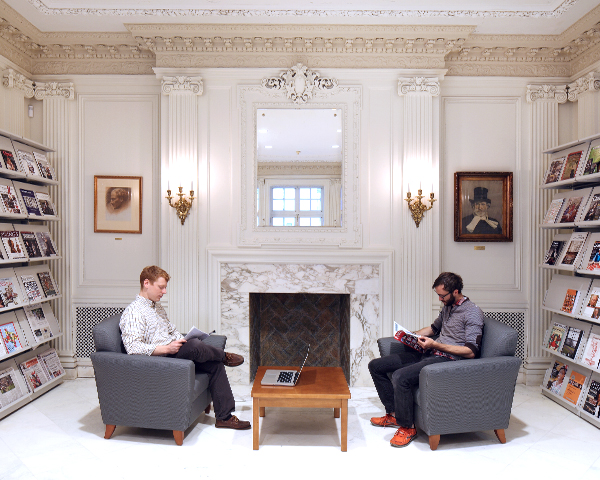
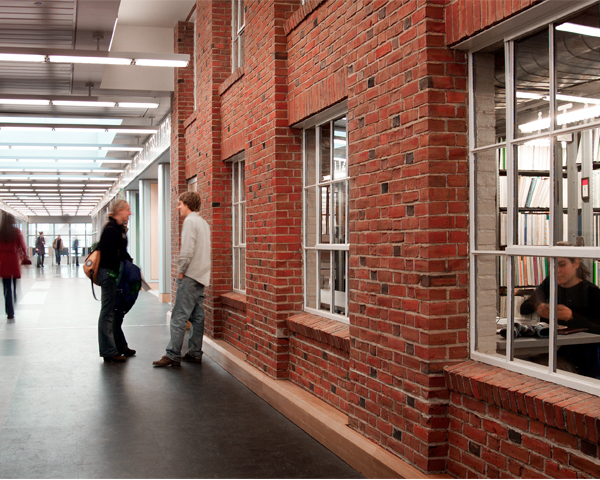
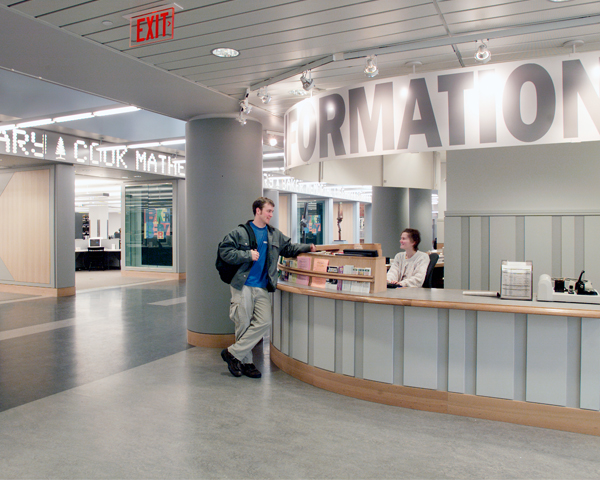
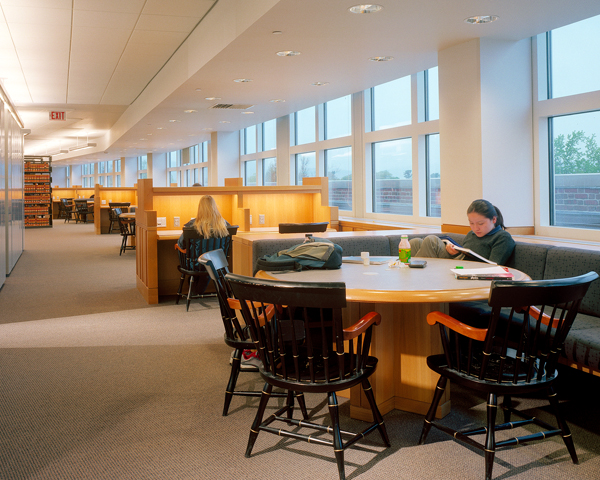
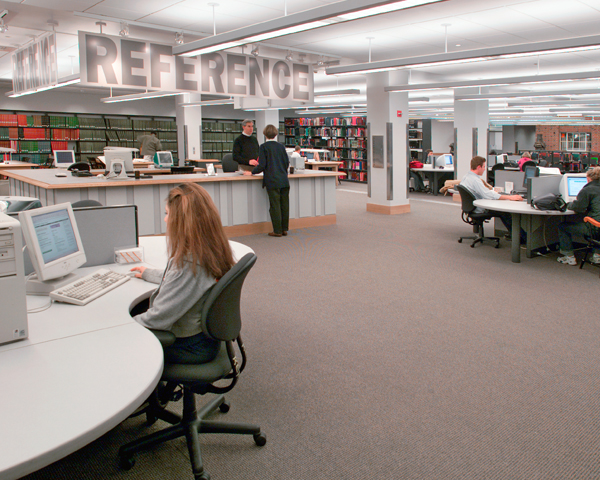
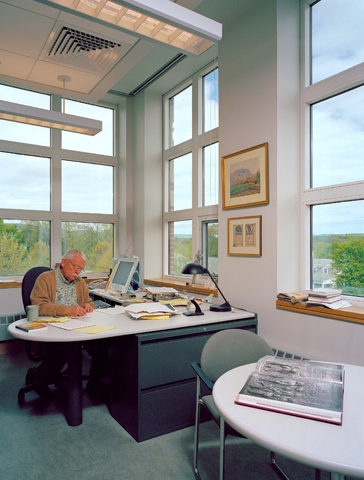
VSBA programmed and designed a renovation of the Arthur and Elizabeth Schlesinger Library for the History of Women in America, one of a group of buildings at the head of historic Radcliffe Yard. Built in 1907 and originally home to the Radcliffe College Library, the building became a research library in 1967. It’s now an important component of the Radcliffe Institute for Advanced Study.
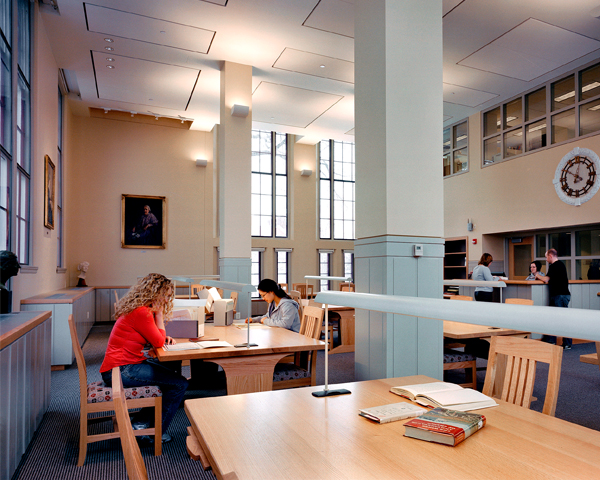
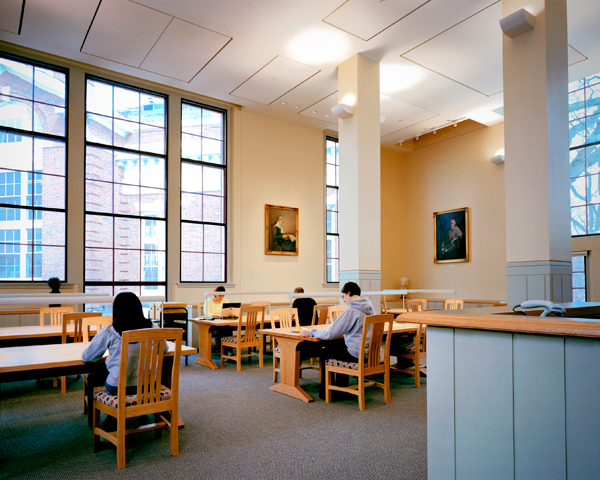
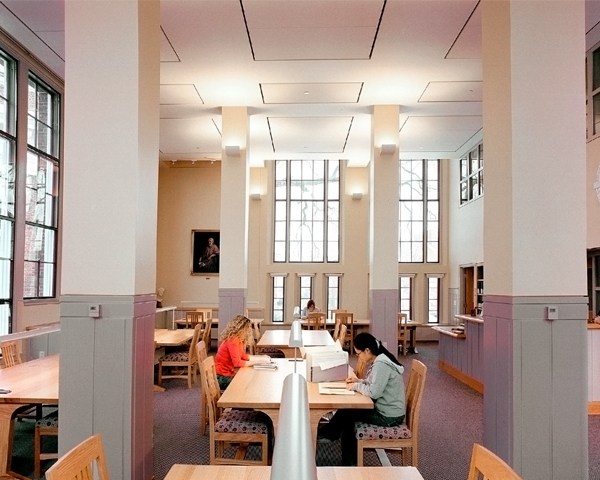
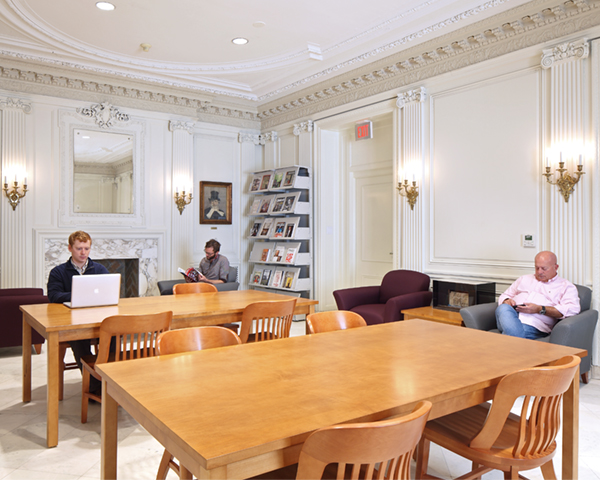
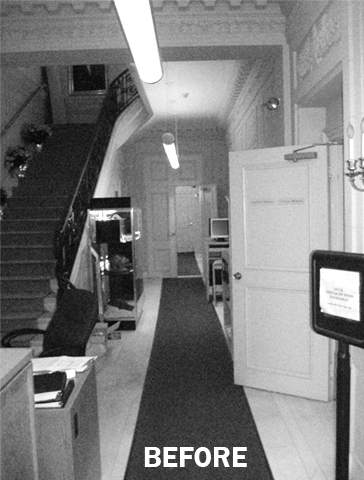
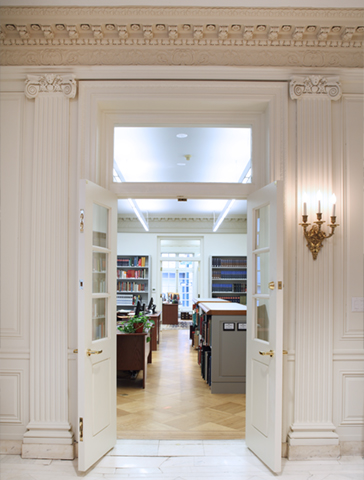
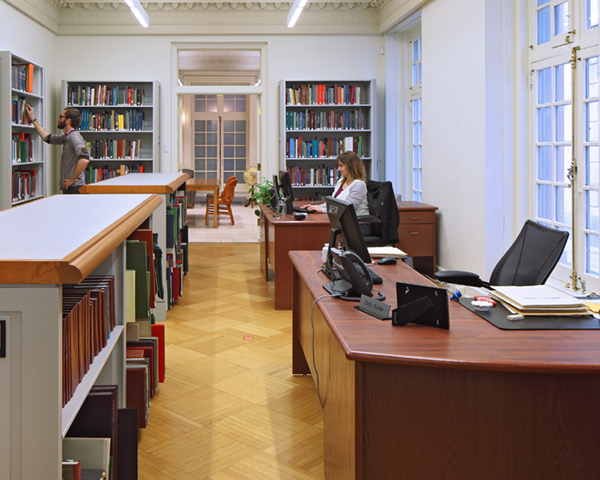
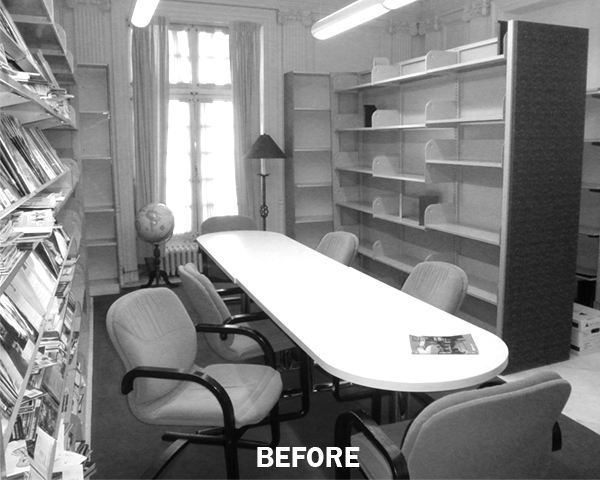
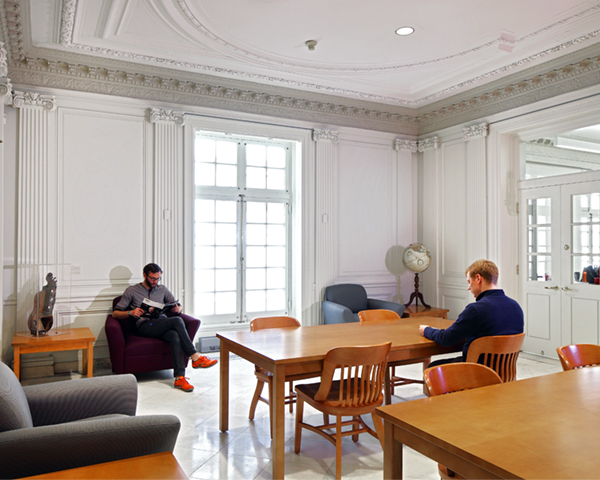
Over time, the building became more intensely and densely used to meet the needs of a modern special collections library. In the process, most of the character, grace, and generosity of the original building interior was obliterated. Our challenge was to help the Library recover some of its character while meeting the 21st century needs of an important collection and contemporary caretakers and users. We:
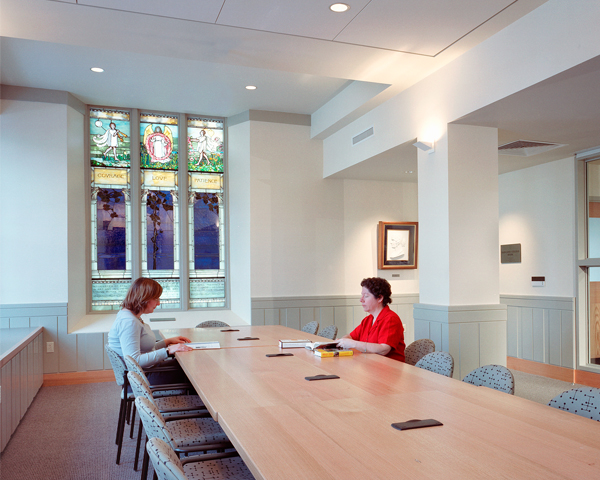
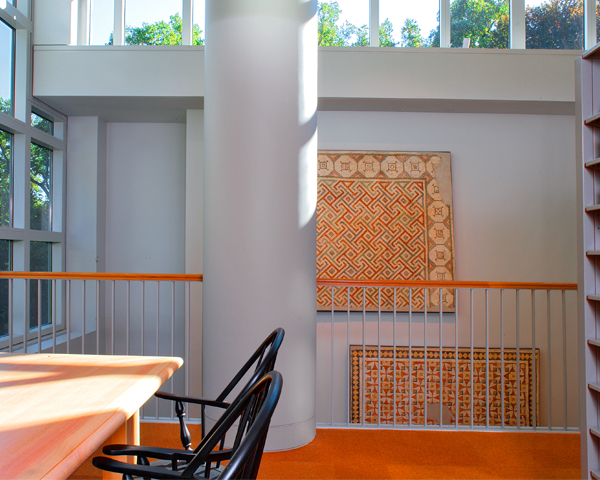
This project was the first increment of the Radcliffe Institute’s campus plan, completed by VSBA in 2002. Our renovation supports the goals of the overall plan, with exhibition and meeting space on the first floor and a newly accessible entrance from Radcliffe Yard. An area of the second floor was returned to double-height reading room space, and existing original building elements — such as the ornamental stair and the Sarah Wyman Whitman Room — were refurbished and maintained in public view.
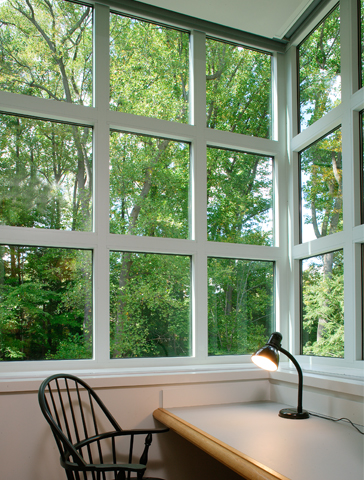
The renovated Schlesinger Library has been LEED Certified for its efficiency, environmental sensitivity, and sustainable approach to interior environments.
April 19th, 2017

In 1920, Mildred and Robert Woods Bliss acquired the Dumbarton Oaks property for their noted Pre-Columbian and Byzantine collections and library. Working with landscape architect Beatrix Ferrand, they transformed the grounds into a series of noted gardens. In 1940, they created the Dumbarton Oaks Research Library and Collection to be managed by Harvard University. VSBA was retained in 2001 to implement a campus master plan for expansion, which centered on creation of a new library, renovation of the Main House, and design of a new refectory and central plant.
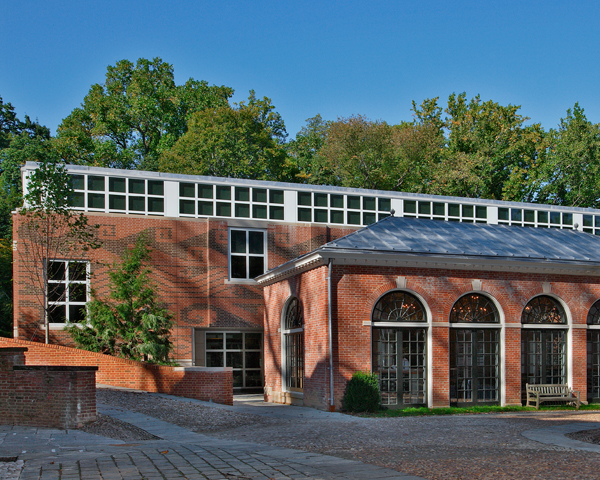
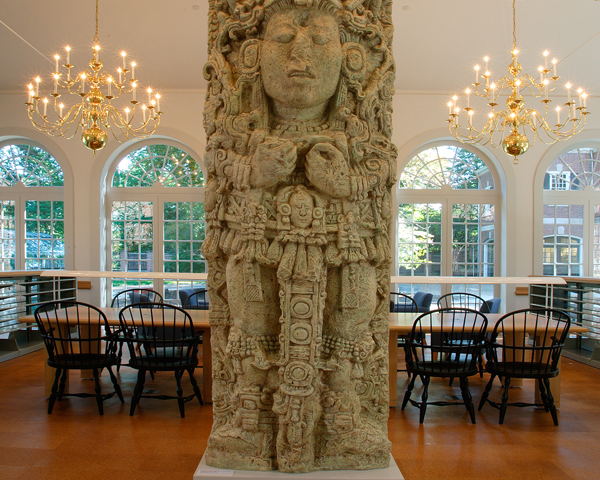
The new library provides academic research space and a substantial increase in state-of-the-art collection storage environments. Its form derives from the neo-Georgian and wooded contexts. Renovation of an original greenhouse provides primary reading space on the entry level. Our extensive site work knits project components into the existing landscape while protecting and restoring original features of the gardens.
We restored the Main House’s historic interiors and renovated galleries and public spaces to improve circulation and provide visitor amenities. Other renovated spaces are used for offices, collection storage, and research. Our work included new mechanical and electrical systems and updated safety systems.
April 19th, 2017

The Rock Resource Center library is an important study center and repository for the Curtis Institute’s printed and audio materials, archives, and digital collections.
VSBA led the reprogramming and complete renovation of the building in two phases to improve reader services, study areas, collection storage, and staff offices. Building systems were replaced and a new elevator installed.
April 19th, 2017

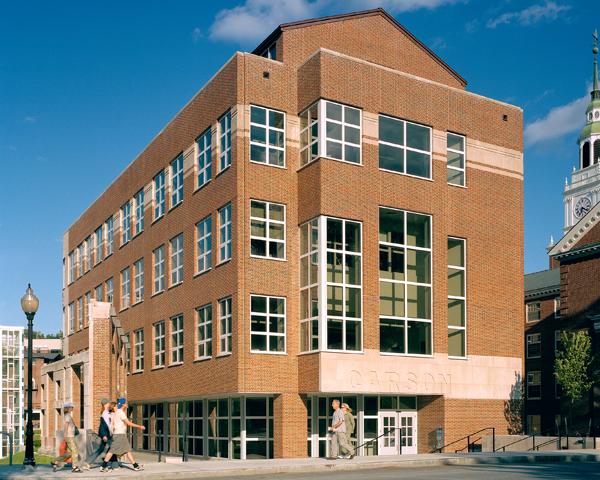
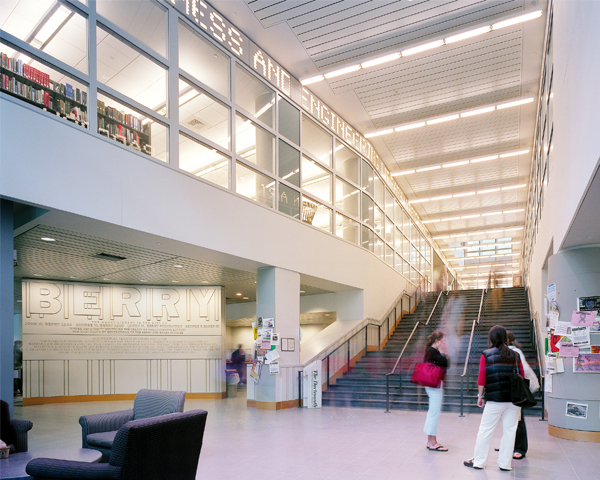
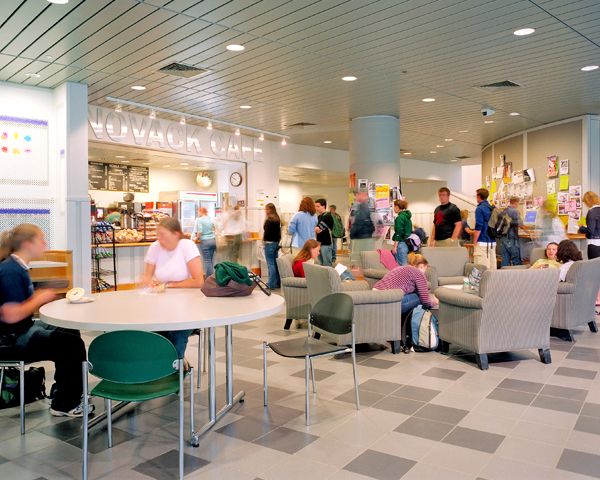
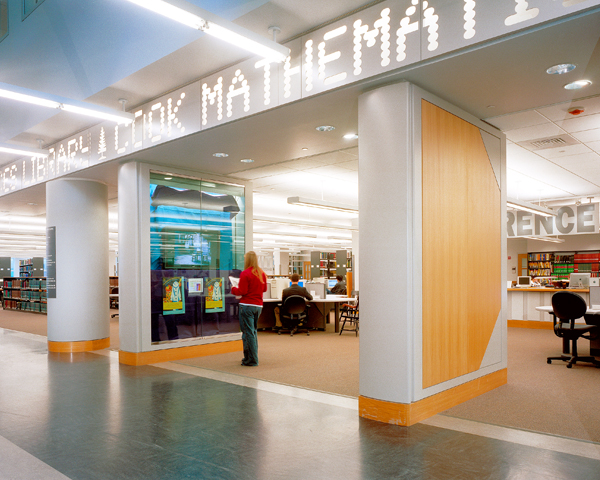
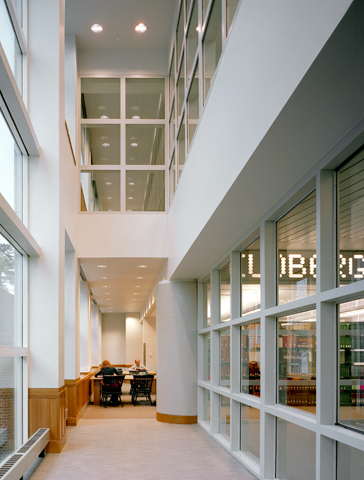
Baker Library, the College’s beloved humanities and social sciences library, has been the center of academic life at Dartmouth College. The Berry addition doubles the size of the existing facility and accommodates new public functions, technical services, reading areas, a café, and the computing services and History departments. The original Baker Library building, essentially unchanged since its construction in 1929, was renovated to accommodate new mechanical systems and comply with current fire and life safety codes. Certain traditional reading rooms and gracious public spaces were carefully restored.
The expanded library occupies a pivotal site between the proposed academic row on one side and the College’s New England commons — the College Green — on the other, thus becoming a focal point at the heart and crossroads of both old and new campuses. The Berry addition extends the library north, anticipating and helping to generate orderly campus development in that direction. Its linear form and imageful north facade terminate the axis of the new row and identify it much as the existing south facade of Baker Library defines the College Green to the south.
April 19th, 2017

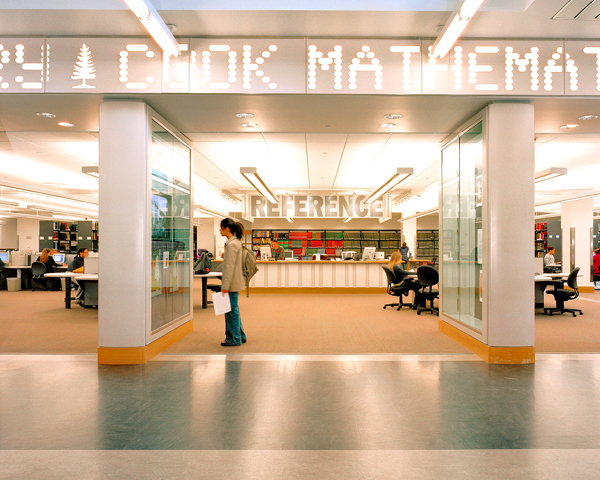
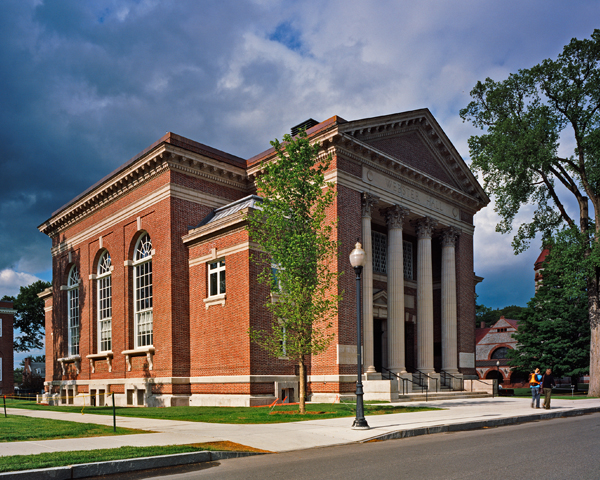
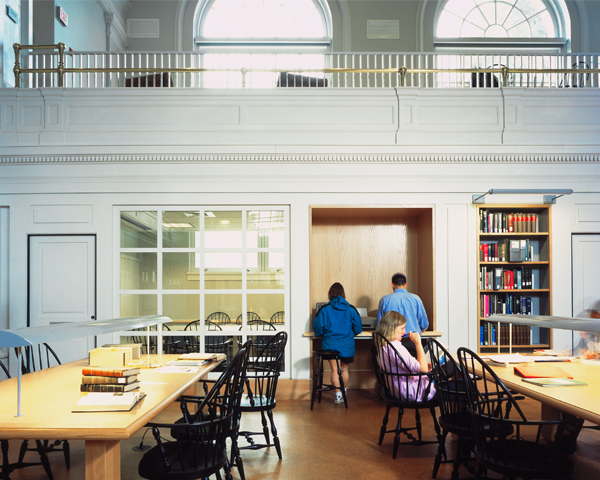
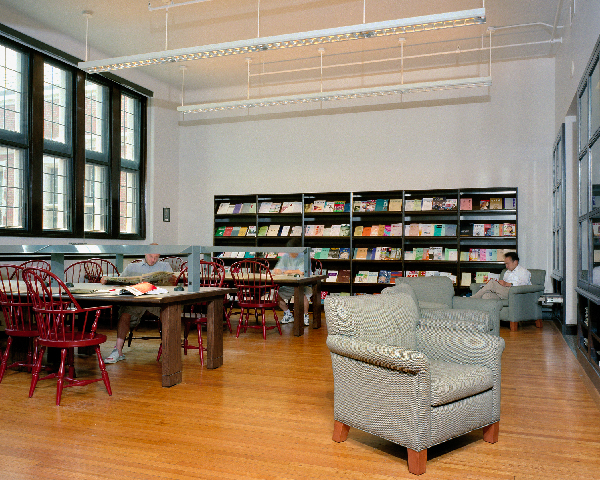
VSBA’s challenge was to transform an underutilized building on an important site into an accessible, functional, and visually evocative library for rare books and manuscripts with a secure and carefully controlled environment. The scope of the renovation included a reading room, study and seminar rooms, offices, and technical support spaces.
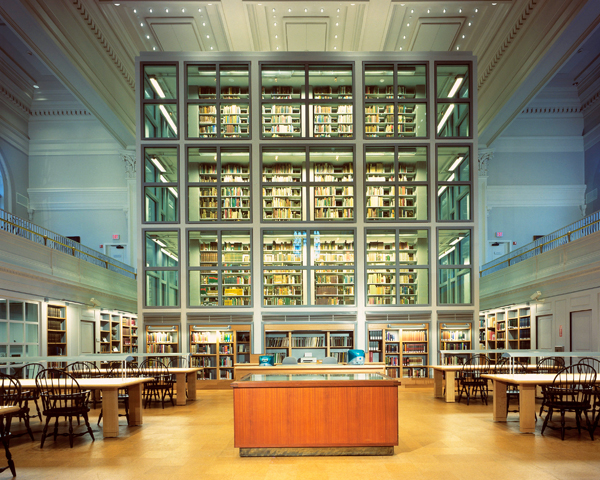
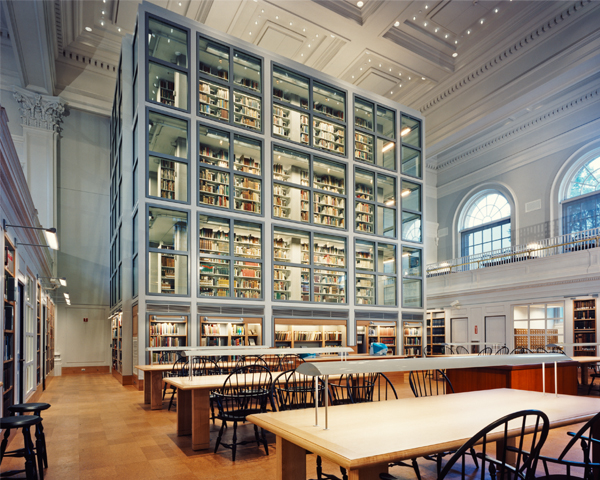
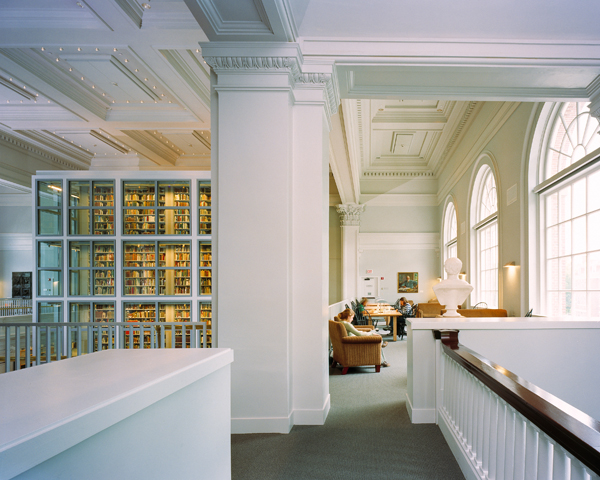
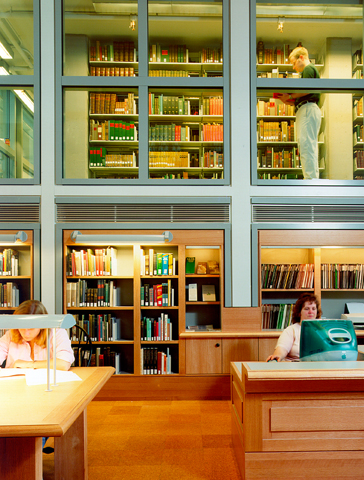
Our design preserves the monumental interior hall as the reading room. As the original exterior walls of the building could not effectively provide thermal and moisture protection for the controlled collections space without substantial modifications, an aluminum and glass curtainwall enclosure was designed to create a transparent “building within a building.” This glazed “lantern” of book stacks maintains temperature and humidity levels for the sensitive collection, protecting them in a vapor-tight environment while making them more visually accessible.
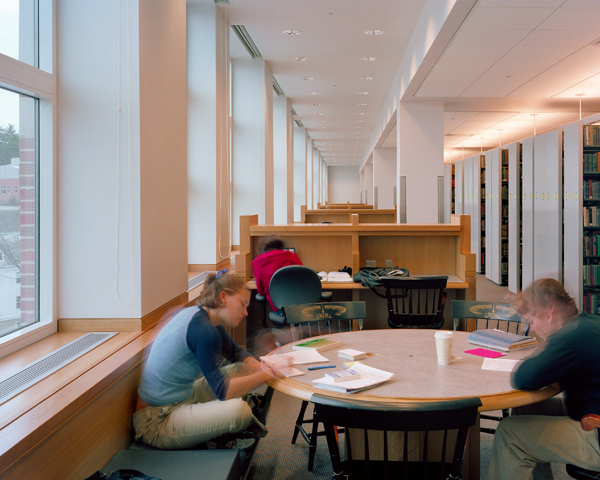
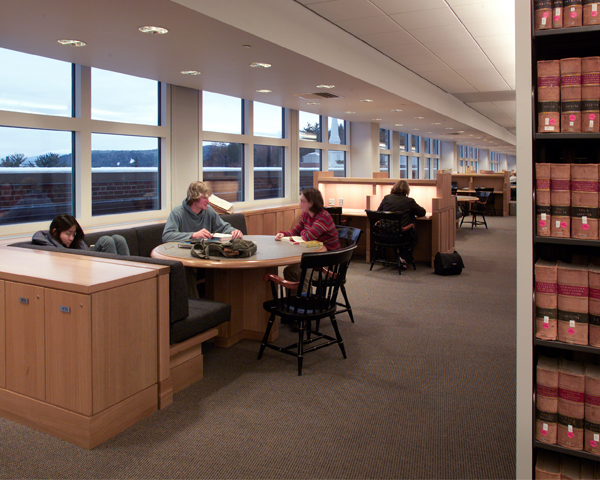
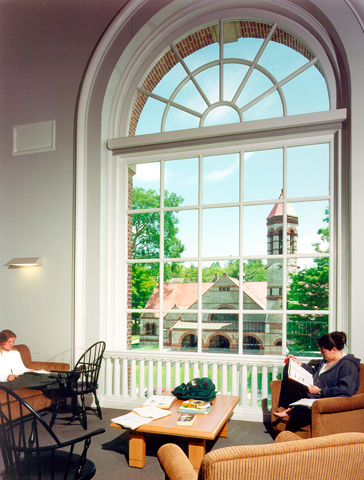
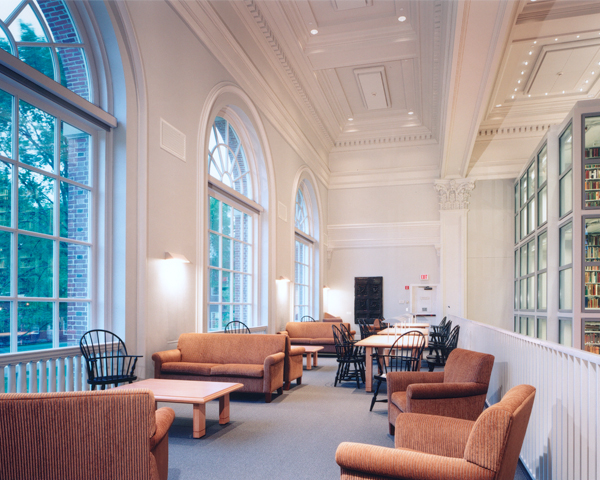
The reading room accommodates 36 users and is surrounded by shelves of reference materials. Office and seminar rooms beneath the balconies are acoustically isolated to allow groups the use of collections with contemporary audio and visual media. Above, the mezzanine provides students with a comfortable and quiet study area, with views from the large windows to the surrounding campus, lending an outward focus to a building that had formerly been oriented towards an interior stage. Additional book storage is accommodated in an adjacent underground area with vegetative roof to blend seamlessly into the surrounding landscape. The new Special Collections Library is a dialogue between the original neoclassical and the new. The machine-like curtainwall is juxtaposed with gentle detailing on the walls, ceiling, and balcony front, while the millwork and curtainwall relate to the original building’s variety of scales.
April 19th, 2017

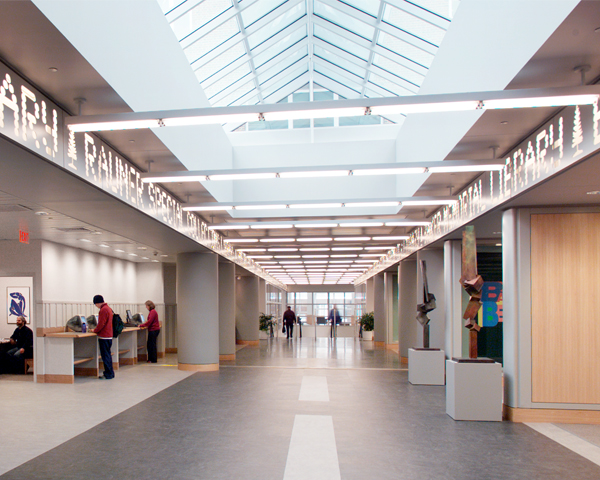
VSBA renovated and expanded Palmer Hall, Princeton University’s original physics laboratory, to house the new Frist Campus Center. The University first proposed a campus center in the 1920s, but the project wasn’t undertaken until the 1990s. Palmer Hall, historically significant though deteriorated and underutilized at the periphery of the traditional campus core, over time became the geographical center of the changing campus. Paths linking academic, social, recreational, and residential activities intersected at the site.
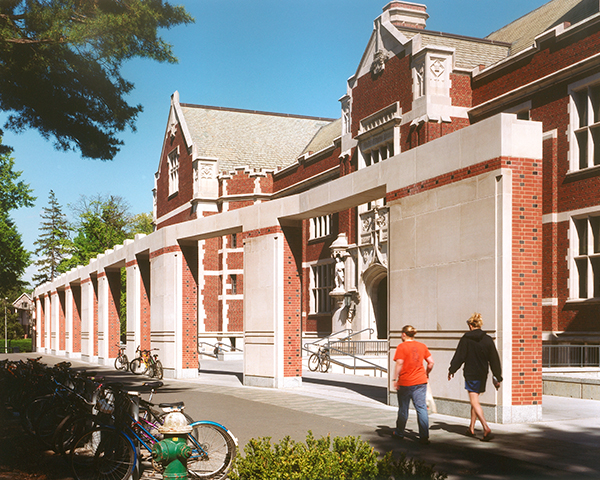
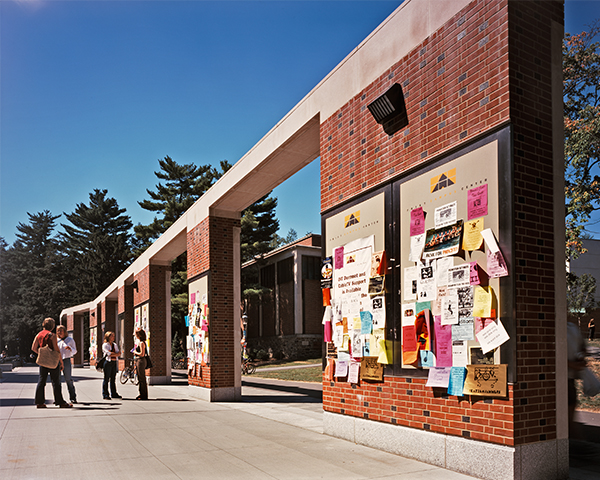
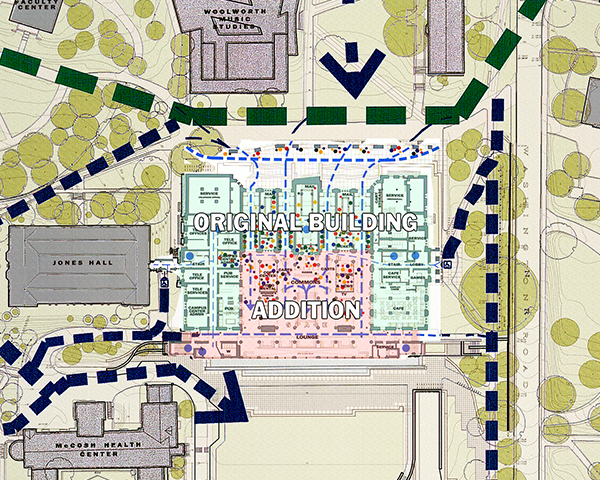
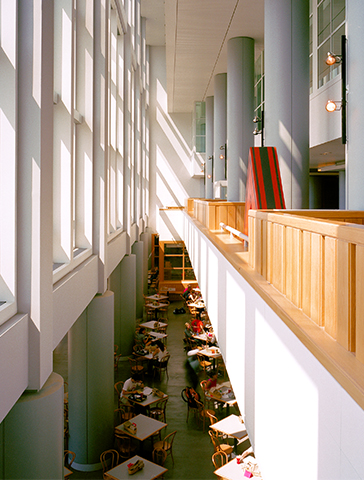
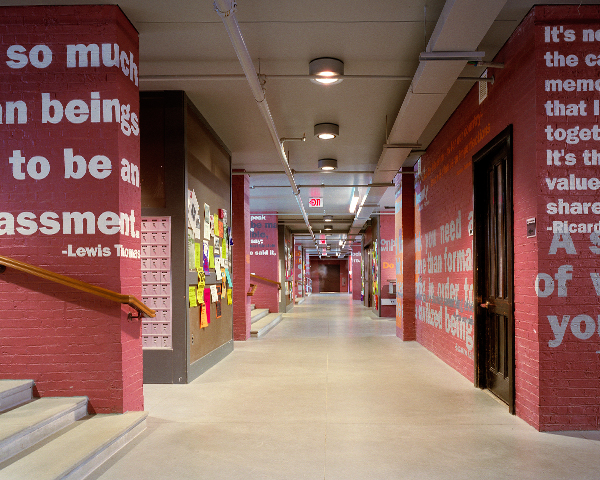
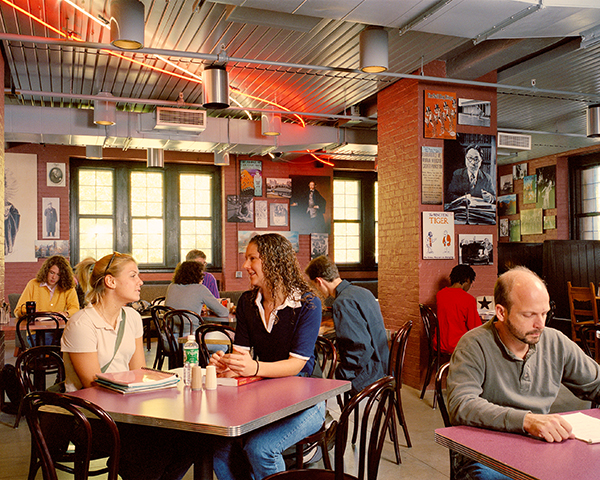
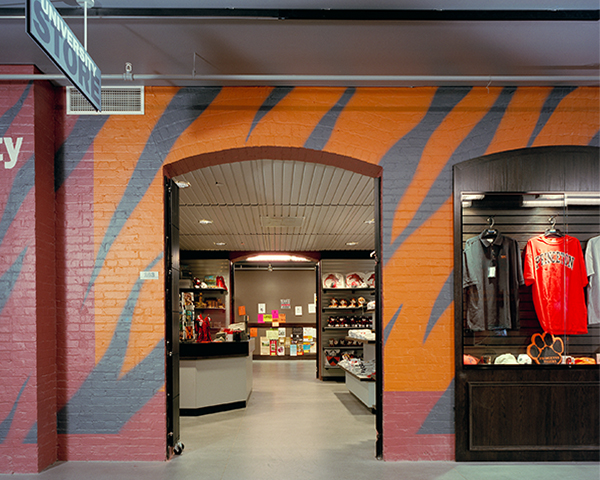
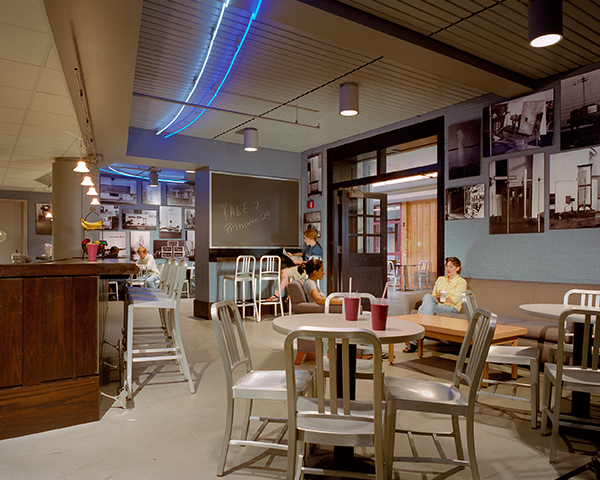
The design for the campus center is organized to reinforce these paths and establish the facility as a locus of activity along these routes — at once a destination and point of passage and casual interaction. The primary procession through the facility follows the terraced grading of the site. Visitors approaching from the north flow through a new arcade, designed as an extension of the existing building, into entries at Palmer’s lower level and move south through a series of “streets” lined with shops, student mail and information boards. At the end of these paths is a light-filled lounge overlooking an atrium with views opening out to the south. A generous flight of stairs leads further down to a dining room which opens south onto a terrace and lawn. Multiple entries are provided at this level for those approaching from the south.
The adaptation of an existing building is appropriate for a campus center, providing discovered places and lived-in spaces for a mix of uses. As a form of generic loft building — with repetitive, generous spaces readily adapted for multiple uses — Palmer provides for many aspects of the campus center program. These spaces are juxtaposed with open and flowing spaces appropriate to the new construction and constituting the south face of the building as a whole.
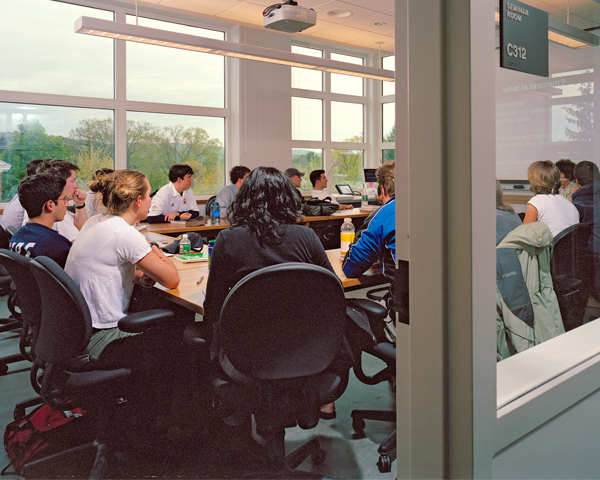
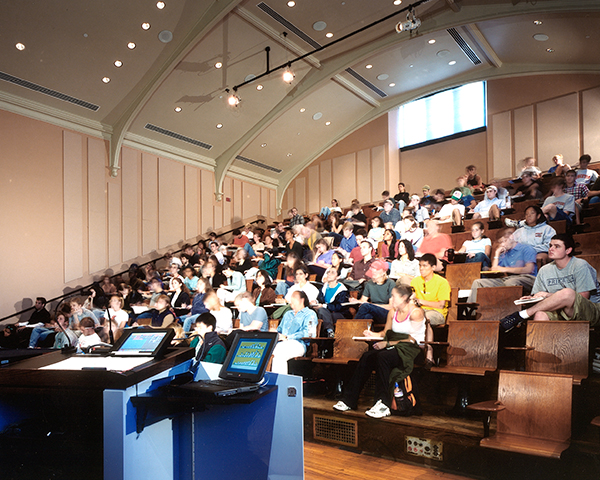
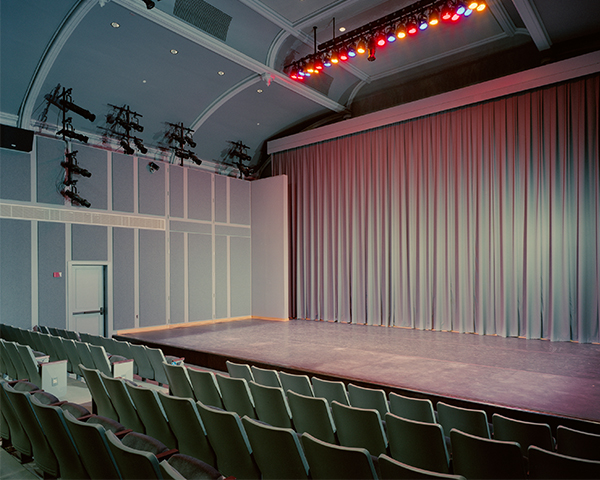
Frist’s state-of-the art academic spaces include new classrooms outfitted with extensive audiovisual systems; one was restored with the original seating and a display of the room’s original scientific apparatuses, while another retained its original vaulted and ribbed plaster ceiling but was completely transformed to house a film and performance theater. Frist also offers a home to Princeton’s East Asian Library and Gest Collection.
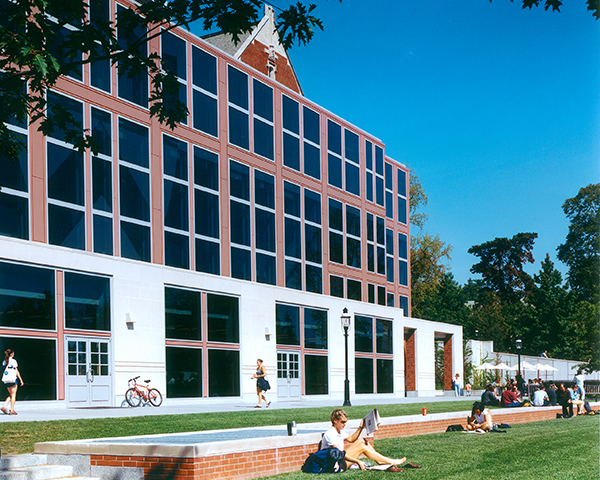
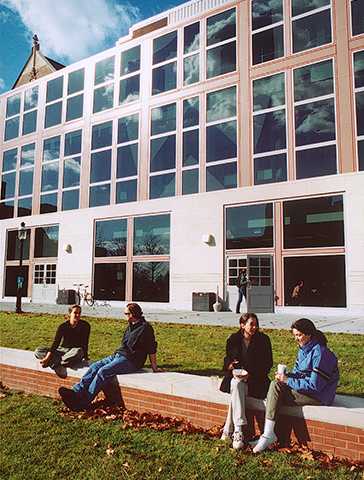
The new arcade and multiple entries at the north face make more public the rather private and closed façade of Palmer, while respecting the beautiful quality of the Jacobean style of its architecture. But there is no ambiguity between new and existing in the complex. The south, window-walled façade cloaking the wing of new construction represents the singular nature of the Frist Campus Center — a communal entity and a place of community. At night the lighted interior is opened-up, displaying multiple architectural layers and a rich mix of activity.