Guild House, Sign Restoration
May 13th, 2026

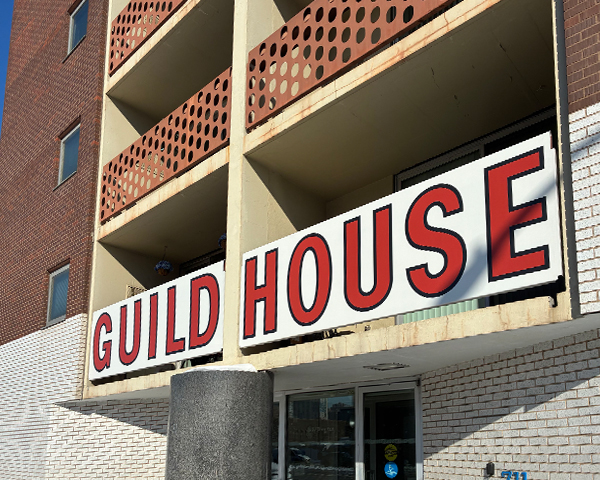
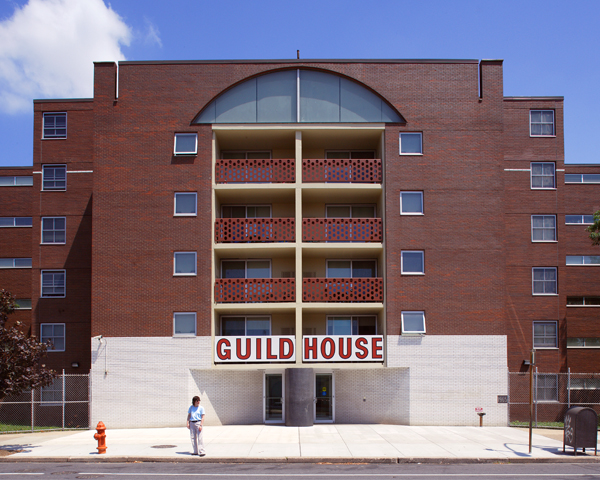
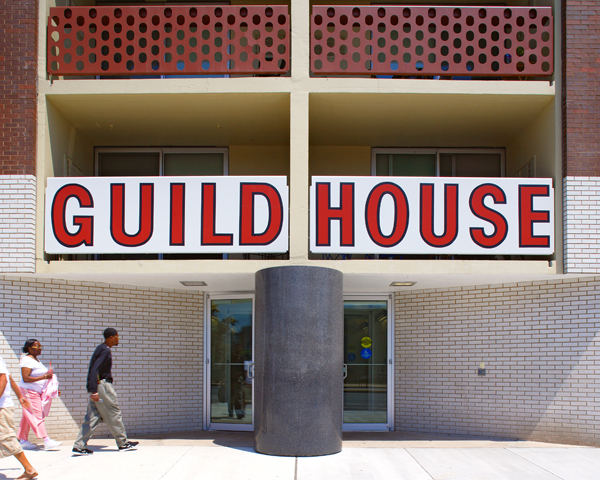
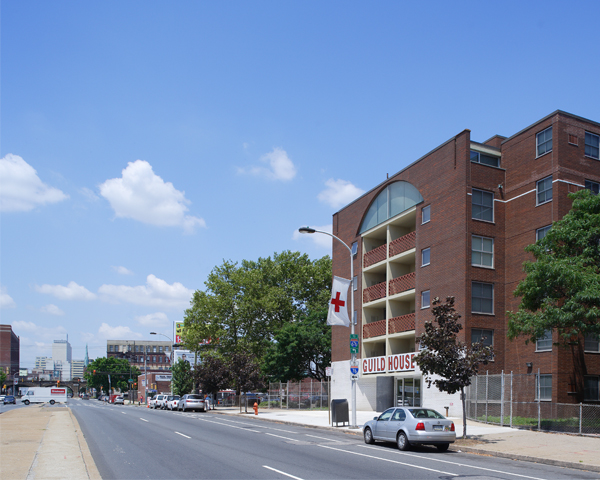
After years of weather and wear along Philadelphia’s Spring Garden Street, it was time to restore the iconic “GUILD HOUSE” sign on Robert Venturi’s historic 1964 building.
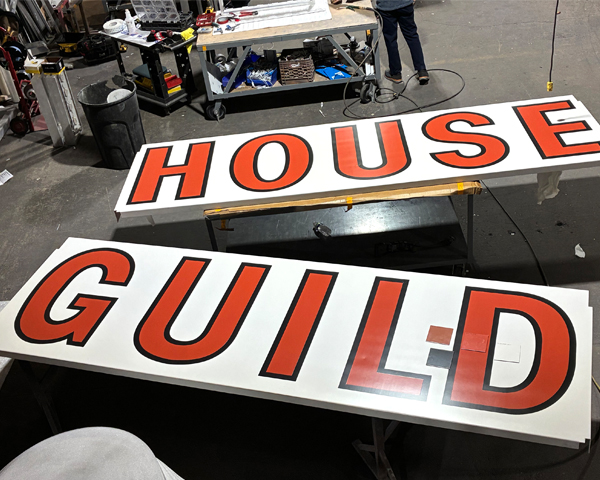
VSBA collaborated with Vitam Signs to renovate the main sign above the entry as well as the balcony guards.
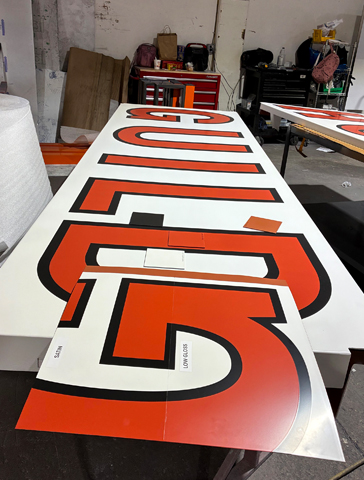
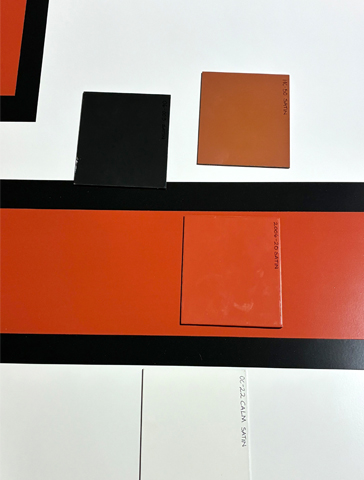
We created full size templates to replicate the existing artwork then painstakingly matched colors to the original paint. The original bent metal guards were demounted, sandblasted to remove rust, refinished with high quality automotive paint, then reinstalled.
We expect the refurbished sign and guards should last decades before needing another refresh.
March 4th, 2025

PCOM asked us to very quickly design building signage to honor the donation of a prominent alumnus. Our work was to adorn exterior as well as interior surfaces and span a wide variety of types and sizes — including signage to rededicate two major campus buildings.
Signage and communication has always been fundamental to VSBA’s approach, especially for academic campuses. Prominent donor recognition signage both celebrates an important contribution and serves the communicative needs of the campus community, so we believe it should be artistically crafted but clear, legible, and distinct.
At PCOM, our designs built on building signage we had created for Meta Christy House, working toward what might someday become campus design standards for signage.
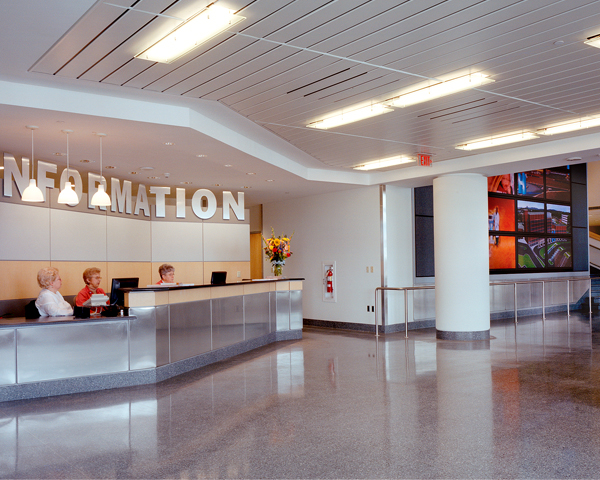
Our designs for the Hassman Academic Center (formerly Evans Hall) included a new exterior building entry sign, lobby dedication text, donor dedication plaque, and lettering / plaque for a portrait at the entrance to their administrative suite.
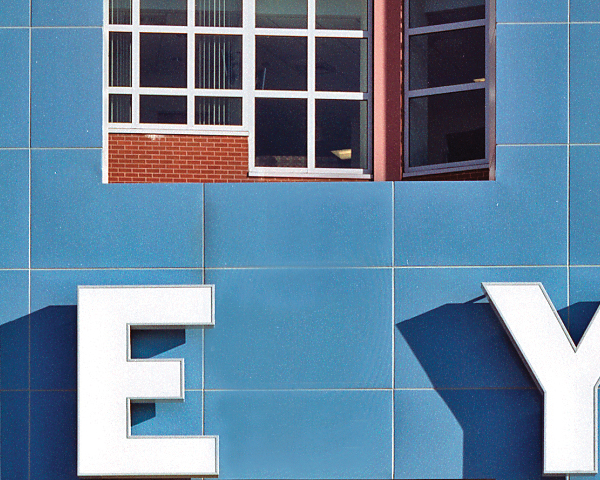
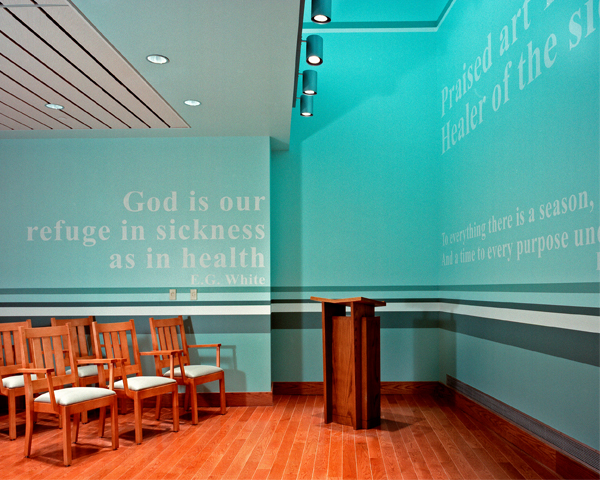
For the Hassman Family Medicine Center (formerly Rowland Hall), our designs included a large illuminated exterior building entry sign, reception desk signs, and prominent wall text and plaque at the elevator landing.
May 24th, 2022

VSBA worked with the University of Pennsylvania to create a home for The Sachs Program for Arts Innovation (SPAI) at the Annenberg Center for the Performing Arts. SPAI’s goal is to stimulate advances in the study, teaching, and development of the arts. Formerly an underused space without much comfort or amenity, the new Arts Lounge is now a wonderful place to view art, attend a concert, study, practice a play, or just hang out.
Penn’s Annenberg Center for the Performing Arts is both a public venue — offering a full event schedule for Penn Live Arts — and an educational facility for the campus’s theatre arts department. SPAI’s goal is to stimulate advances in the study, teaching, and development of the arts. It’s helping to foster collaboration across disciplines and between venues while serving as an information nexus extending the arts across campus and into the city. We collaborated with a complex client team made up of representatives from SPAI, the Annenberg Center, and the theatre arts.
The 1971 building at 37th and Walnut Streets features high windowless masonry walls. It has several entries, but they were half-hidden, dark, and undistinguished. So our main challenge was: how can we overcome the building’s opaque facades and entries to promote activities and identity — and accomplish this through very strategic changes on a tight budget?
To do this, we worked from both the outside-in and the inside-out. Outside, we traced the shadowed entries with changing multicolored marquee light strips that cycle through bright, saturated colors. Nearby, new digital kiosks and wall-mounted screens offer info about events and activities. Entries are now beacons to people on and off campus. We also added fresh building signage, improved lighting on Annenberg Plaza, and improved circulation at the 37th Street entrance.
Inside, we transformed an uninspiring lobby atrium into an exciting new Arts Lounge. We added colorful furniture — deep blue settees, lively orange and red loungers, and low tables. Because ever-changing programs demand a variety of configurations, furniture can easily be rearranged to serve group gathering, gallery, presentation, performance, and other needs. Refreshment is offered through mobile coffee / snack carts and a prep kitchen. To draw people through the space, a vibrant new stair mural was also added during our renovations.
To transform one large masonry wall into a powerful space for art, we added a new gallery wall hanging system, track lights for the art, and theatrical spotlights. A new video server communicates with both the Arts Lounge screens and kiosks outside. Along the mezzanine, we replaced part of a low concrete wall with a glass railing, encouraging people up from the Arts Lounge to a cozy mezzanine area serving the theater department, SPAI offices, and others studying and hanging out.
Maybe most expressively, VSBA lit the Arts Lounge with a system of light rings at a variety of sizes that extend through the lobby, connecting the Annenberg Plaza and 37th Street entries. These temper the scale of the tall space, making it feel warm and inviting. At night, the glowing hoops draw visitors in; from the inside, they’re reflected in the large entry glass panes, appearing to flow into the distance…
November 17th, 2021

The Philadelphia College of Osteopathic Medicine (PCOM) teaches graduate students holistic approaches to medicine — utilizing a whole person approach, “treating people, not just symptoms.” Lacking on-campus housing since the school moved to its present location on Philadelphia’s City Line Avenue in 1957, PCOM existed as a commuter school with limited campus life accommodations.
The school understood a longstanding need for student housing on campus. Busy medical students have limited time and must focus on studies: living on campus allows more concentrated academic time while promoting collaborative learning. And PCOM’s peer schools can provide housing that enriches campus life. So when Overmont House — a 1971 apartment building for elderly residents at the edge of PCOM’s campus — became available, the College purchased the building to convert it into the campus’s first residential hall.
VSBA was retained to design this transformation. The structure is a 12-story tower with a masonry envelope and repetitive interior layout. Built with a modest budget, it was highly efficient but spartan in its allocation of space, quality of construction, and finishes. The building hadn’t been well maintained, the exterior envelope needed repair, building systems needed replacement, and small apartments were cramped with low floor to ceiling heights. How could VSBA — working with these constraints and a tight budget — transform the building into a modern, gracious campus facility?
We started by rethinking the residential units. We reimagined them as studio and one-bedroom apartments with different configurations. We opened up their layouts to create more airy, light-filled spaces. The new fully-furnished units included contemporary kitchens, plenty of storage space, and many modern amenities.
Beyond the units, every floor includes laundry facilities and shared study spaces. The building’s lower level and first floor offer a commons with student lounges, mail room, package retrieval system, and individual and group study rooms (some with integrated audiovisual tech).
We renovated the building’s exterior masonry, replacing flashings and damaged masonry at relieving angles, and replaced the roofing (adding insulation). A new free-standing entry canopy serves as a portico for the renewed building and link to the rest of campus. The canopy announces the building’s title — Meta Christy House — named for Meta L. Christy, DO, PCOM Class of 1921, the first African American osteopathic physician in the nation.
June 5th, 2017

Bivalve is an historic fishing village on the bank of the Maurice River in southern New Jersey. The Bayshore Center at Bivalve combines active shipping docks with interpretive, educational, and environmental activities.
For two hundred years, area residents told stories of a Revolutionary War skirmish on the Maurice — which may or may not have occurred. In conjunction with an archaeological examination of the site, and collaborating closely with the Cumberland County Cultural and Heritage Commission, VSBA designed one-of-a-kind signage to envision, interpret, and commemorate this event.
We conceived the “oculus” as a transparent disk illustrating a vision of the 18th century battle. The drawing, by artist Bill Ternay, depicts rebel militia and Loyalist forces clashing in opposing boats. We installed the disk on a pier overlooking the river, precisely positioned so its illustration aligns with the water and opposite shore — showing the skirmish just how and where it could have occurred. Rather than an opaque board, the oculus layers interpretive content over its subject — viewers don’t look at but through the signage — to create a deeper engagement.
Formally, the oculus is a simple but carefully detailed structure. The transparent disk inscribed with interpretive information is protected by a second disk, encased in a metal rim, and mounted on a pole affixed to the wooden dock. We designed the interpretive text to be clearly legible at different times of day and with varying degrees of light. The oculus’s form connotes a magnifying glass, a lens, a lookout, prompting viewers to question, debate, and seek out more information.
We created the oculus as a prototype of transparent information systems that might be applied to other contexts — to stimulate a more engaging approach to interpretation. Our goal was to celebrate ambiguity and the subjectivity of interpretation along with historical scholarship and the spirit of the place.
In illustrating one possible echo of history, we wanted to provoke observers with more questions than answers. Here’s one view, the sign suggests, but what really happened?
April 19th, 2017

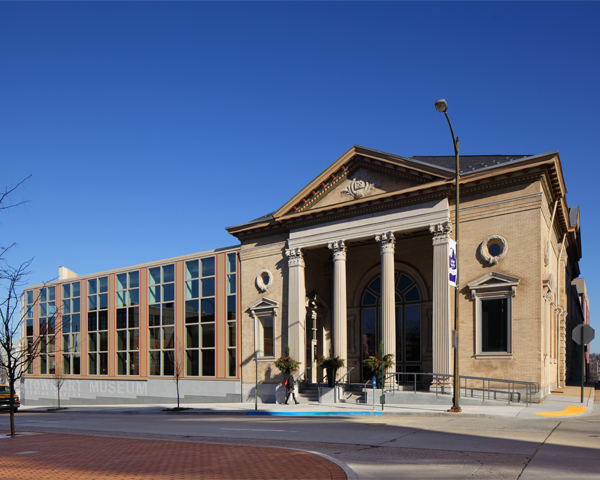
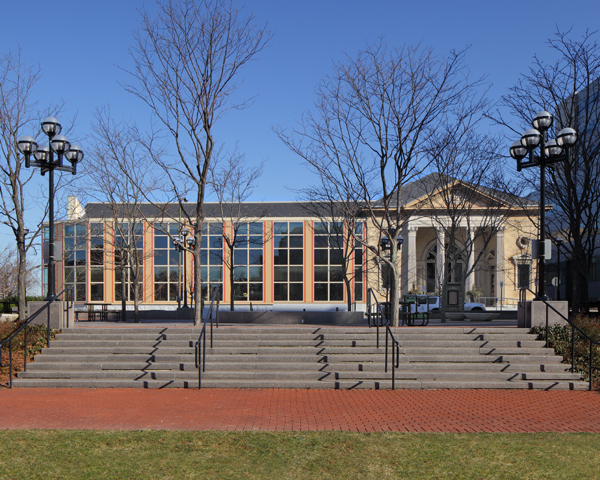
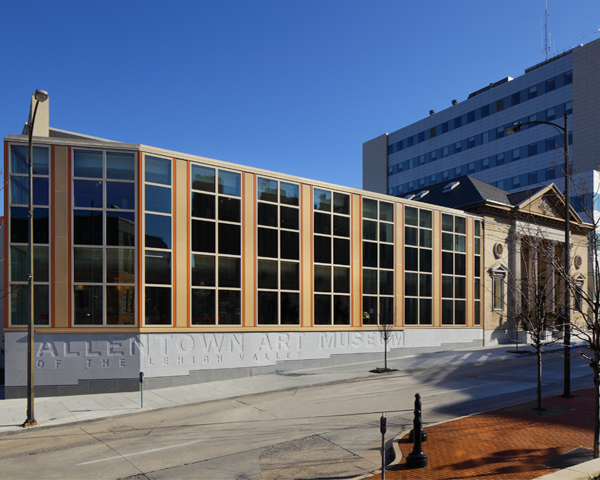
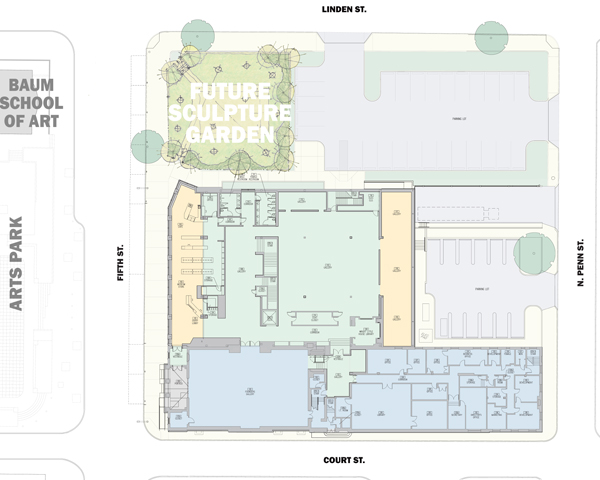
The Allentown Art Museum is housed in a former Presbyterian church on a busy downtown block, adjacent to the recently completed Allentown Arts Park. Built in 1901, the building was significantly expanded in 1937 and 1975. The museum needed extensive renovation and new space for galleries, visitor amenities, education, and collection storage. Of particular importance was strengthening the museum’s civic identity and engagement with the community.
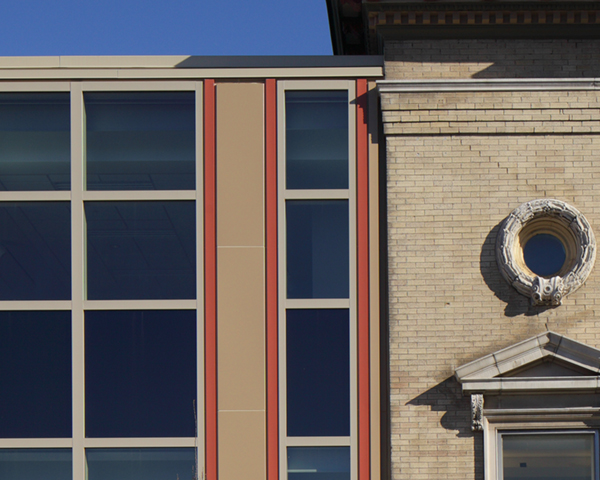
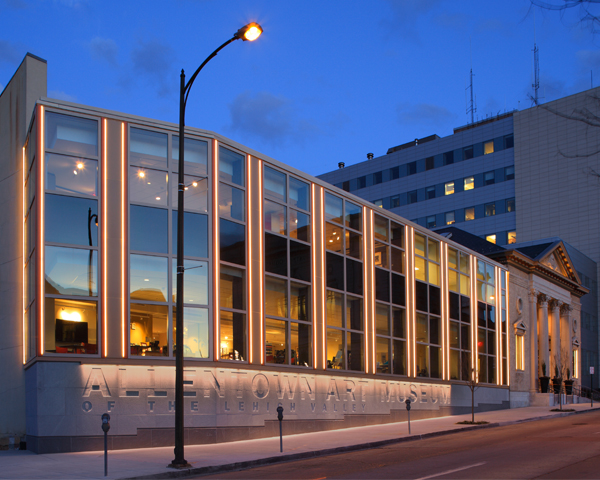
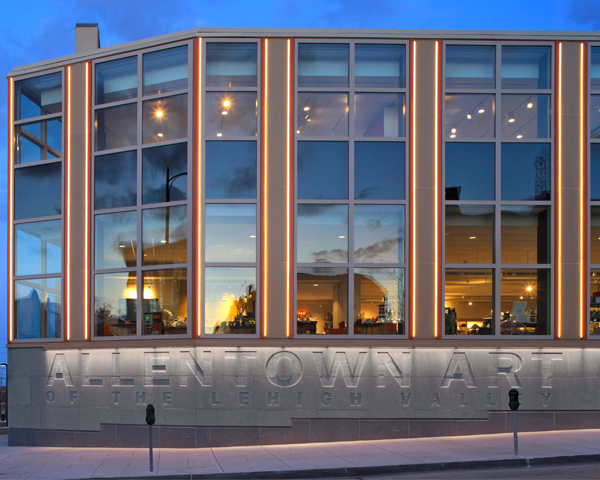
VSBA’s 3-story addition, constructed on a narrow site in front of the 1975 wing, presents a new metal and glass façade that connects and contrasts with the original building. It echoes the palette, civic scale, and rhythm of its columns while providing broad views to and from the Arts Park. Vertical accents enliven the façade, picking up the color of the brick used in the Baum School of Art and Arts Park across the street. At night, festive LEDs highlight the metal columns. The addition enhances the museum’s civic presence while returning prominence to the original neoclassical façade.
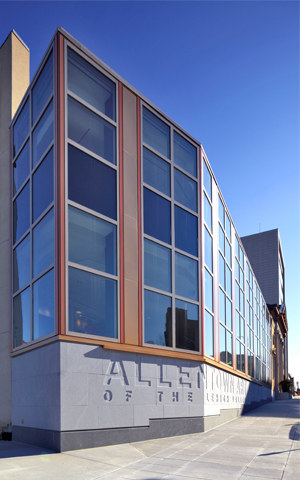
The addition’s canted end inflects towards the Baum School of Art and welcomes visitors approaching from the corner. It overlooks the site of a future sculpture garden and guides visitors arriving from the parking area behind the garden. Large carved letters announce the institution and give interest to the granite base.
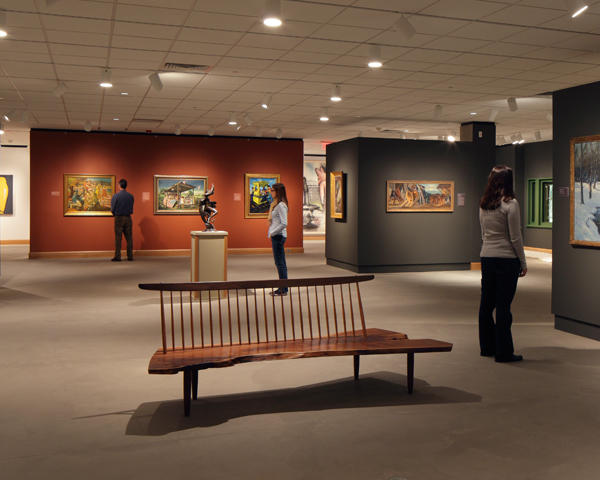
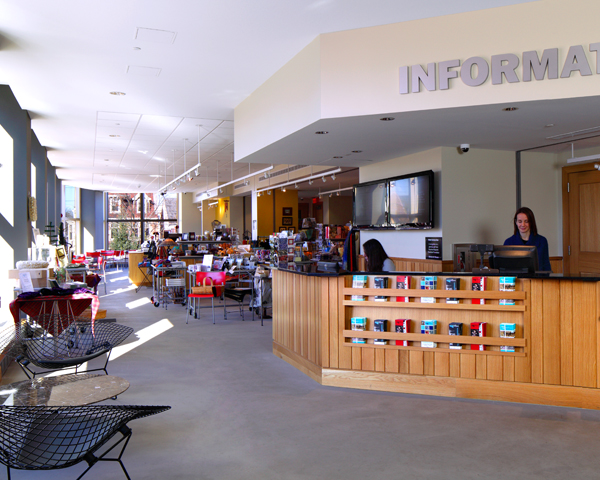
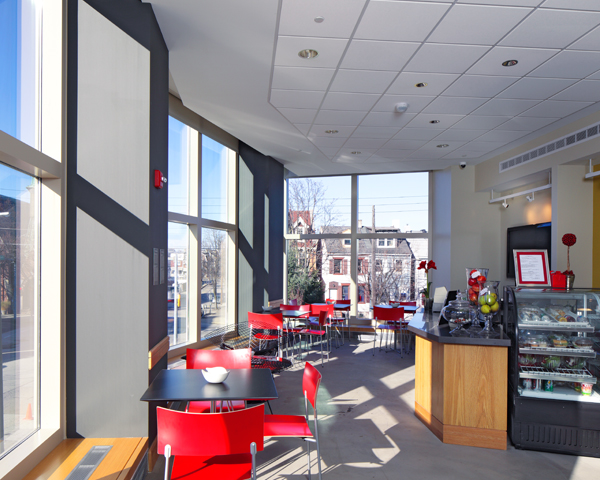
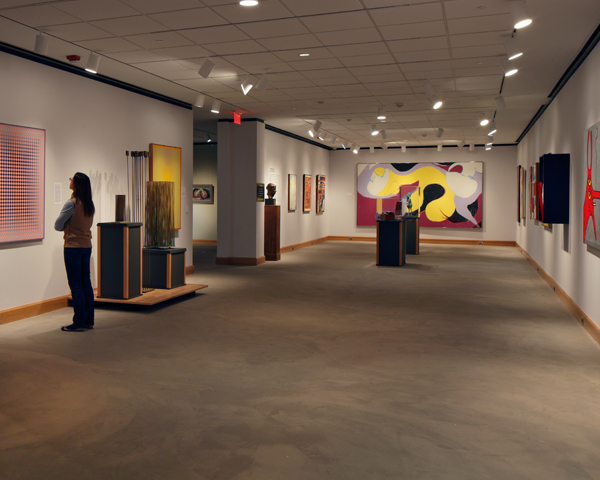
The new main entrance through the portico leads to the lobby, museum shop, and café. Above is a new sculpture gallery and classroom; below is collection storage. A 1-story addition to the rear, infilling an existing terrace, contains additional galleries above an expanded loading dock. The existing 1975 galleries were completely renovated with new finishes, lighting and environmental systems. Throughout the 1975 building, circulation was clarified and made accessible.
All improvements were achieved for an average cost of $228 per square foot.
April 19th, 2017

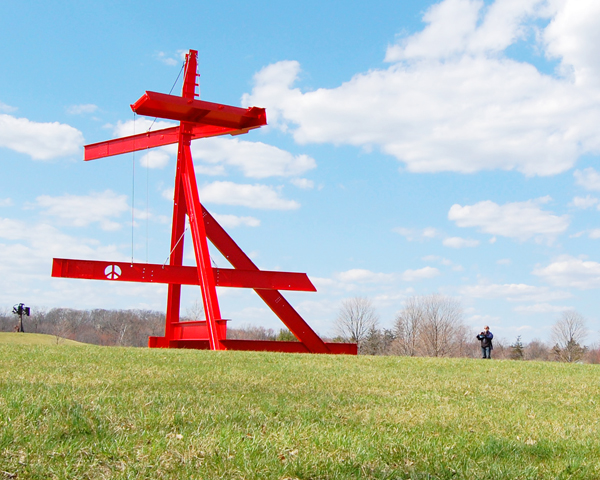
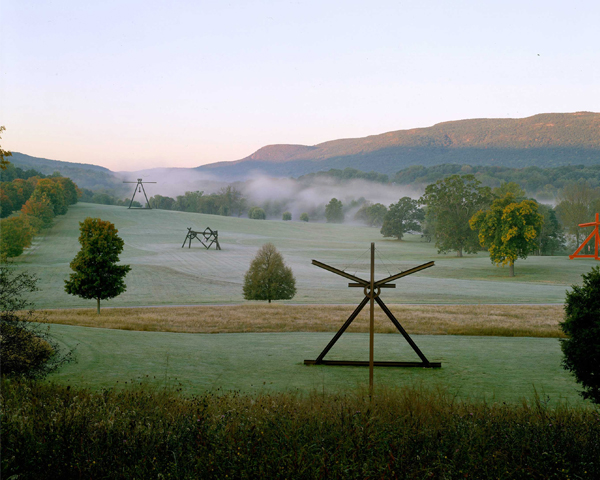
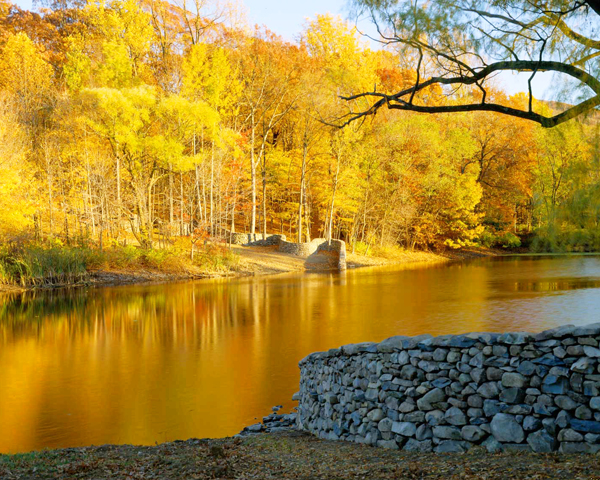
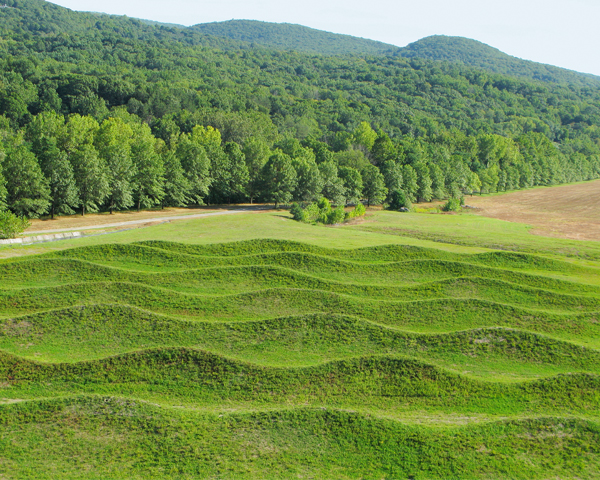
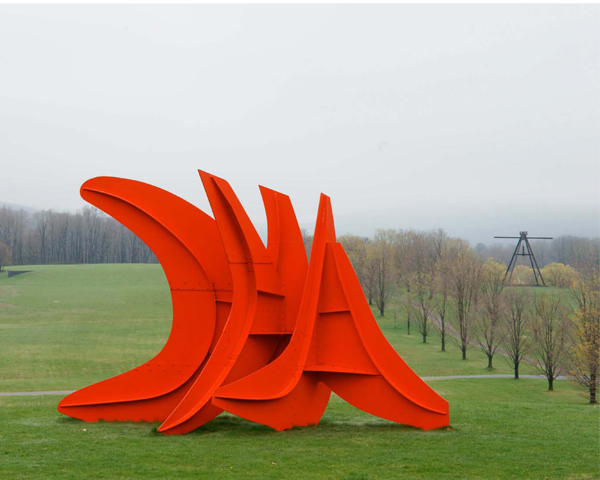
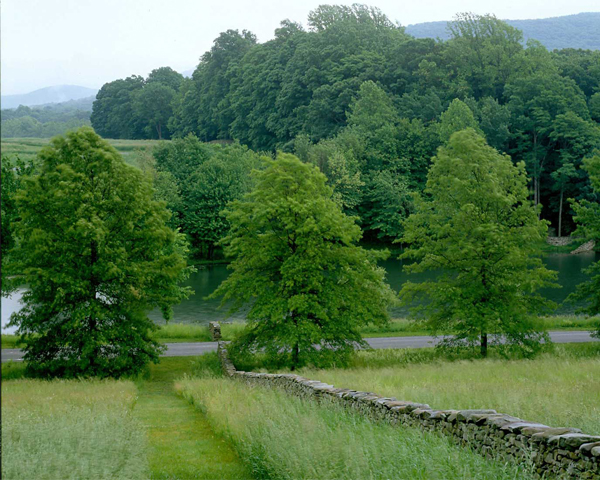
Storm King Art Center is a unique outdoor museum — an expansive series of lawns, trails, fields, groves, and woodlands framed by the Hudson Highlands and set with monumental modern sculptures by notable artists. Each artwork’s context is defined by both immediate and distant landscapes; the ever-changing visitor experience encompasses the seasons and weather, as well as the growing collection. The Center is a public, non-profit, and educational institution.
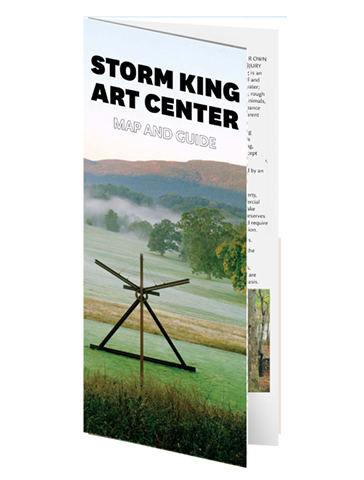
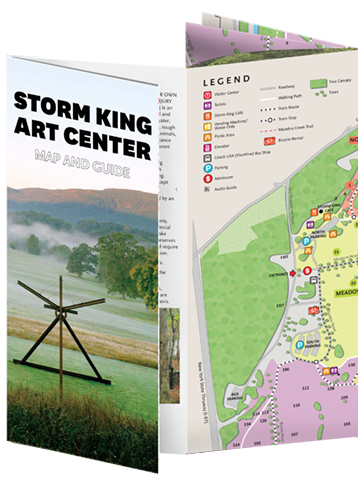
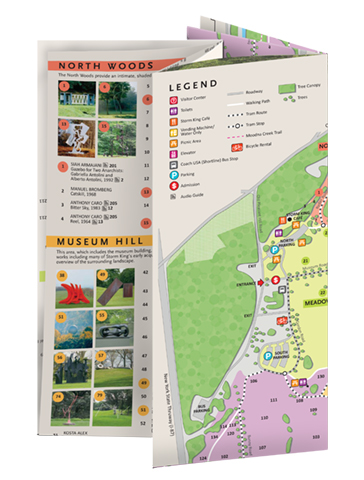
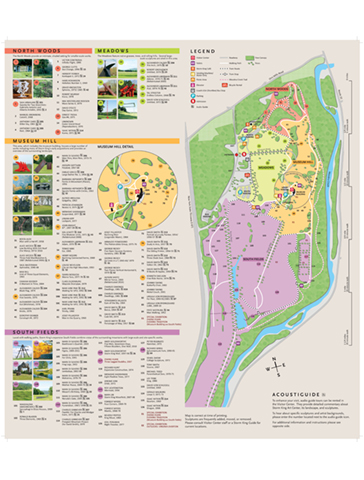
In addition to our conceptual planning for the institution, we were asked to design a new visitor map and brochure as a guide to the grounds’ sculptures, facilities, and natural features. The map reflects conceptual reorganization of Storm King’s precincts, in accord with our planning.
Along with a map of the grounds, our brochure collects in one place different bits of information important to visitors, as well as news about special exhibitions and events at Storm King. The map’s printed on recycled-content paper that’s’ resistant to rain, helping it to be long-lasting and sustainable.
April 19th, 2017

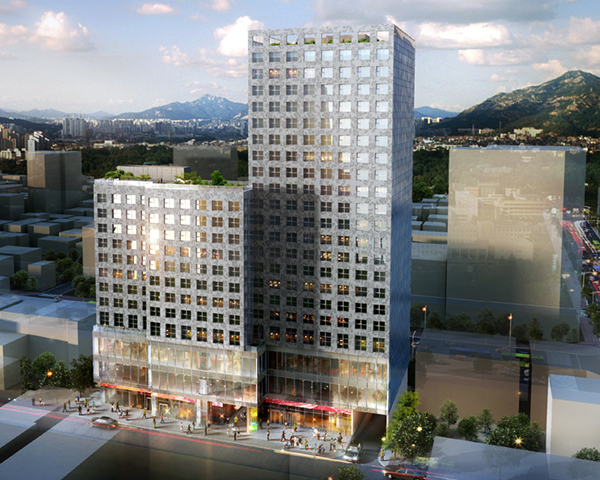
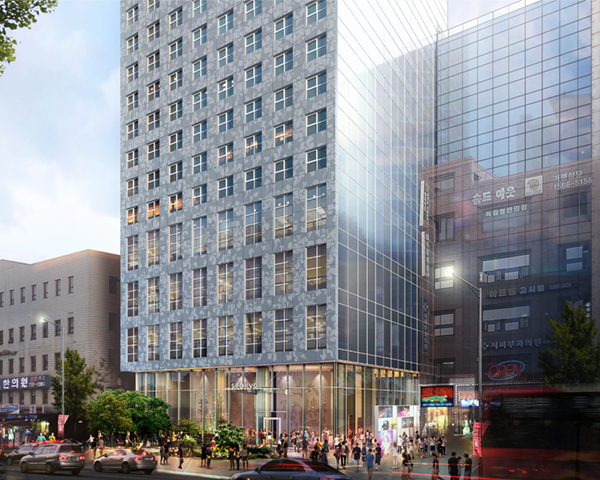
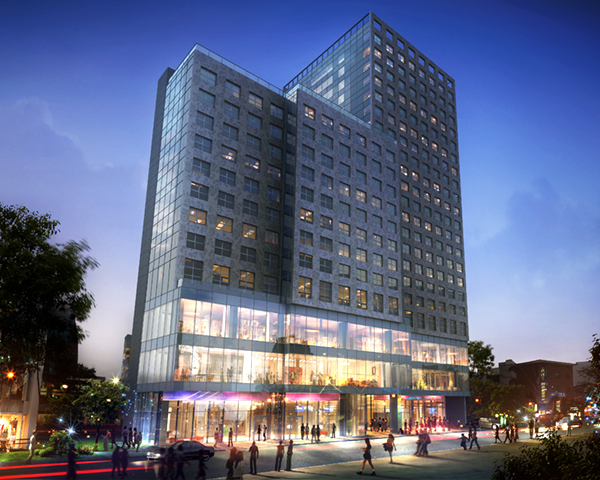
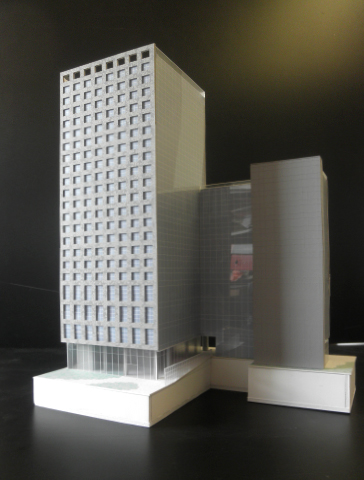
VSBA was retained to design a new hotel at the edge of a bustling entertainment and commercial neighborhood in Seoul, Korea. The mixed-use project places the hotel lobby and amenities above two levels of retail space and below-grade parking.
We worked with a local associated architect and client representatives to devise several options, from which two main schemes were selected for greater development. In both, our overarching goals include:
April 19th, 2017

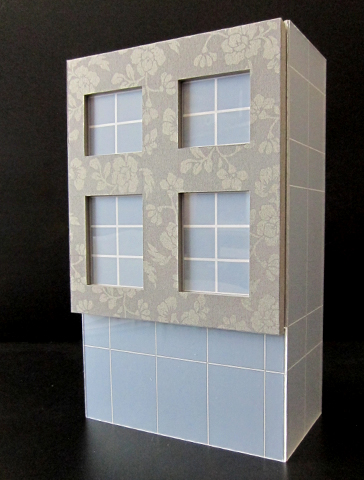
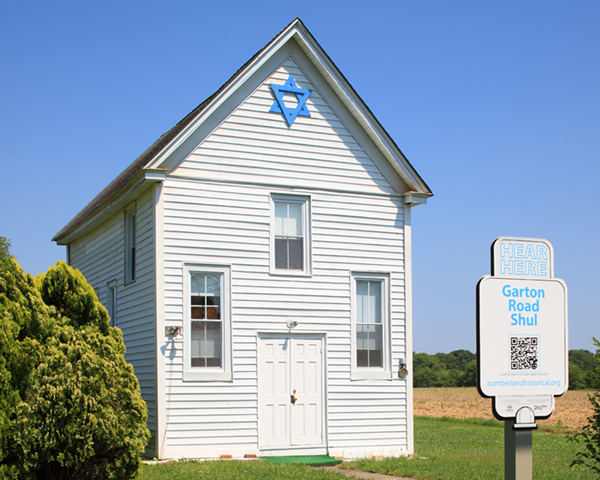
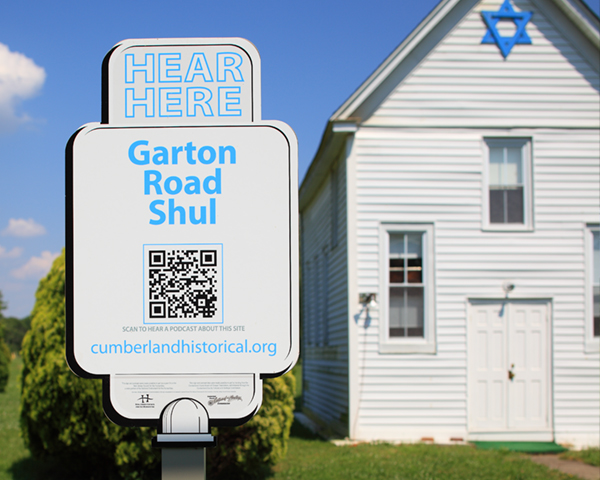
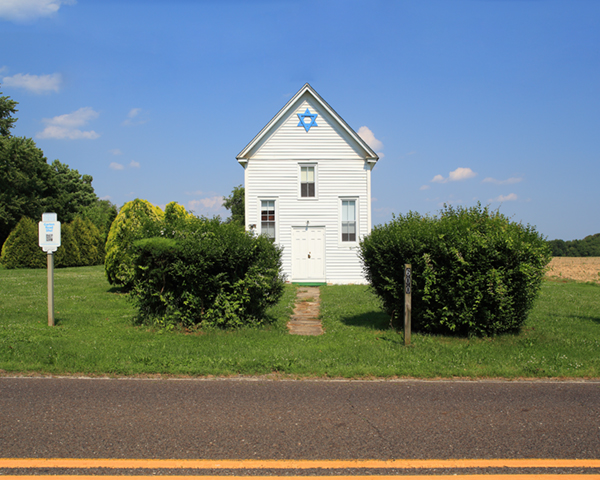
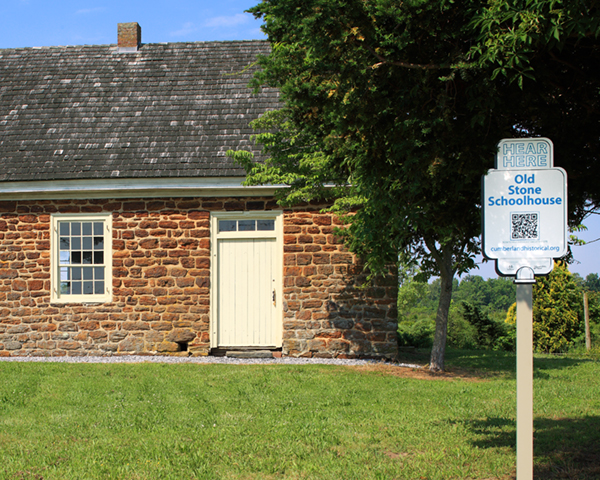
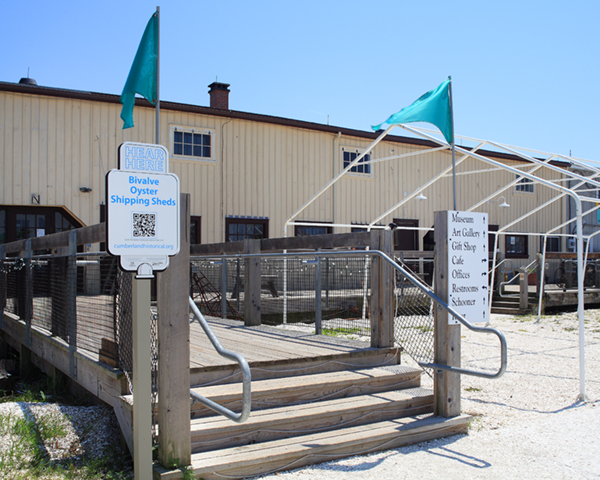
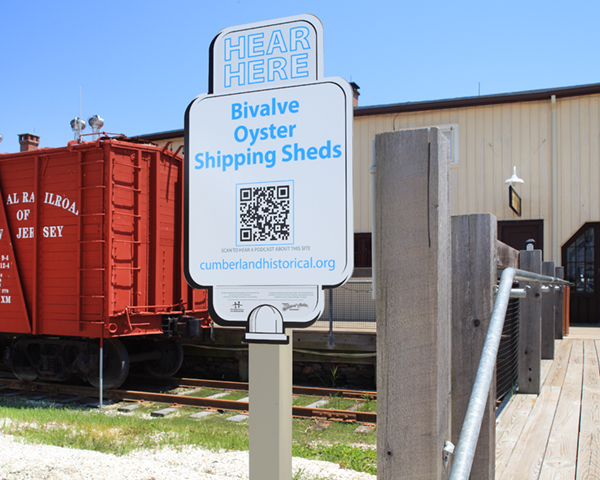
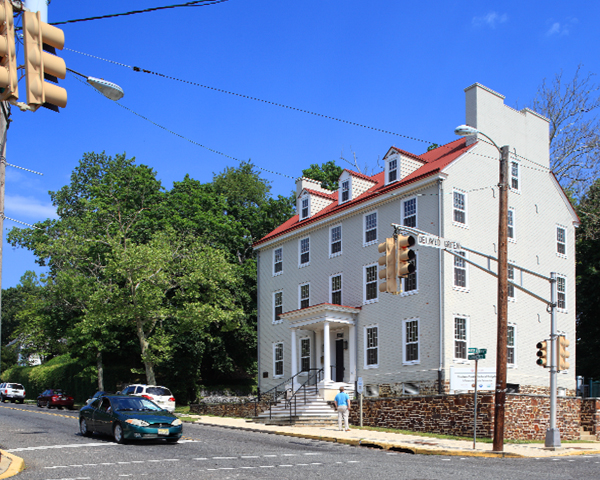
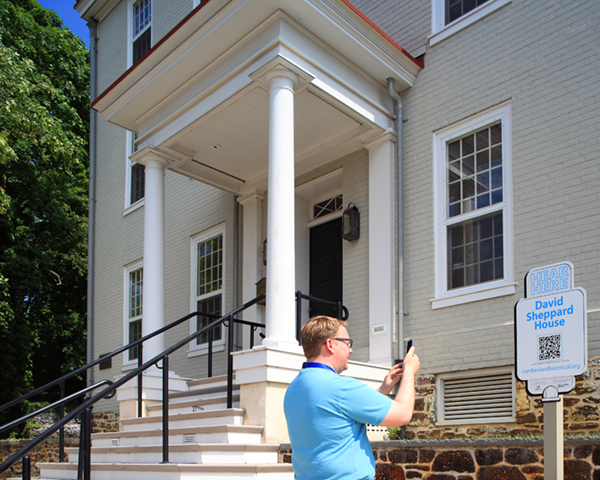
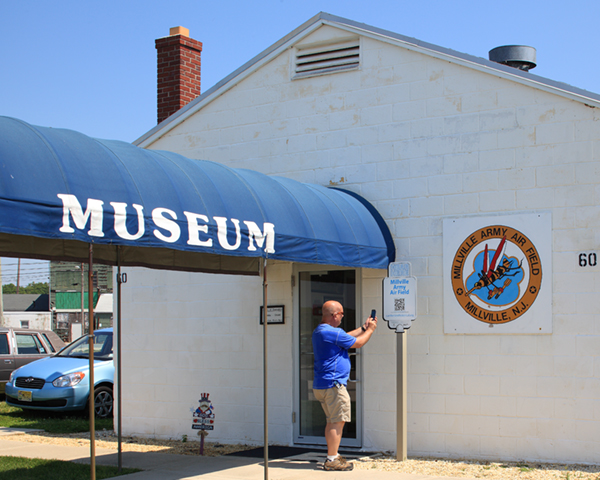
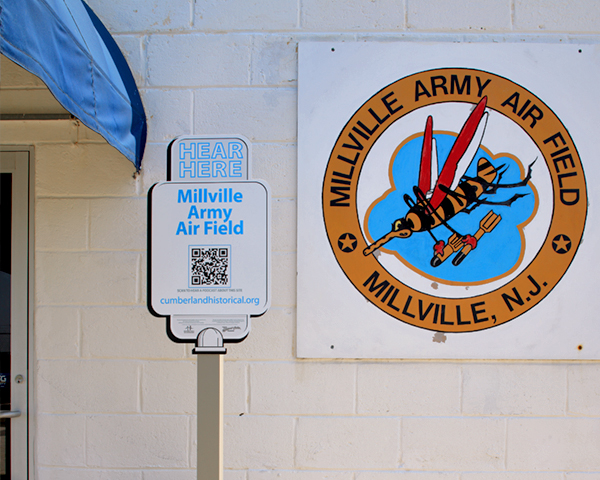
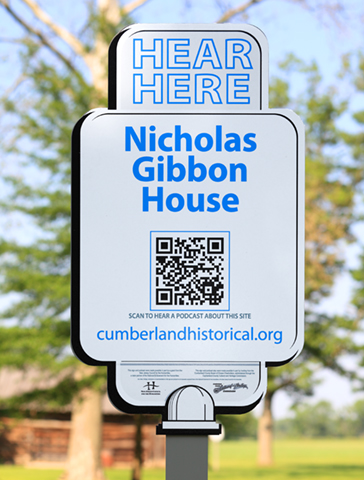
The Cumberland County Cultural and Heritage Commission asked VSBA to conceive a signage system for numerous historical sites and structures, including the 17th century Swedish Granary, the East Point Lighthouse, and the Millville Army Air Field and Museum, as well as houses, churches, and banks. The Commission produced a series of five-minute interpretive podcasts on the history and significance of each site — which aren’t typically open to the public, or open with limited hours.
To promote the Commission’s program, VSBA was asked to conceive an engaging new signage system. We devised signs that identify each site and feature prominent QR codes — which, when scanned by a mobile device, links to the related podcast. The large-scale QR code and place name can be seen by motorists while smaller text addresses pedestrians reading and scanning the sign. (We carefully tested full-scale mock-ups to ensure that the codes would be scannable at appropriate heights and distances.) And since the podcasts can be updated independently, interpretive content can evolve while the signs remain current.
The Time Traveler signs are designed to fit multiple contexts, from urban to rural. While distinctive and prominent, the signs are also deferential to the beautiful sites they interpret. To reinforce their neutral character, we used as few colors as possible, basic white and light grey backgrounds, and a simple sans serif font. But we also incorporated discreet trompe l’oeil elements to lend depth and playfulness to the thin signs.
Our signs are built to last and change. They’re constructed of vinyl laminate mounted to aluminum plate. This method allows content to change without having to replace the sign: it’s relatively easy to apply a new laminate, so the sign can adapt with new needs and technologies (as QR codes are superseded, for example) — or totally change appearance.
The West Jersey Time Traveler signs offer an excitingly different approach to interpretation — allowing visitors to virtually enter historic buildings even when they’re closed. The American Association for State and Local History recognized our pioneering approach to interpretation with a Leadership in History Award of Merit.
April 19th, 2017

Storm King Art Center is a unique outdoor museum — an expansive series of lawns, trails, fields, groves, and woodlands framed by the Hudson Highlands and set with monumental modern sculptures by notable artists. Each artwork’s context is defined by both immediate and distant landscapes; the ever-changing visitor experience encompasses the seasons and weather, as well as the growing collection. The Center is a public, non-profit, and educational institution.
In the late 2000s, VSBA was retained to help develop a comprehensive picture of the institution’s facilities and plans for future growth. We studied the interrelation of art, landscape, architecture, circulation, education, outreach, parking, and other systems as they relate to the visitor experience. Linkages were fundamental concerns. Our planning mapped existing and problem connections between activities and uses both on the site and with the broader neighborhood. Our study also encompassed important issues of environmental stewardship and operational and finance concerns.
In 2013 we were then asked to begin a second phase of planning. Since the initial study, Storm King has increased its acreage of native grasses, acquired new properties, added a new cafe, rerouted its tram service, and expanded its bike rental program. Our goals are to continue improving visitor experience, promoting identity, creating flexible areas for programs and activities, providing good working environments, and fostering the right conditions for its unique art.
In addition to our planning, we’ve designed a new visitor map and brochure as a guide to the grounds’ sculptures, facilities, and natural features. The map reflects conceptual reorganization of Storm King’s precincts, in accord with our planning.
April 19th, 2017

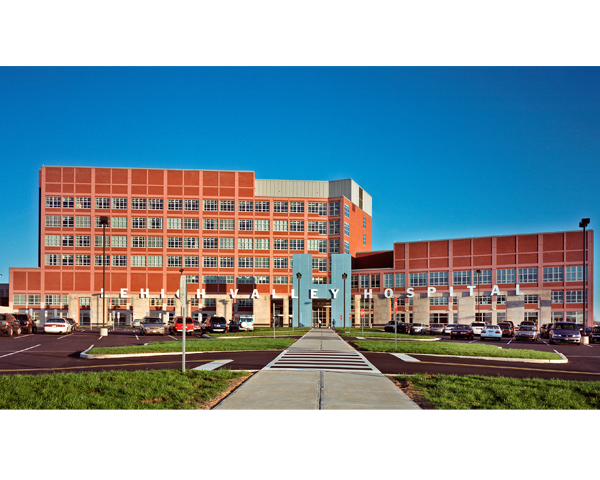
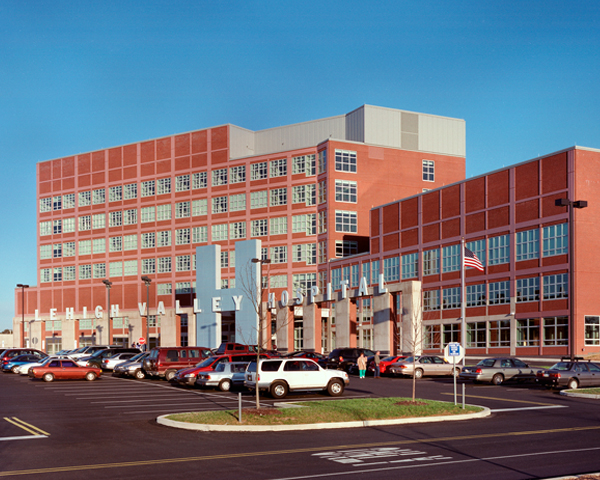
VSBA, in collaboration with architects FreemanWhite, Inc., completed a major expansion of the Lehigh Valley Hospital – Muhlenberg. After conducting master and organizational planning for the Hospital, we embarked on a $42 million renovation of 100,000 square feet and creation of a new 265,000 square feet patient tower and clinical care units.
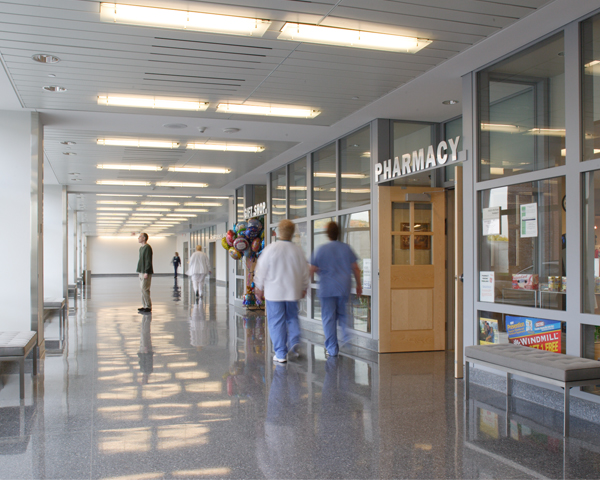
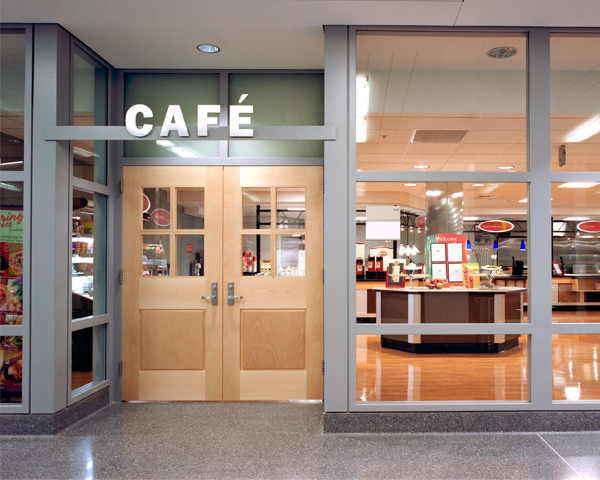
The Hospital now features 188 private rooms for critical care, cardiac, and medical/surgical patients; expansion of the Regional Heart Center; an intensive care unit; Diagnostic Care Center; new hospital entrance and lobby; cafeteria; pharmacy; chapel; retail space; and increased visitor and staff parking.
Patient and clinical areas were designed with the patient and family in mind. An administrative staff member is located to provide personal contact upon arrival at each floor. Each unit includes a room for family members to stay overnight. Units are designed to help staff focus on patient care by distributing functions usually located at a central nurse station to staff areas at the entrance to the patient’s room. Each room provides separate zones for patient, staff, and family. To improve flexibility and decrease patient relocations, the twelve-bed open-heart unit was designed to provide complete services from post-surgery to discharge.
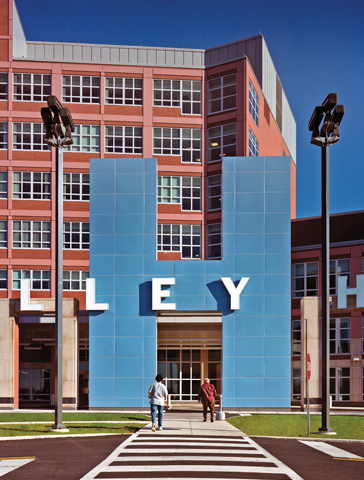
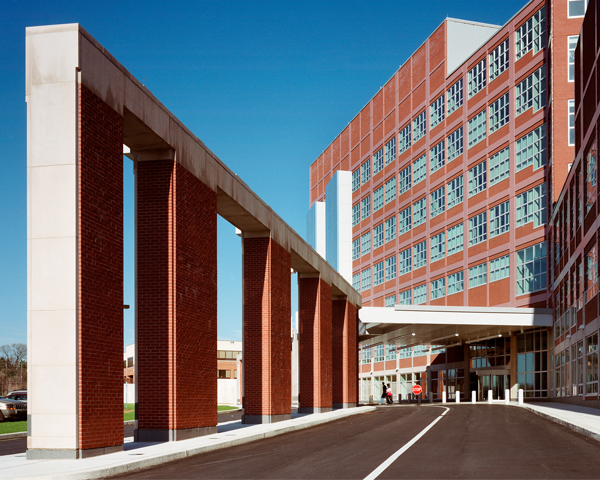
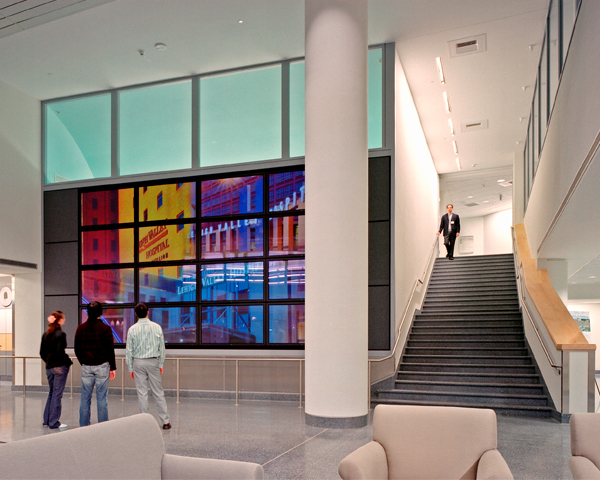
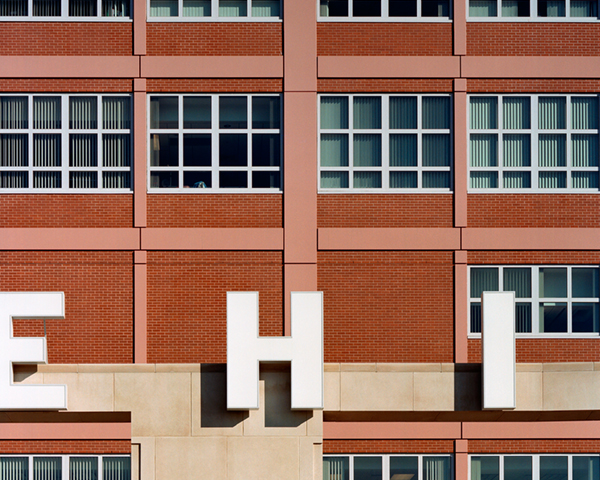
An iconic 48-foot blue “H” marks the Hospital’s entrance. It’s integrated into a limestone arcade that welcomes visitors and supports the entrance canopy. The building’s facade is red brick and limestone on the front and buff brick on the sides and back. An applied metal grid on the front represents the advanced technological structure and complements the more traditional brickwork. On the interior, warm finishes, patterns, and colors help to create a comforting atmosphere while providing useful wayfinding.
President and CEO Elliot Sussman writes: “…Yesterday I found a few extra minutes and took a walk through our new hospital. It is simply amazing! I love the space, I love the light, I love the details….What a wonderful resource for our community….Thank you for giving us such a splendid building.”
April 19th, 2017

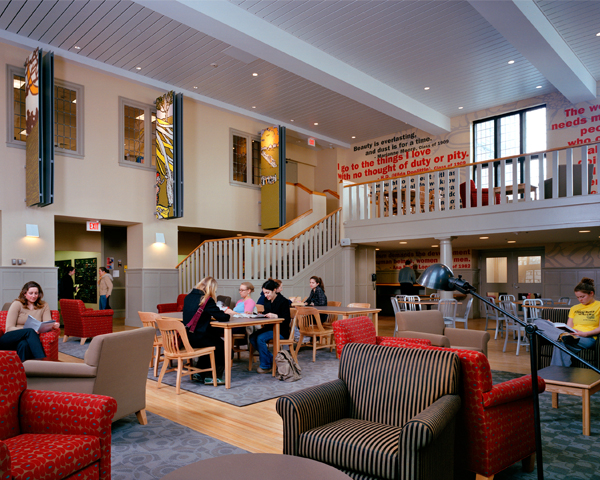
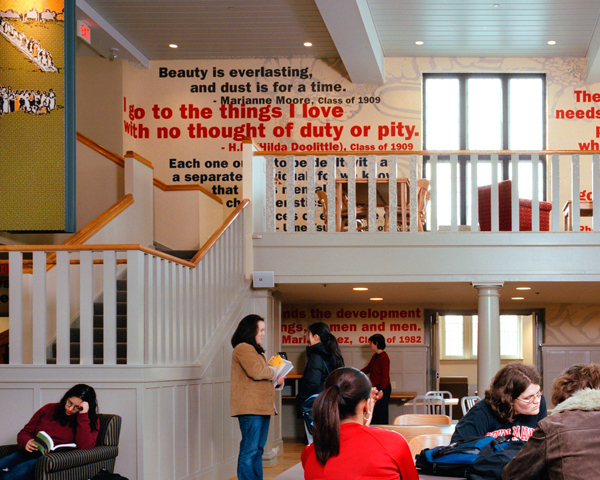
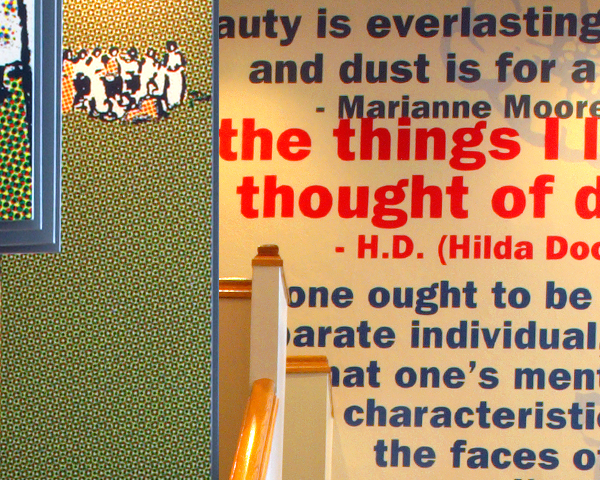
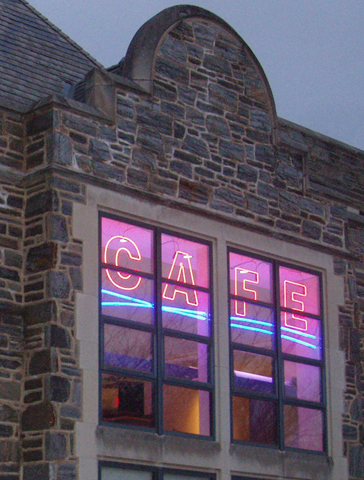
VSBA was asked to suggest ways of improving and enlivening the student-centered spaces on the first level of Bryn Mawr College’s Campus Center. The College wished to make the spaces more student and visitor-friendly and more emblematic of Bryn Mawr spirit. VSBA redesigned the Café and Main Lounge, converted an adjacent meeting room to a student rec room, and created more visible connections between spaces. Throughout, traditional symbols of Bryn Mawr’s past and present express the College’s identity and spirit. The Main Lounge and Balcony include:
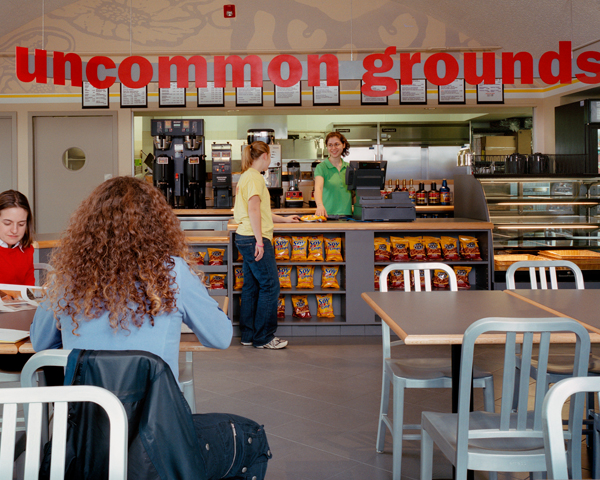
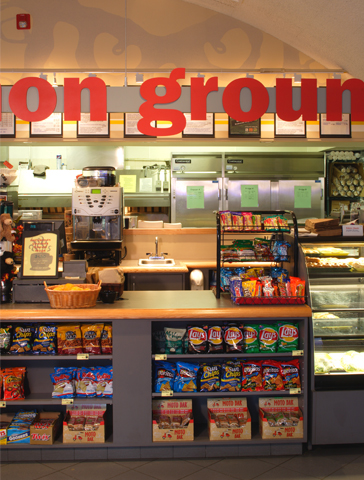
In the reorganized Café, new menu boards and café identity signs are set against a backdrop of College symbols and memorabilia:
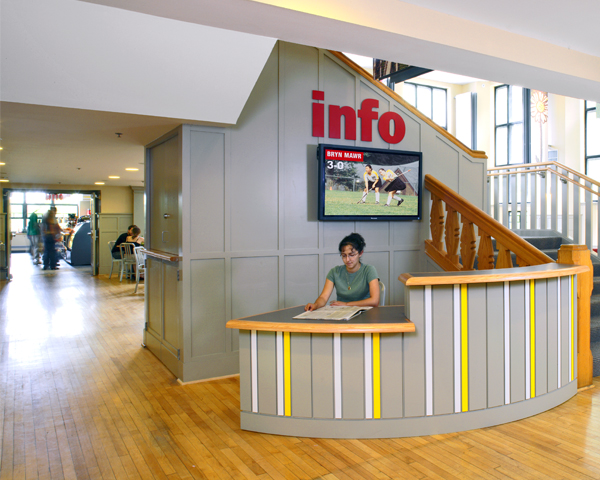
The campus “rec room” — formerly a meeting room — will be hung with rotating exhibits of student-created, student-selected artwork. Main circulation spaces include large bulletin boards for student postings and e-mail stations. A new information desk and informational plasma screen were also installed.
April 19th, 2017

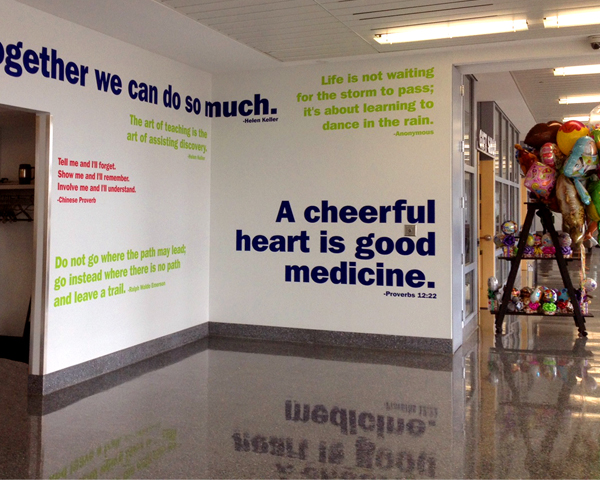
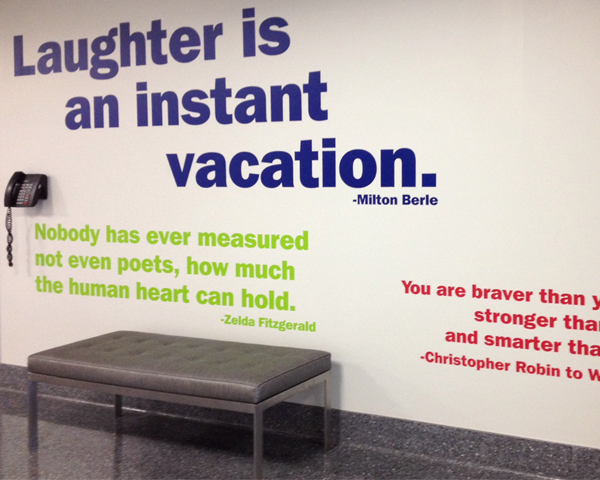
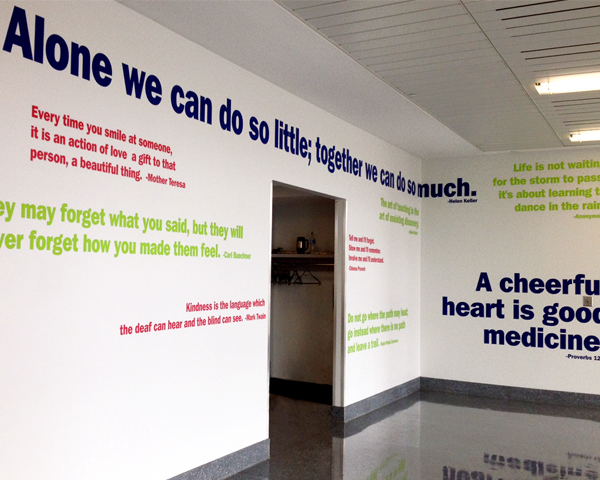
When we designed a new hospital building for the Lehigh Valley Health Network at Muhlenberg, we incorporated a series of large decorative murals in the lobby and public circulation areas.
Subsequently, we were asked to adapt these large-scale murals for two other locations — elsewhere at the Muhlenberg hospital and also for their Mack Boulevard administrative building.
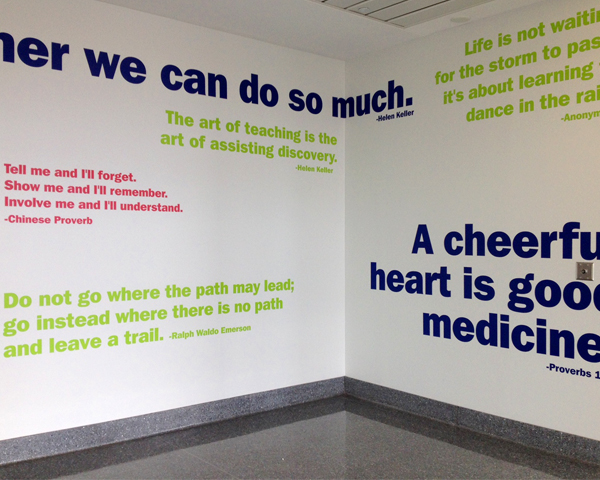
Our murals are composed of a selection of quotes from many sources, which were selected by LVHN employees. They’re intended as comforting, supporting, inspirational, and humorous. We used vinyl lettering, which is durable but also economical and easily removable.
April 19th, 2017

VSBA rehabilitated the landmark Guild House, one of Venturi, Scott Brown and Associates’ earliest built works, designed nearly 45 years prior as housing for the elderly.
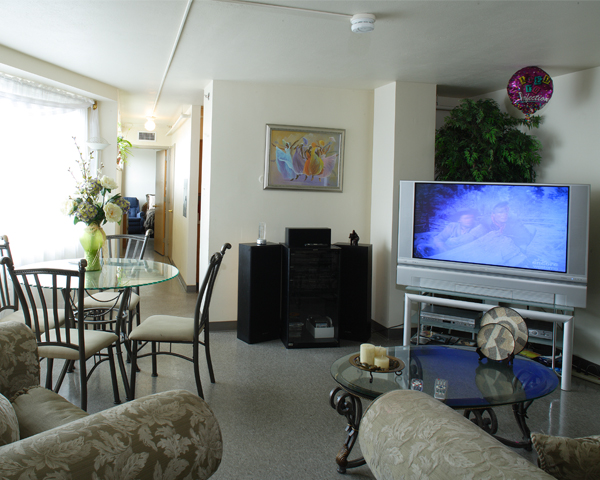
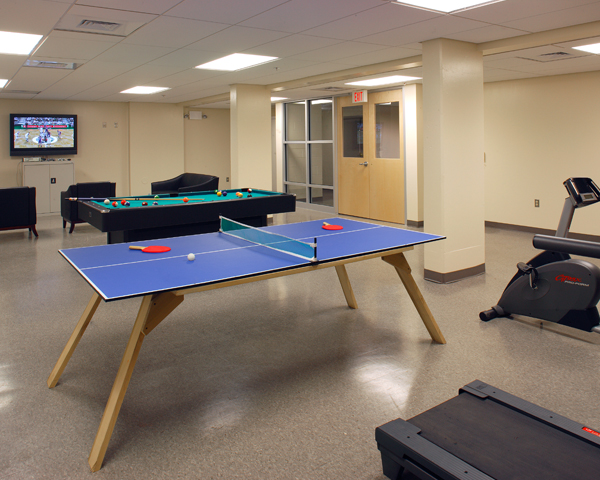
While Guild House was originally built for wheelchair access, we modified five apartments to meet current accessibility requirements and we equipped two units for hearing and visually impaired residents. On the first floor we located a common accessible laundry room. New amenities include offices for a social worker and visiting care providers and a Wellness Room with exercise equipment, ping pong and pool tables, a large screen TV, and interactive fitness video games.
Our rehabilitation provided new systems throughout for heating and cooling, automatic sprinklers, fire alarm, and emergency lighting; a new security call system to the manager’s office and front door; a new emergency notification system with ADA compliant pull-cord devices in all units; electrical upgrades such as new digital accessibility wiring and devices for telephone, Internet, and TV access for all apartments; and external cameras.
Exterior repairs included replacement of worn original aluminum windows with new units — including insulated low-emittance glazing for improved thermal performance — replacement of damaged bricks, and the addition of horizontal control joints at relieving angles. Exterior paint colors for balconies and air conditioner covers were restored to analogous brick colors. The iconic “GUILD HOUSE” sign was restored to its original font and color scheme.
April 19th, 2017

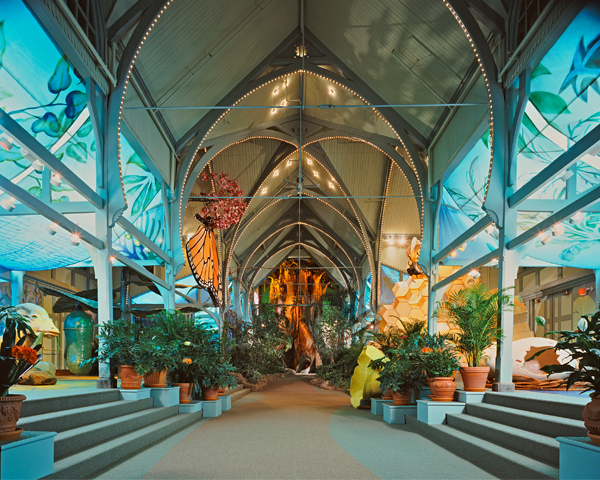
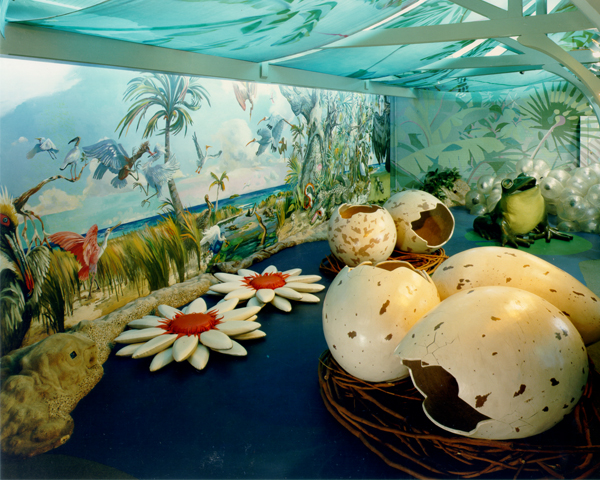
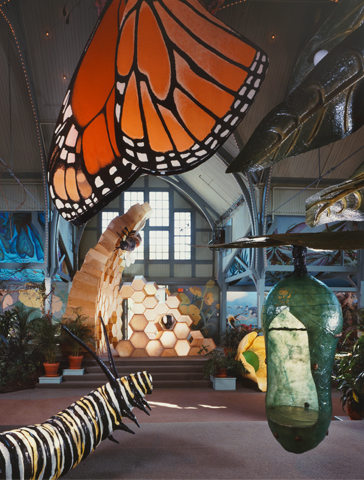
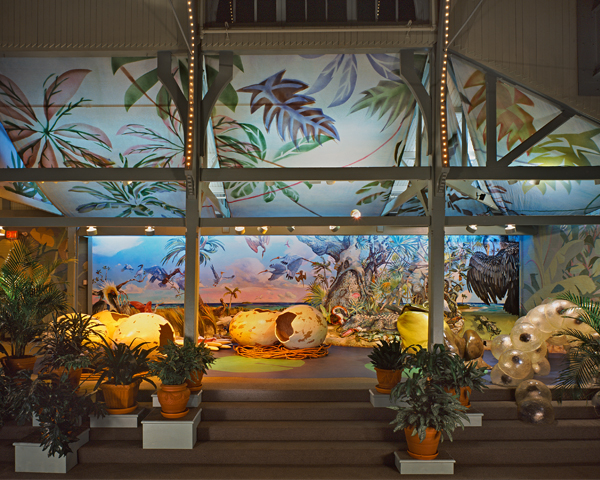
When VSBA was commissioned to design the new Children’s Zoo, part of the program called for a special exhibit area to create visitor understanding of and sympathy with the natural world of science. Traditionally this has been achieved through a teach/learn environment, but in this case the desire was to go beyond the usual constraints and involve visitors on an emotional and physical level. Thus the most important element in the new Children’s Zoo became the reuse of an architecturally distinguished Victorian building to house a series of innovative, interactive exhibits depicting different animal and plant environments.
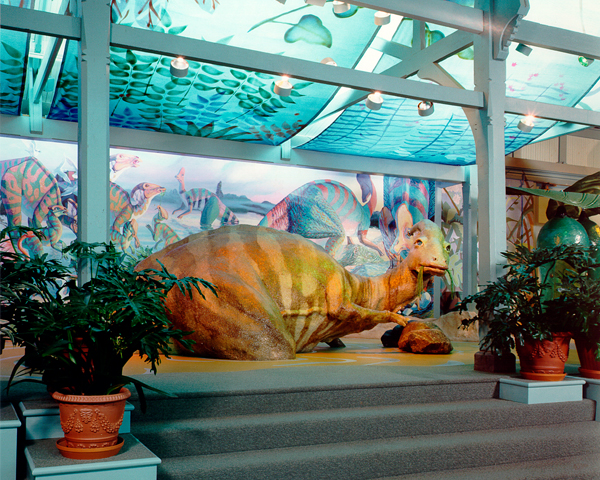
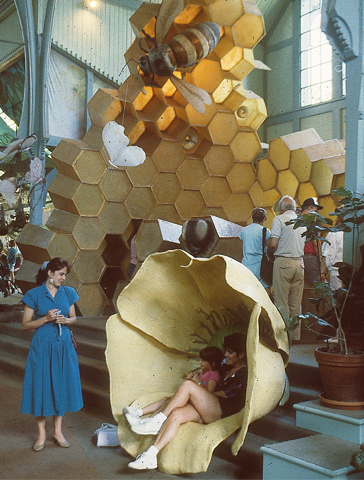
We designed a non-traditional exhibit style, an environmental approach that actively immerses visitors in a real physical context. The design allows many visitors to experience the new context simultaneously, a critical factor in accommodating large crowds on high-attendance days.
In the four-year design and construction process of the Tree House, we have been responsible for initial research and development of each individual environment. We have also developed innovative uses for artificial materials such as fiberglass, building insulation, rubber and plastic to develop artificial trees, vegetation, animal forms and so forth that will maintain the exhibits’ illusions and that can take constant handling by the public and the physical abuse the exhibits will receive.
The exhibits are intimately associated with the architecture of the building, with structures and contexts placed to complement and be complemented by the building’s many spatial characteristics. The visitors’ experience of the wonderful old architecture becomes integral to the exhilarating experience of the exhibits themselves. Thus a Victorian building from a previous era is not only preserved, but put to effective use in an urban zoo of today.
April 19th, 2017

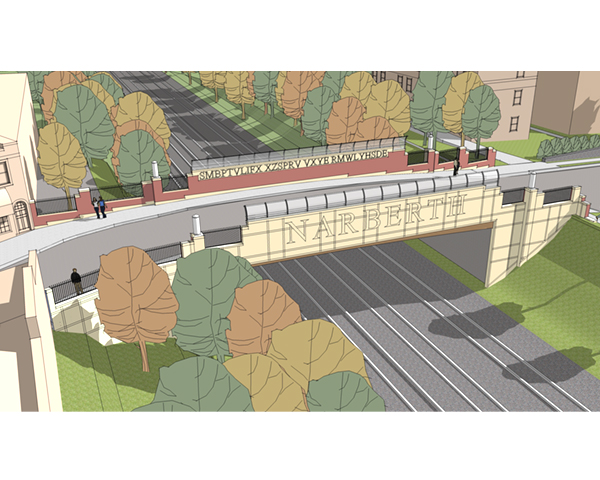
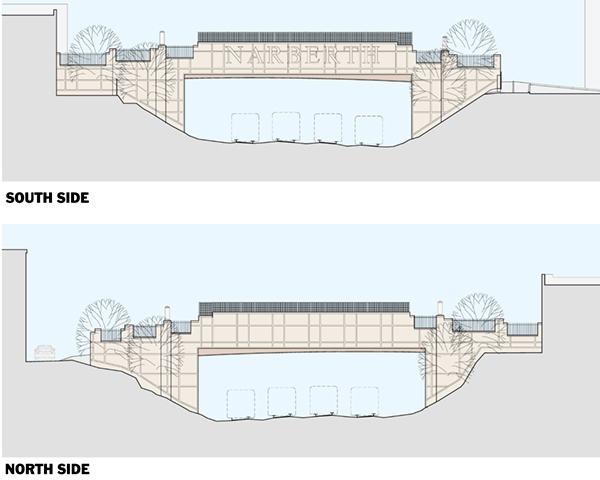
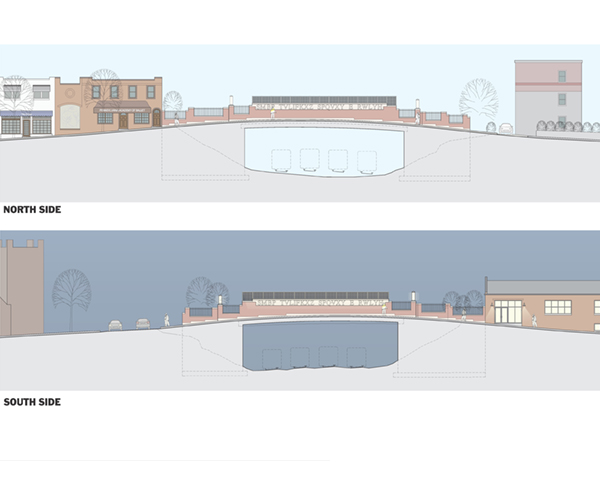
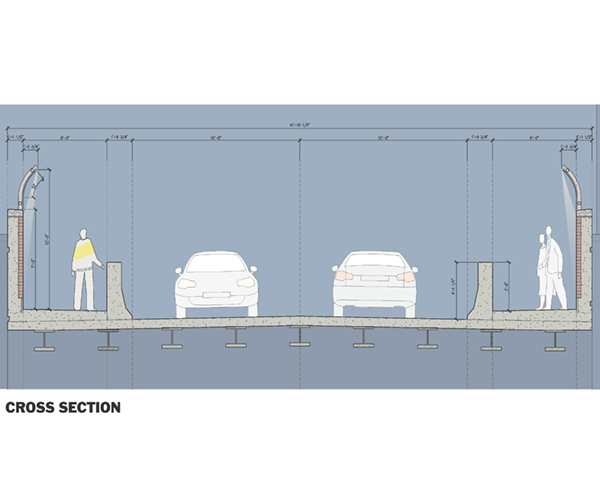
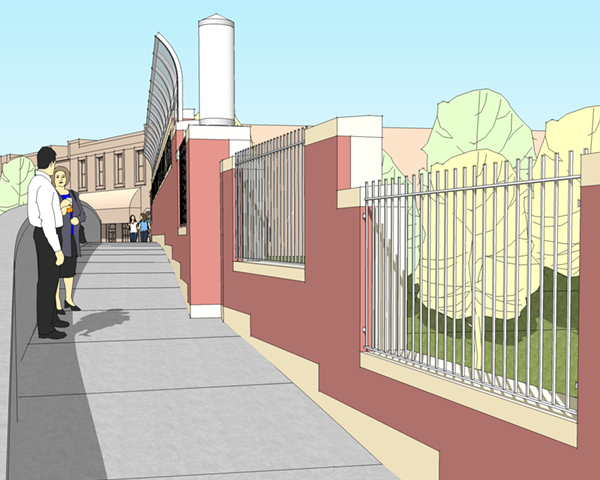
VSBA is working with engineers Pennoni Associates on designs for replacing the Narberth Avenue Bridge in Narberth, PA, a borough just outside Philadelphia. The bridge crosses the Main Line commuter and Amtrak rails, connecting the lively downtown to a residential neighborhood.
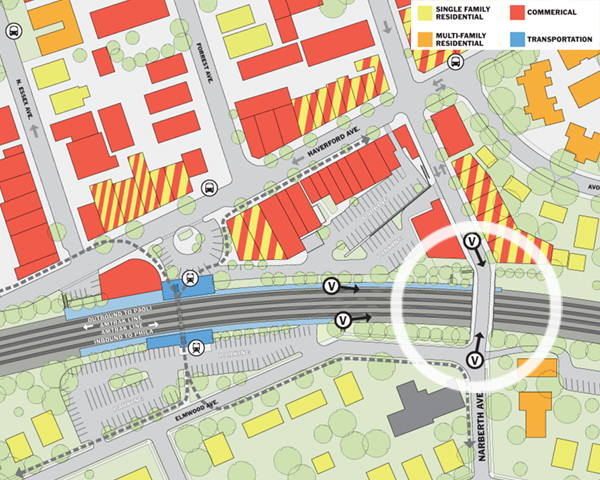
We began by mapping areas around the bridge to understand its relationship to uses and activity patterns within the community. We envisioned the bridge both as a connector between the downtown and residential neighborhood and as a gateway between them — as well as an opportunity to enhance the borough’s identity.
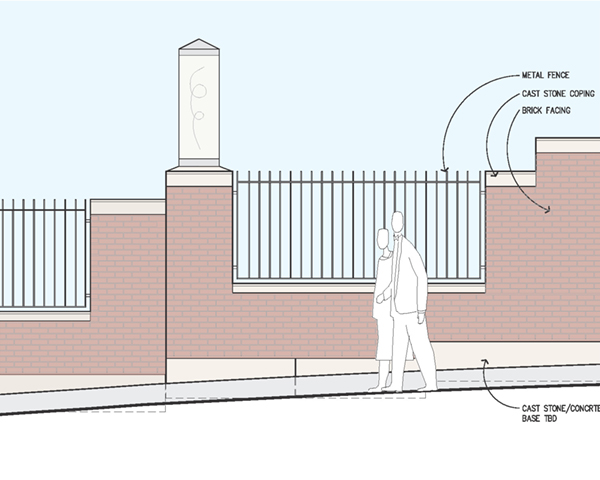
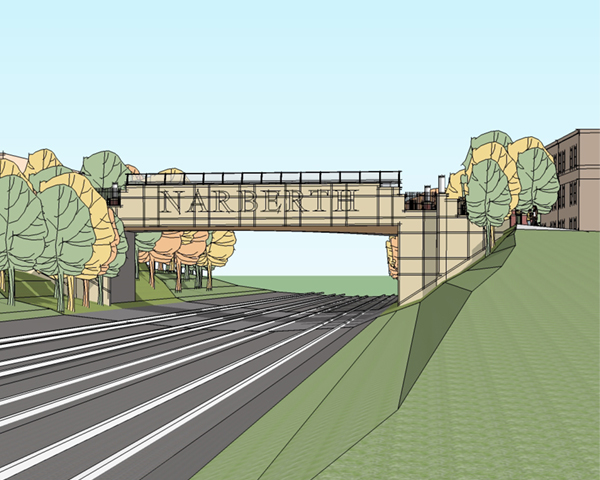
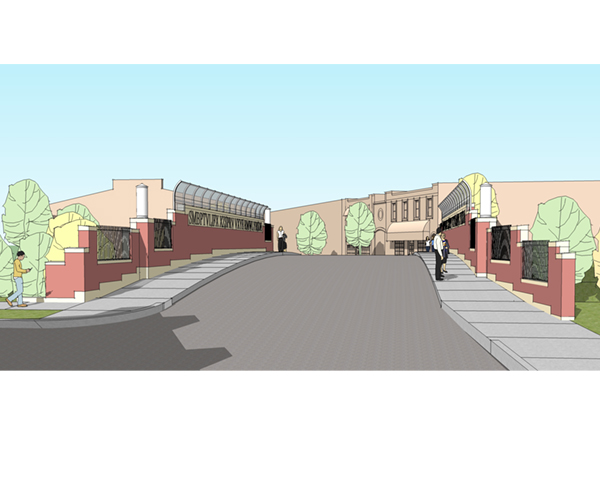
From the pedestrian perspective, our design is conceived as masonry wall segments, with openings for views, that provide a sense of continuity with facades of buildings leading up to the span. The walls and openings step and angle in response to the different slopes and sidewalk conditions at each approach to the bridge. The central span is defined by piers surmounted by lights at each quadrant. The necessarily solid central portion of the span features a frieze-like inscription that links the two sides of the bridge. From the outside, the bridge and abutments are concrete with a pattern of reveals providing scale and texture appropriate for distant views — the large “NARBERTH” scaled to be seen from the train station platform.
April 19th, 2017

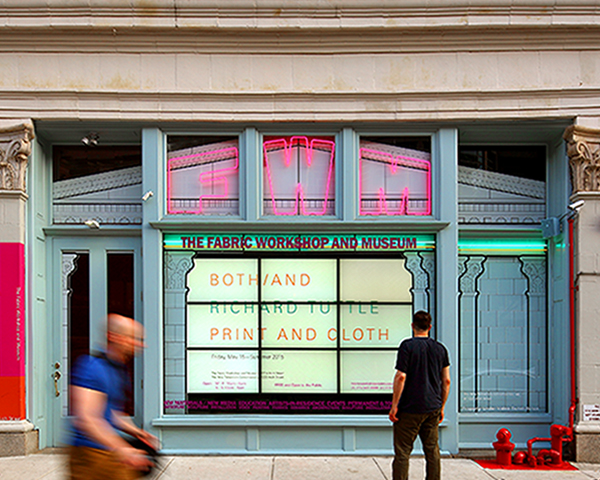
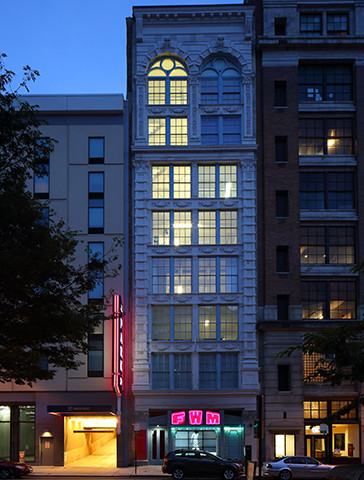
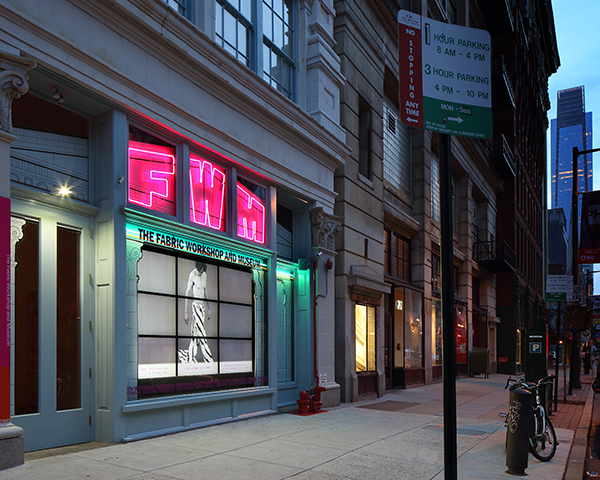
Since the 1970s, the Fabric Workshop and Museum (FWM) has been a world-renowned gallery and studio for artists working in all media.
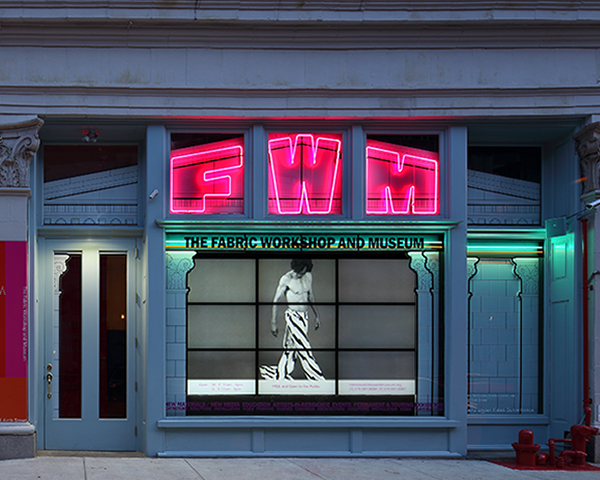
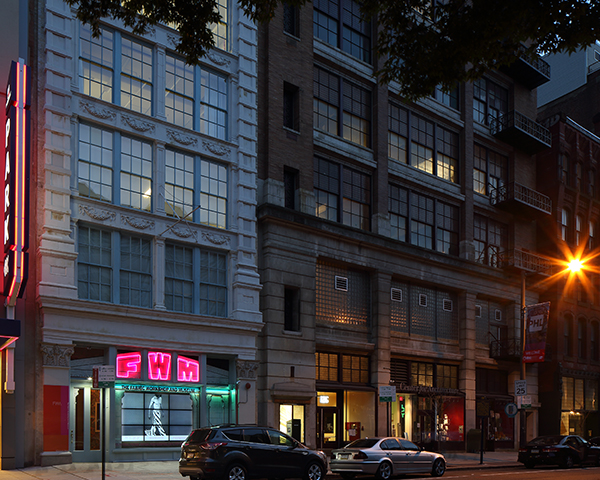
After relocating to an historic building adjacent to the Philadelphia Convention Center and the Reading Terminal Market, FWM retained us to create a permanent storefront display. But for an arts institution offering ever-changing exhibitions, as well as public events and a museum shop, how could any “permanent” display adequately serve? Moreover, the FWM also operates several other storefronts along the same block; the institution wanted a display that somehow helped to identify and unite them all.
VSBA’s solution was to create a multimedia installation incorporating state-of-the-art display technology, static signage, colorful lighting, and more. To enable the most flexibility for changing content, we filled the main museum building’s windows with an array of high-definition digital displays capable of showing video, text, still images, and ornamentation on an huge scale. The display’s web-based programming interface allows FWM artist-collaborators around the world to design the window.
As a static counterpoint, we framed the displays with Sintra panels depicting Classical Greek columns and pediment — riffing on the historic building’s Corinthian elements. (A portion of the signage even playfully extends into the main entrance’s doorway — so visitors symbolically pull apart and step through the Classical façade.)
We also incorporated two bright stripes of neon across the top of the window, with bright pink vinyl lettering at top and bottom identifying the institution. To unite the other storefronts, the Greek order and neon were extended from window to window, while leaving ample space for changing art and merchandise displays.
VSBA has created the new public face of the Fabric Workshop — at once contextual and contemporary — bold, nuanced, and playful. The new storefront has brought an important new focus and excitement to the Museum.