St. Mary’s Episcopal Church, New Entry Pavilion and Improvements
September 16th, 2024

St. Mary’s is a noted historical church whose origins relate to “plans for a cathedral for the Episcopal Diocese of Pennsylvania that would rival those of Europe.” The church is located along a busy residential and commercial corridor in the city’s northwest Roxborough neighborhood. In 1979, the Cathedral Village retirement community was established on the site, with one wing attached to the church.
For years St. Mary’s suffered issues related to entry and accessibility. At the main entrance, they lacked any enclosure or transition space, and deteriorations along the paved terrace presented safety and aesthetic challenges. Given that many of their congregants and Cathedral Village residents experience mobility issues, the lack of accessibility presented a major impediment.
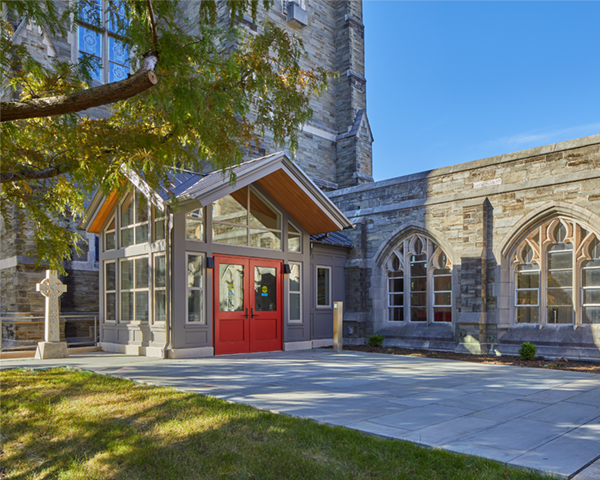
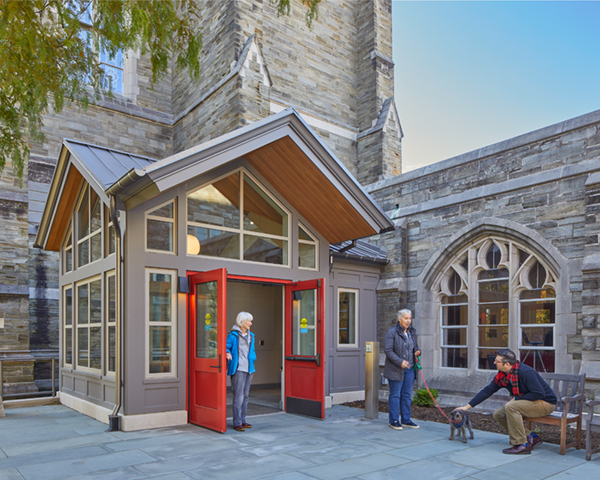
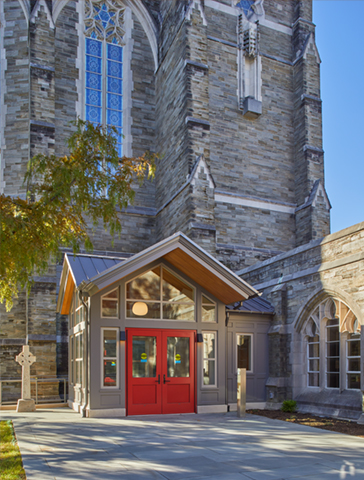
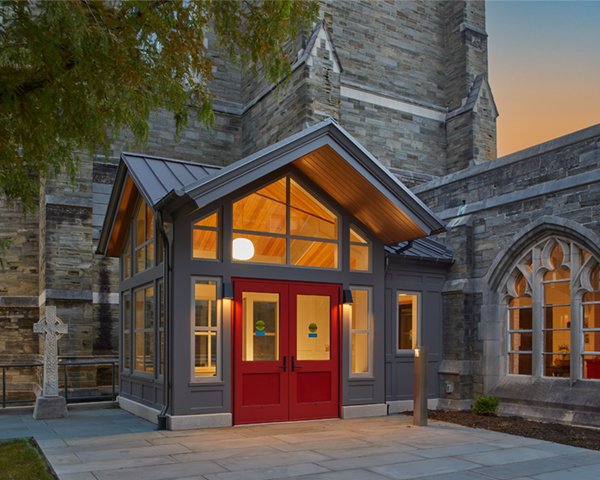
VSBA’s entry pavilion creates a new face for the church. Context was paramount. The new pavilion acknowledges the church’s masonry materials, colors, and scale while expressing itself as an independent modern addition. The effect is a distinct new iteration that handsomely complements the church. It fits in while standing out, relates but doesn’t imitate. Its red doors take cues from another entry and reference traditional colors. The entry creates a powerful new physical and visual link from parking through the landscape into the church.
Beside the pavilion, a renewed bluestone terrace is a flexible place for small gatherings or even services. It extends into the landscape, with a dotted path leading down to gardens and cemetery. A large stone cross relocated to this site commemorates Bishop Thomas James Garland, buried at the church. On the lawn, a large dawn redwood tree overhangs the pavilion; we went to lengths to base the design around the tree, ensuring its health throughout construction.
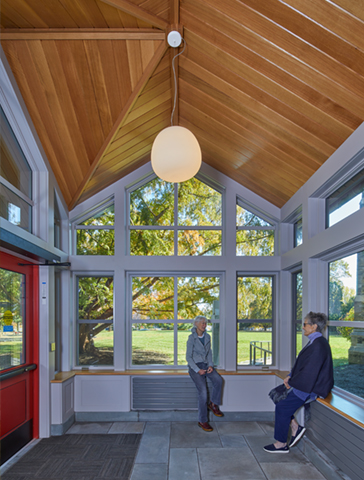
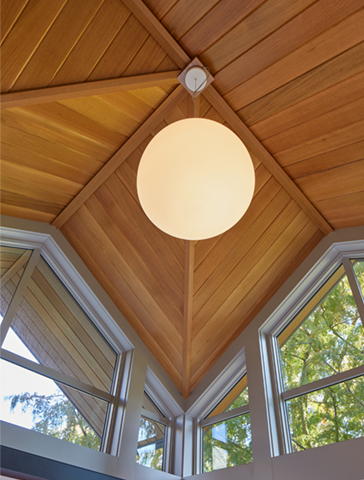
Inside, the pavilion offers lightness and transparency. The space is large enough for people to meet and linger; comfy window seats provide places to sit and talk. The natural, transparent finish oak ceiling and benches bring warmth, color, and material texture to the space. The ceiling’s gathering of angles draws the eye upwards and serves as a backdrop to the soft glow of the central hanging lamp. (All of the transparent finish oak used in the pavilion was rift-sawn, for strength and appearance.) The more recessive painted oak trim and paneling harmonizes with the existing masonry and frames views of the lush lawn. The stone flooring links the outside bluestone pavers with slate inside the hallway.
As for all our projects, we considered sustainable materials and approaches. We selected durable, long-lasting materials. Operable windows provide natural ventilation and the vestibule fundamentally cuts down energy usage while increasing comfort.
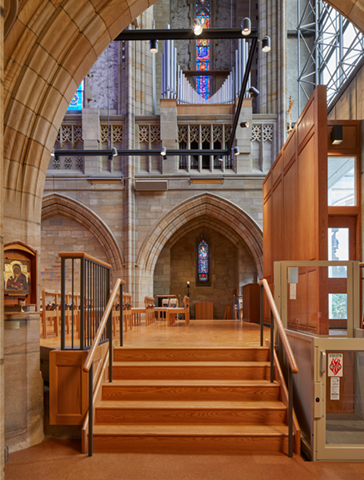
Inside the sanctuary we promoted universal accessibility. We incorporated a new accessibility lift and used natural finish oak to craft a new stair from the hallway. As in the entry pavilion, natural wood harmonizes with the existing architecture and promotes a feeling of warmth while distinguishing the sanctuary from the corridor. We also modified building and life safety systems and gently integrated all new elements within the historical nave and sanctuary spaces.
June 5th, 2017

Bivalve is an historic fishing village on the bank of the Maurice River in southern New Jersey. The Bayshore Center at Bivalve combines active shipping docks with interpretive, educational, and environmental activities.
For two hundred years, area residents told stories of a Revolutionary War skirmish on the Maurice — which may or may not have occurred. In conjunction with an archaeological examination of the site, and collaborating closely with the Cumberland County Cultural and Heritage Commission, VSBA designed one-of-a-kind signage to envision, interpret, and commemorate this event.
We conceived the “oculus” as a transparent disk illustrating a vision of the 18th century battle. The drawing, by artist Bill Ternay, depicts rebel militia and Loyalist forces clashing in opposing boats. We installed the disk on a pier overlooking the river, precisely positioned so its illustration aligns with the water and opposite shore — showing the skirmish just how and where it could have occurred. Rather than an opaque board, the oculus layers interpretive content over its subject — viewers don’t look at but through the signage — to create a deeper engagement.
Formally, the oculus is a simple but carefully detailed structure. The transparent disk inscribed with interpretive information is protected by a second disk, encased in a metal rim, and mounted on a pole affixed to the wooden dock. We designed the interpretive text to be clearly legible at different times of day and with varying degrees of light. The oculus’s form connotes a magnifying glass, a lens, a lookout, prompting viewers to question, debate, and seek out more information.
We created the oculus as a prototype of transparent information systems that might be applied to other contexts — to stimulate a more engaging approach to interpretation. Our goal was to celebrate ambiguity and the subjectivity of interpretation along with historical scholarship and the spirit of the place.
In illustrating one possible echo of history, we wanted to provoke observers with more questions than answers. Here’s one view, the sign suggests, but what really happened?
April 19th, 2017

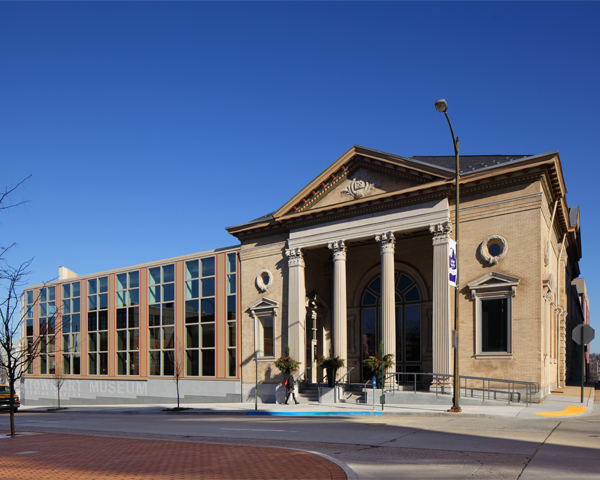
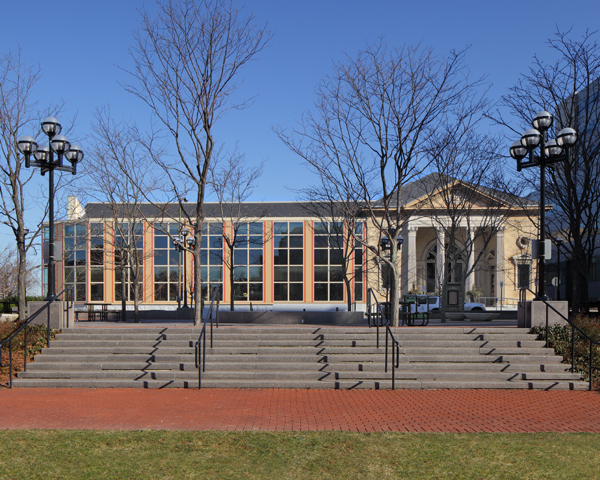
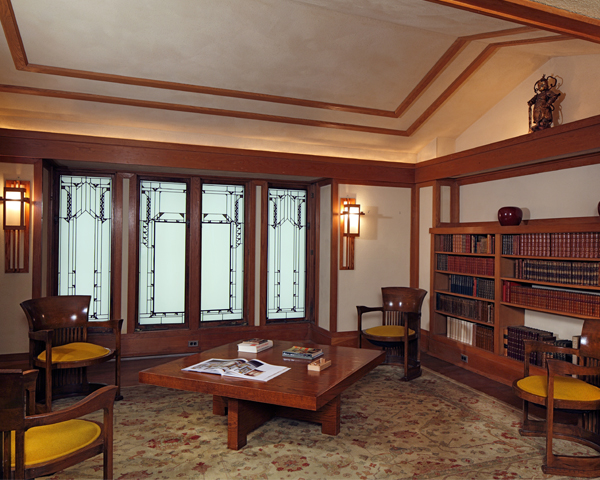
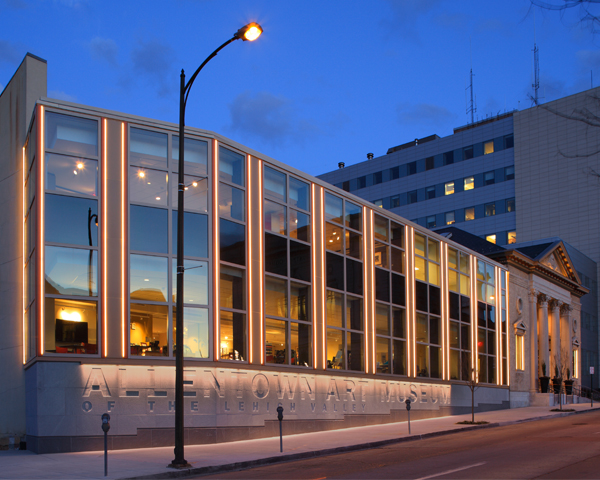
The Allentown Art Museum is housed in a former Presbyterian church on a busy downtown block, adjacent to the recently completed Allentown Arts Park. Built in 1901, the building was significantly expanded in 1937 and 1975. The museum needed extensive renovation and new space for galleries, visitor amenities, education, and collection storage. Of particular importance was strengthening the museum’s civic identity and engagement with the community.
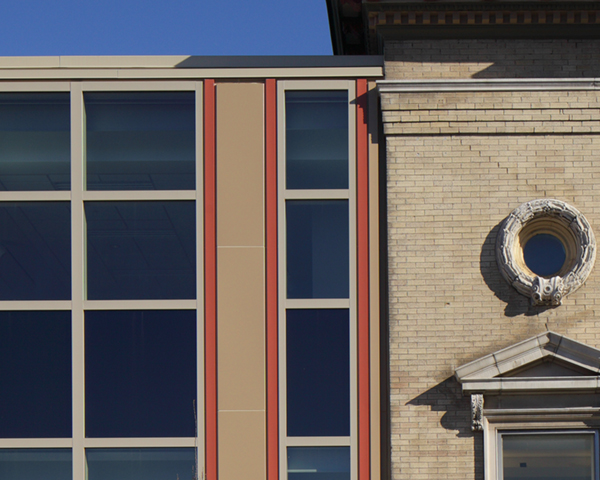
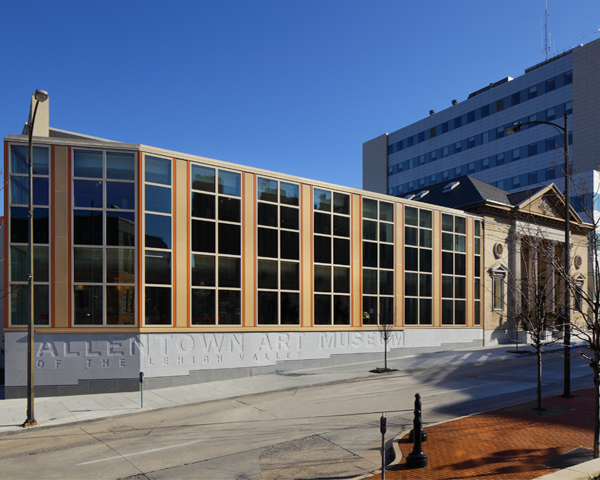
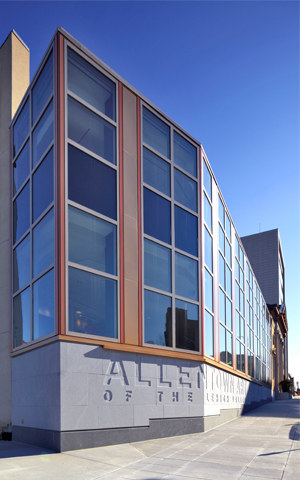
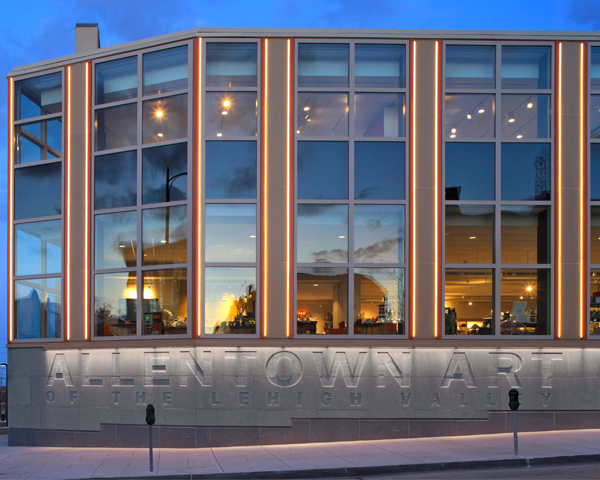
VSBA’s 3-story addition, constructed on a narrow site in front of the 1975 wing, presents a new metal and glass façade that connects and contrasts with the original building. It echoes the palette, civic scale, and rhythm of its columns while providing broad views to and from the Arts Park. Vertical accents enliven the façade, picking up the color of the brick used in the Baum School of Art and Arts Park across the street. At night, festive LEDs highlight the metal columns. The addition enhances the museum’s civic presence while returning prominence to the original neoclassical façade.
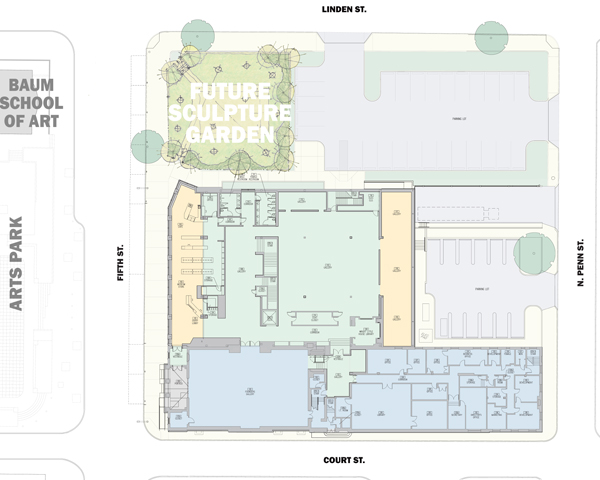
The addition’s canted end inflects towards the Baum School of Art and welcomes visitors approaching from the corner. It overlooks the site of a future sculpture garden and guides visitors arriving from the parking area behind the garden. Large carved letters announce the institution and give interest to the granite base.
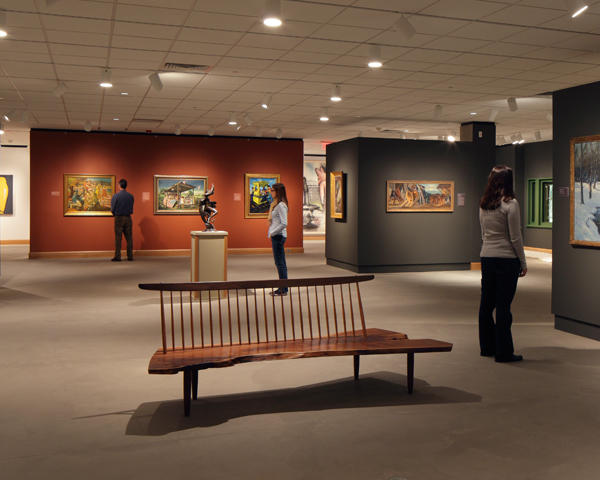
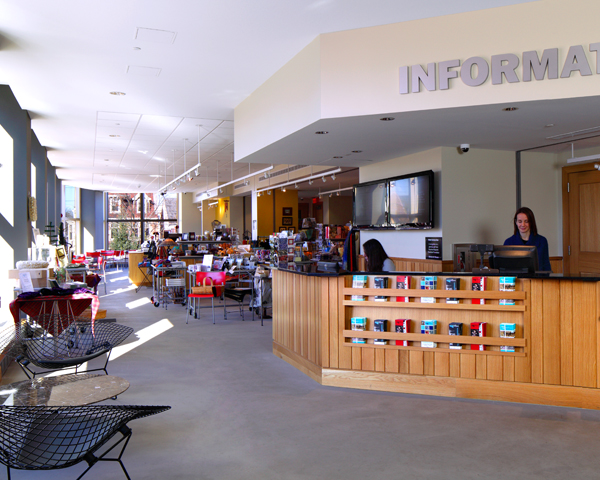
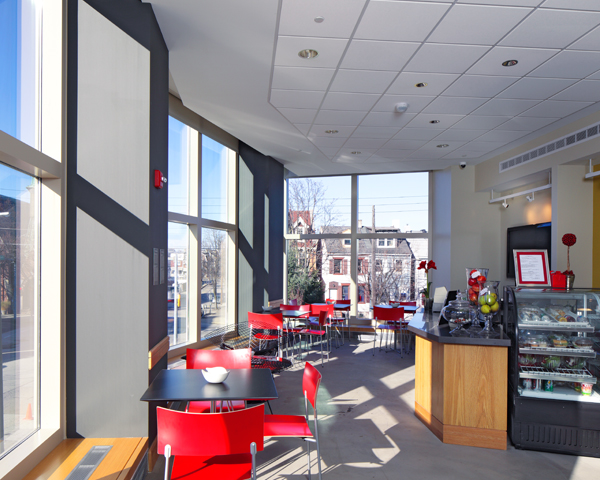
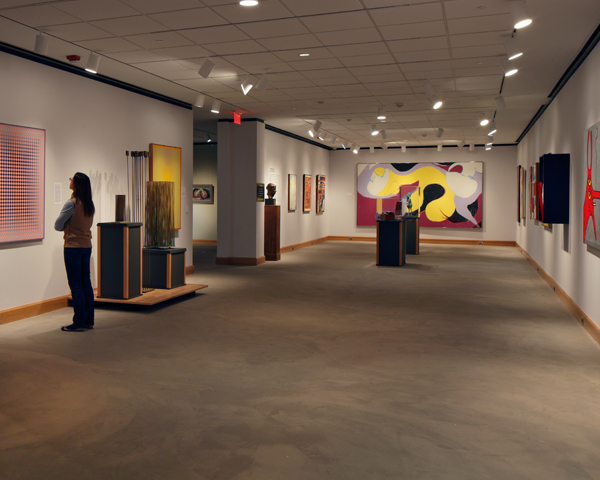
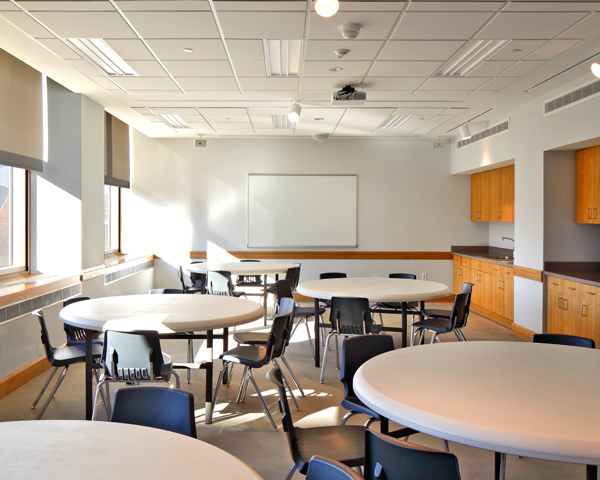
The new main entrance through the portico leads to the lobby, museum shop, and café. Above is a new sculpture gallery and classroom; below is collection storage. A 1-story addition to the rear, infilling an existing terrace, contains additional galleries above an expanded loading dock. The existing 1975 galleries were completely renovated with new finishes, lighting and environmental systems. Throughout the 1975 building, circulation was clarified and made accessible.
All improvements were achieved for an average cost of $228 per square foot.
April 19th, 2017

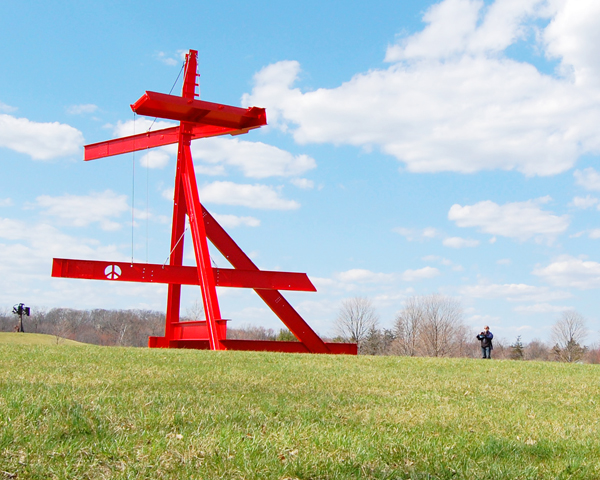
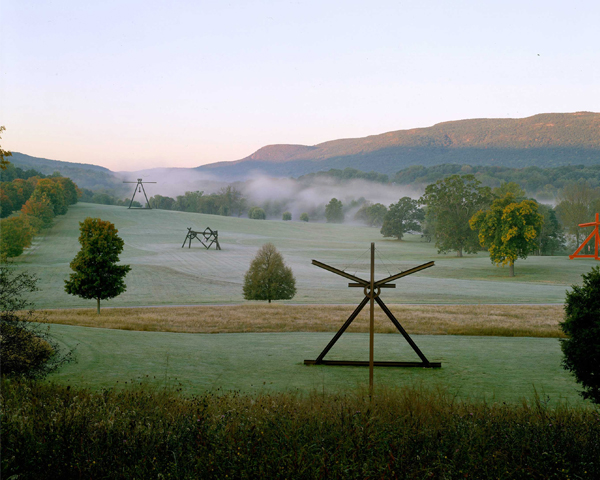
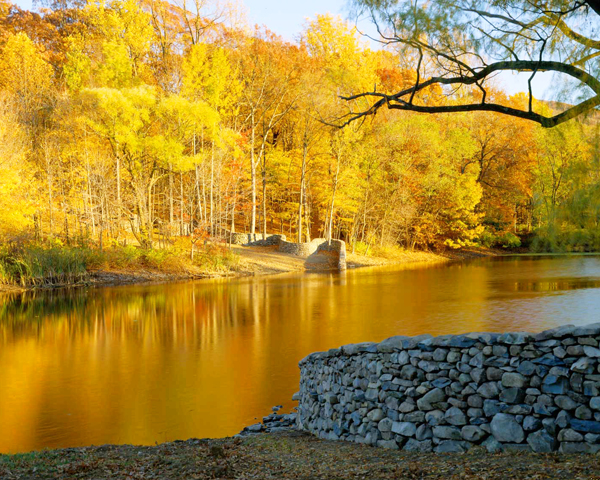
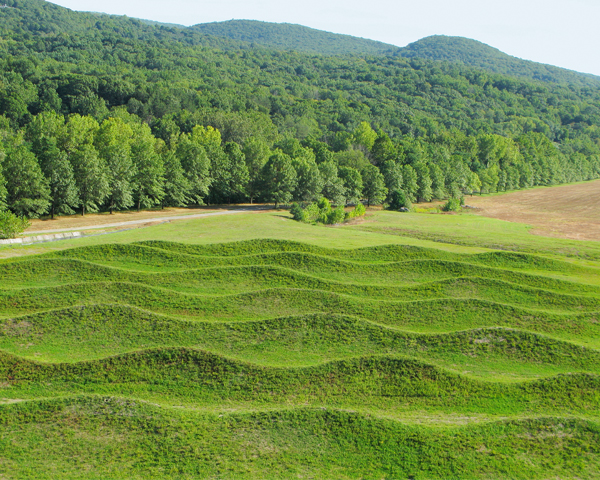
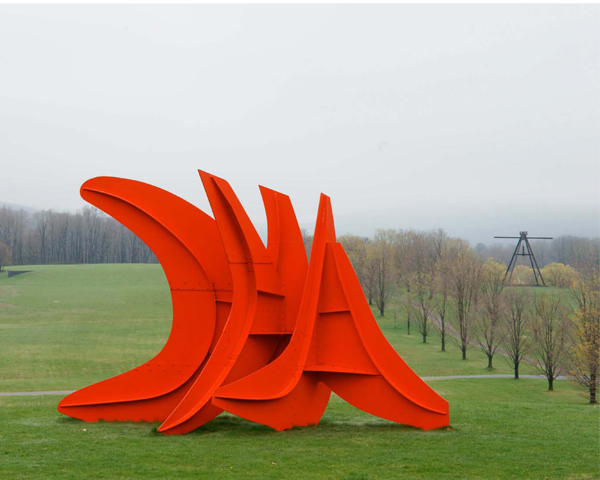
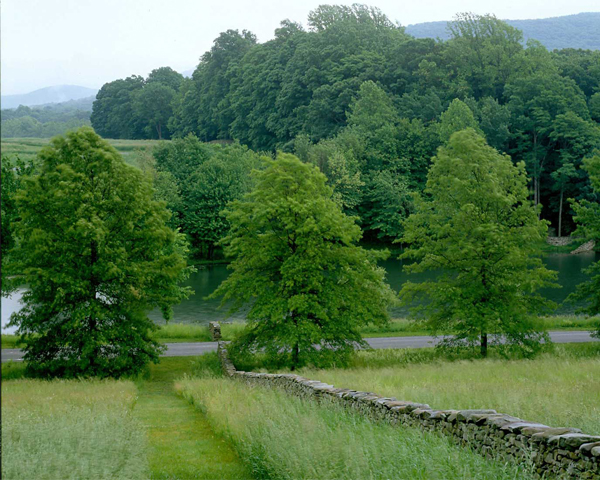
Storm King Art Center is a unique outdoor museum — an expansive series of lawns, trails, fields, groves, and woodlands framed by the Hudson Highlands and set with monumental modern sculptures by notable artists. Each artwork’s context is defined by both immediate and distant landscapes; the ever-changing visitor experience encompasses the seasons and weather, as well as the growing collection. The Center is a public, non-profit, and educational institution.
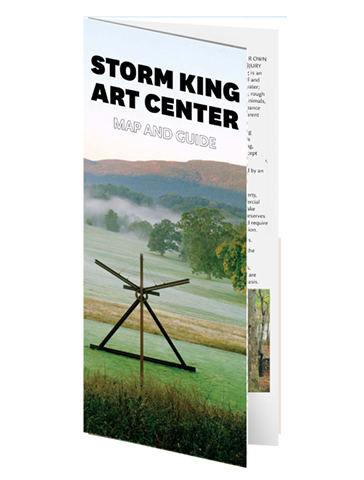
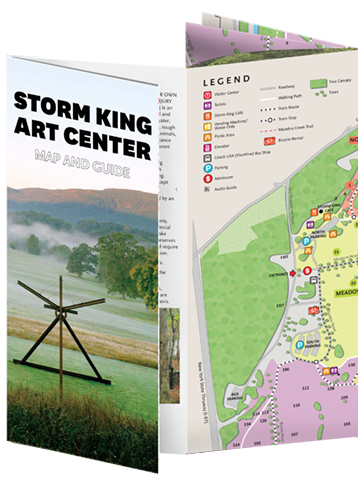
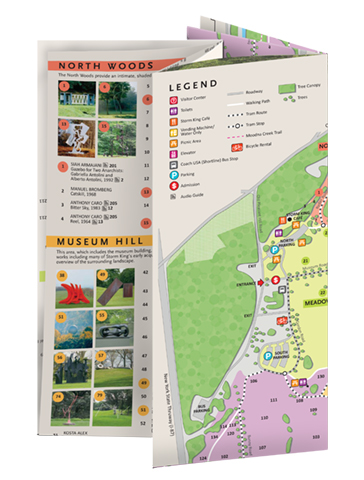
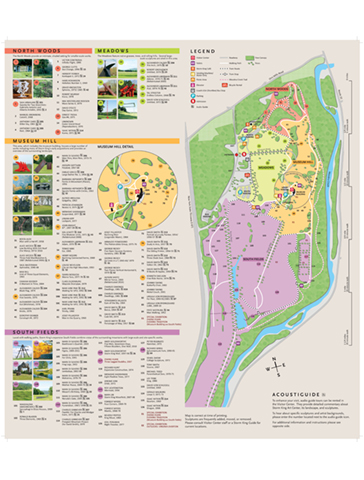
In addition to our conceptual planning for the institution, we were asked to design a new visitor map and brochure as a guide to the grounds’ sculptures, facilities, and natural features. The map reflects conceptual reorganization of Storm King’s precincts, in accord with our planning.
Along with a map of the grounds, our brochure collects in one place different bits of information important to visitors, as well as news about special exhibitions and events at Storm King. The map’s printed on recycled-content paper that’s’ resistant to rain, helping it to be long-lasting and sustainable.
April 19th, 2017

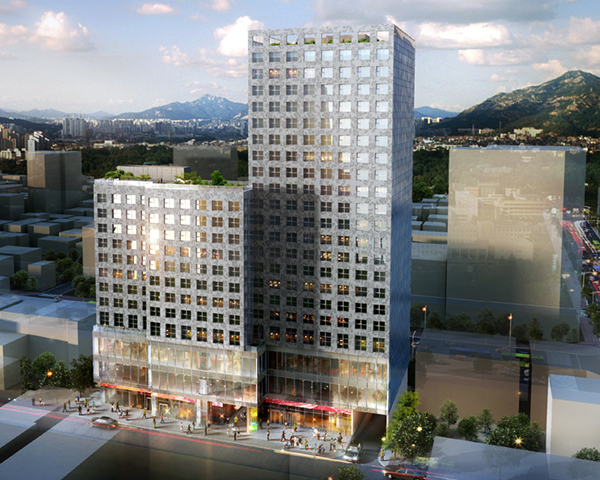
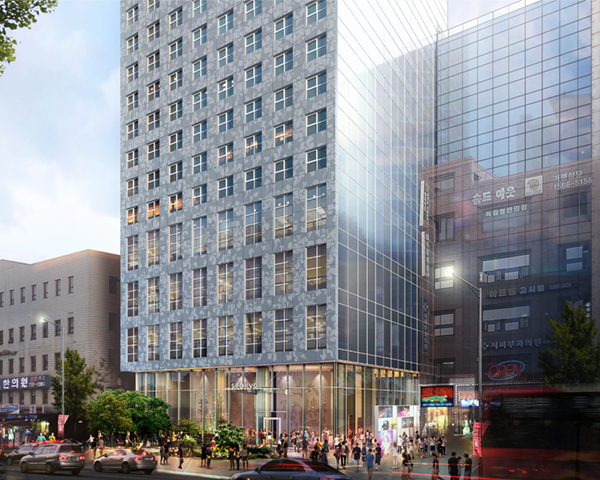
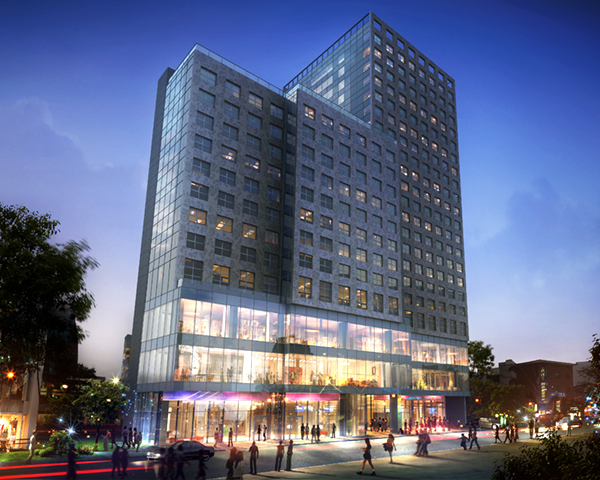
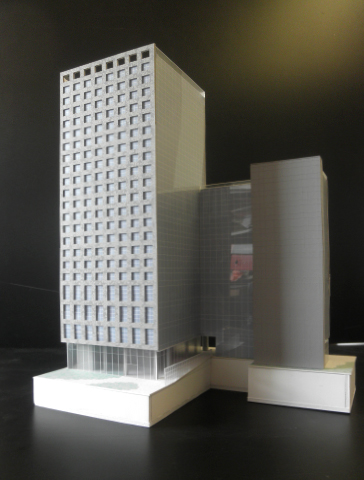
VSBA was retained to design a new hotel at the edge of a bustling entertainment and commercial neighborhood in Seoul, Korea. The mixed-use project places the hotel lobby and amenities above two levels of retail space and below-grade parking.
We worked with a local associated architect and client representatives to devise several options, from which two main schemes were selected for greater development. In both, our overarching goals include:
April 19th, 2017

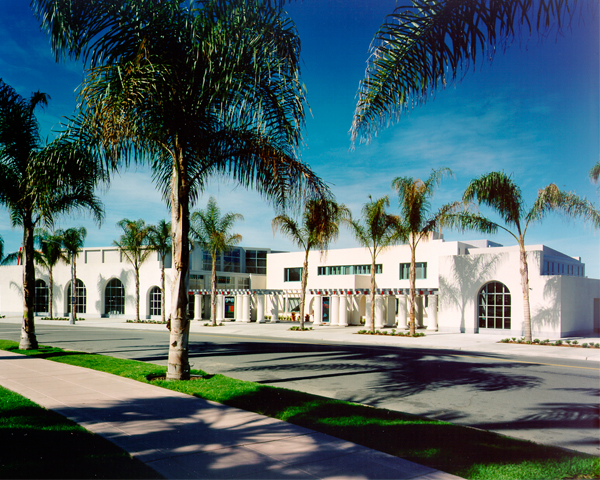
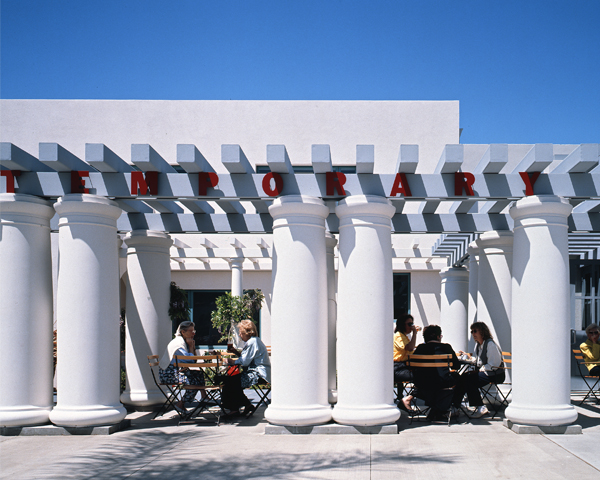
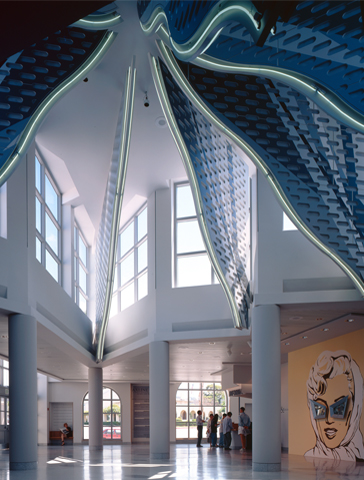
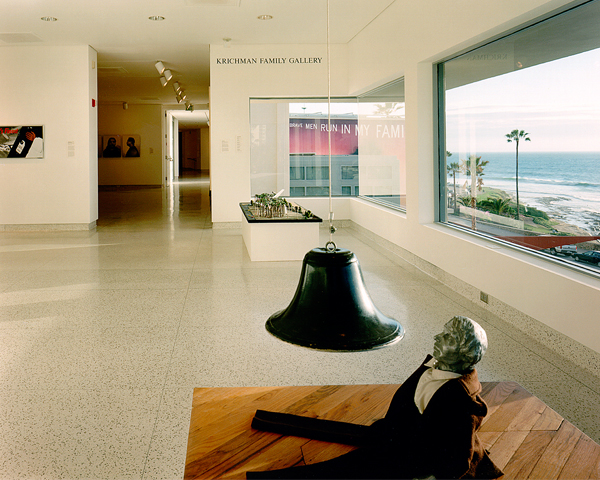
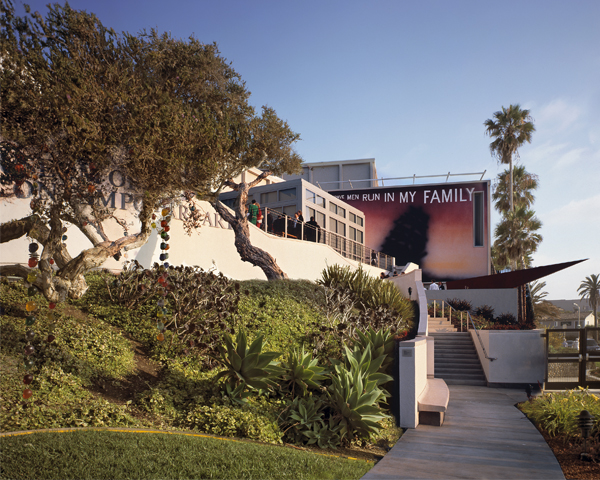
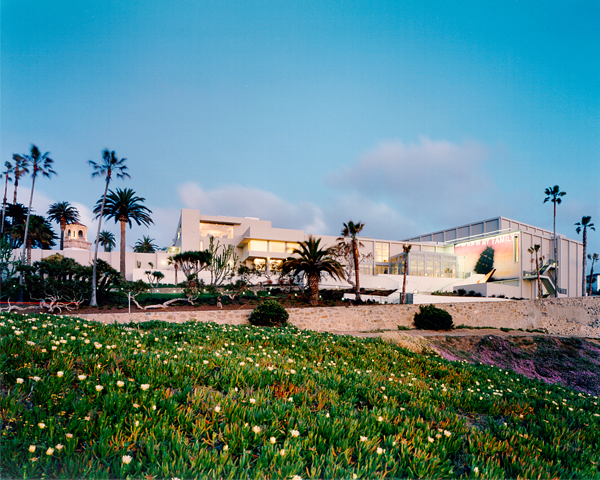
VSBA, in association with David Singer, renovated and expanded the Museum of Contemporary Art, San Diego. Since 1941, this distinguished Museum has occupied the Scripps House, Irving Gill’s extremely significant 1915 villa. The building had been enveloped by subsequent additions. VSBA created a new facade in order to enrich the Museum’s image and civic presence, while exposing and restoring the original façade. The vine-covered pergolas of the original garden were reconstructed to form a new entrance court.
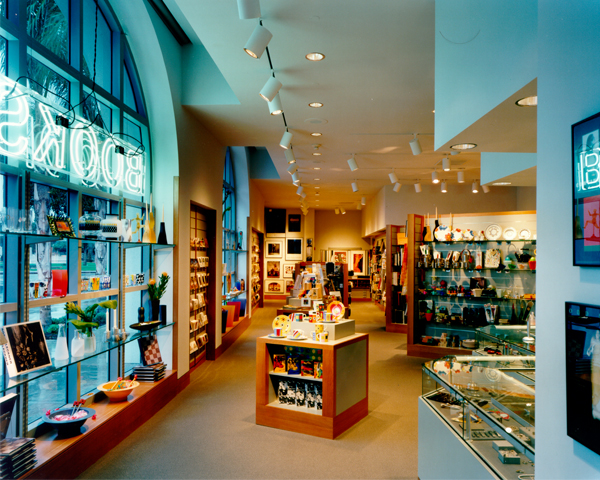
The new facades extend beyond the house; their arched windows are reminiscent of other Irving Gill buildings — especially those of the Women’s Club building across the street — and gently enhance the scale of the Museum and the urban unity of the building’s immediate context. Inside, a new central lobby surmounted by a star-shaped clerestory serves as a kind of courtyard, providing access to a bookstore, the auditorium, and galleries. It’s also used as a banquet hall for special gala events. We redesigned and expanded the existing Coast Room to be used for meetings, events, and educational activities. Our renovations also created a larger library and reading / conference room. The garden was enhanced with additional wheelchair-accessible paths and ramps while significant plants and vistas were preserved. In addition, Sherwood Auditorium was given a new entrance, refurbished seats and finishes, critically needed repairs, and new lighting and other systems.
The project was completed on budget. In fact, as construction contingencies were reduced, additional scope was added to the project. In addition, change orders for a “wish list” were executed as additional funds were raised.
Photos courtesy of Timothy Hursley
April 19th, 2017

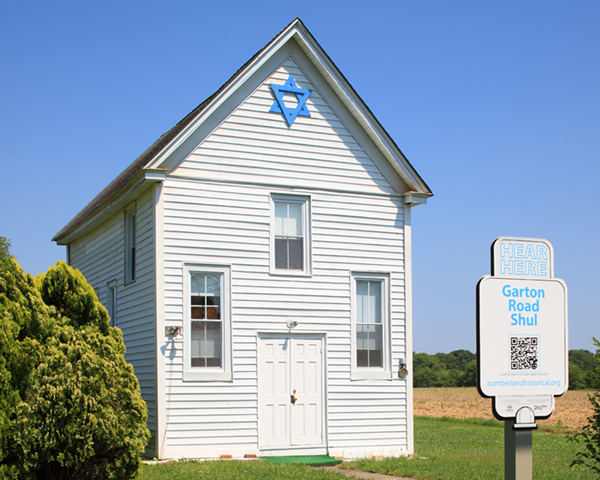
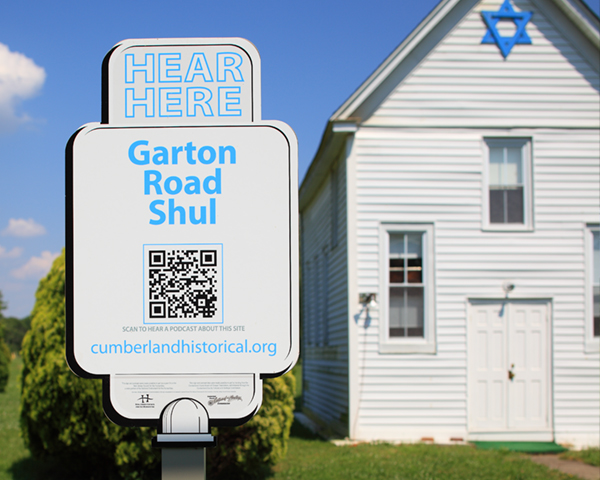
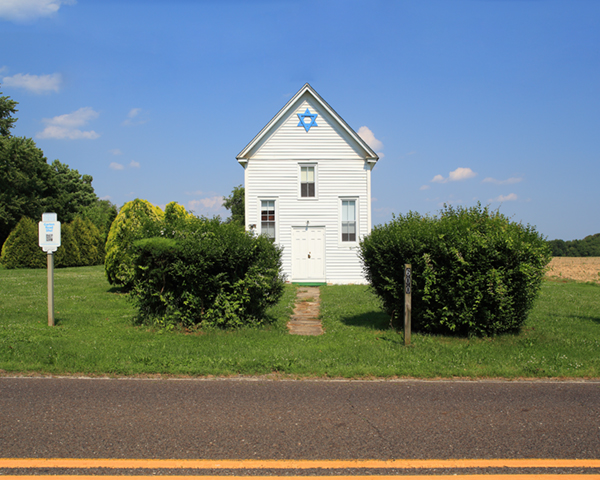
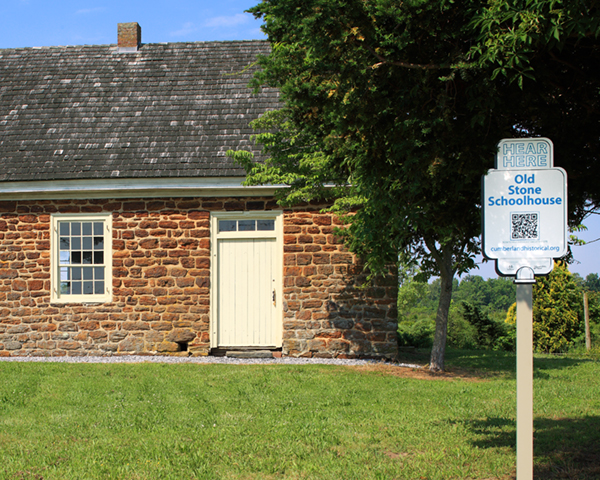
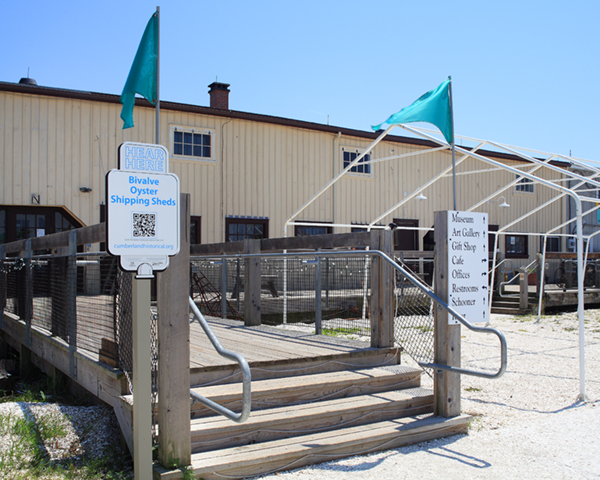
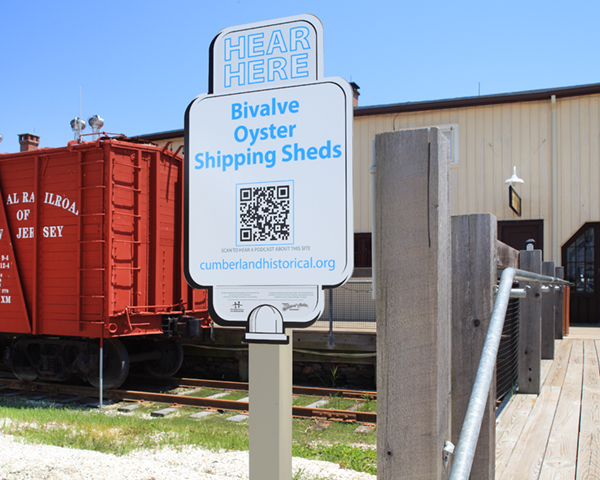
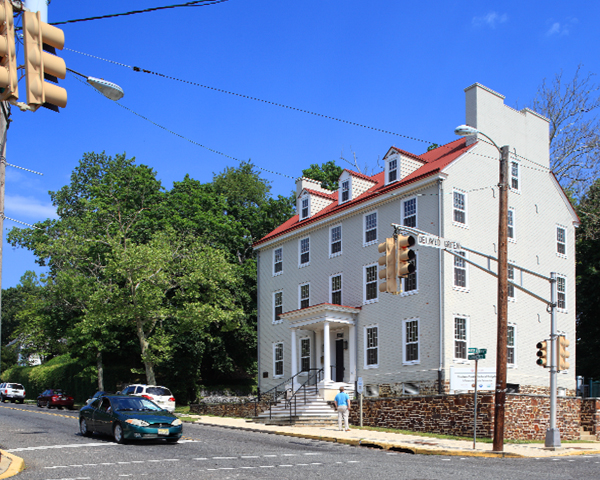
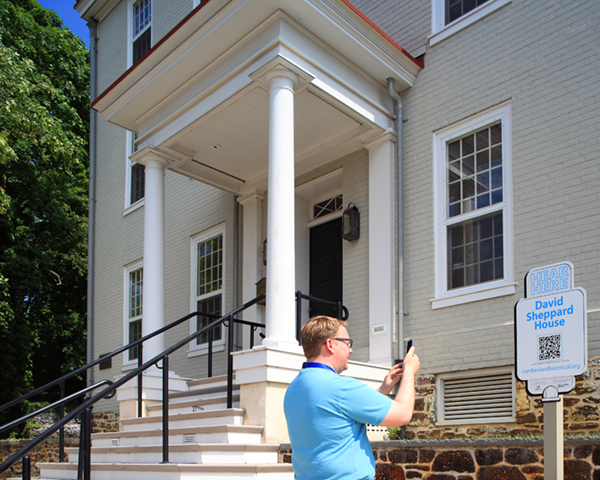
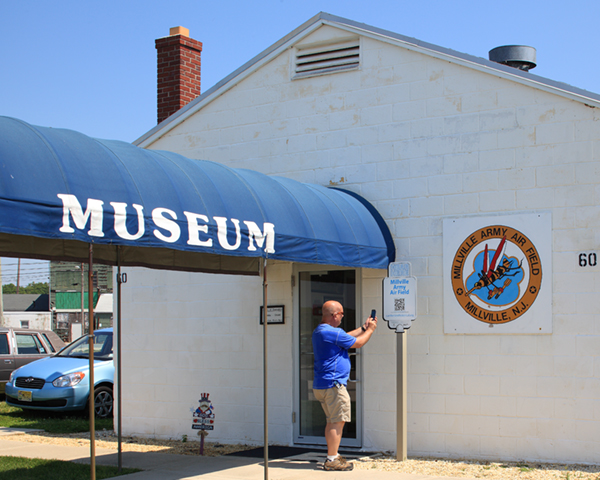
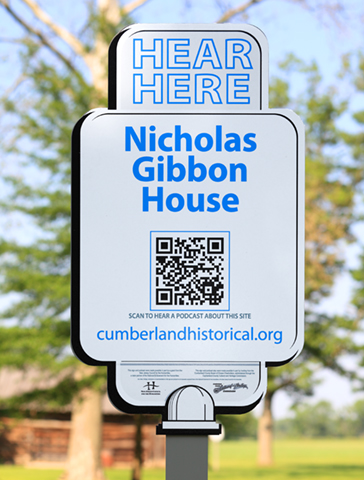
The Cumberland County Cultural and Heritage Commission asked VSBA to conceive a signage system for numerous historical sites and structures, including the 17th century Swedish Granary, the East Point Lighthouse, and the Millville Army Air Field and Museum, as well as houses, churches, and banks. The Commission produced a series of five-minute interpretive podcasts on the history and significance of each site — which aren’t typically open to the public, or open with limited hours.
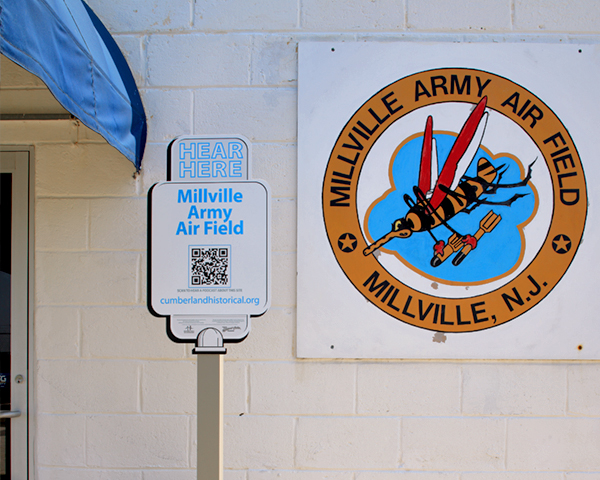
To promote the Commission’s program, VSBA was asked to conceive an engaging new signage system. We devised signs that identify each site and feature prominent QR codes — which, when scanned by a mobile device, links to the related podcast. The large-scale QR code and place name can be seen by motorists while smaller text addresses pedestrians reading and scanning the sign. (We carefully tested full-scale mock-ups to ensure that the codes would be scannable at appropriate heights and distances.) And since the podcasts can be updated independently, interpretive content can evolve while the signs remain current.
The Time Traveler signs are designed to fit multiple contexts, from urban to rural. While distinctive and prominent, the signs are also deferential to the beautiful sites they interpret. To reinforce their neutral character, we used as few colors as possible, basic white and light grey backgrounds, and a simple sans serif font. But we also incorporated discreet trompe l’oeil elements to lend depth and playfulness to the thin signs.
Our signs are built to last and change. They’re constructed of vinyl laminate mounted to aluminum plate. This method allows content to change without having to replace the sign: it’s relatively easy to apply a new laminate, so the sign can adapt with new needs and technologies (as QR codes are superseded, for example) — or totally change appearance.
The West Jersey Time Traveler signs offer an excitingly different approach to interpretation — allowing visitors to virtually enter historic buildings even when they’re closed. The American Association for State and Local History recognized our pioneering approach to interpretation with a Leadership in History Award of Merit.
April 19th, 2017

Storm King Art Center is a unique outdoor museum — an expansive series of lawns, trails, fields, groves, and woodlands framed by the Hudson Highlands and set with monumental modern sculptures by notable artists. Each artwork’s context is defined by both immediate and distant landscapes; the ever-changing visitor experience encompasses the seasons and weather, as well as the growing collection. The Center is a public, non-profit, and educational institution.
In the late 2000s, VSBA was retained to help develop a comprehensive picture of the institution’s facilities and plans for future growth. We studied the interrelation of art, landscape, architecture, circulation, education, outreach, parking, and other systems as they relate to the visitor experience. Linkages were fundamental concerns. Our planning mapped existing and problem connections between activities and uses both on the site and with the broader neighborhood. Our study also encompassed important issues of environmental stewardship and operational and finance concerns.
In 2013 we were then asked to begin a second phase of planning. Since the initial study, Storm King has increased its acreage of native grasses, acquired new properties, added a new cafe, rerouted its tram service, and expanded its bike rental program. Our goals are to continue improving visitor experience, promoting identity, creating flexible areas for programs and activities, providing good working environments, and fostering the right conditions for its unique art.
In addition to our planning, we’ve designed a new visitor map and brochure as a guide to the grounds’ sculptures, facilities, and natural features. The map reflects conceptual reorganization of Storm King’s precincts, in accord with our planning.
April 19th, 2017

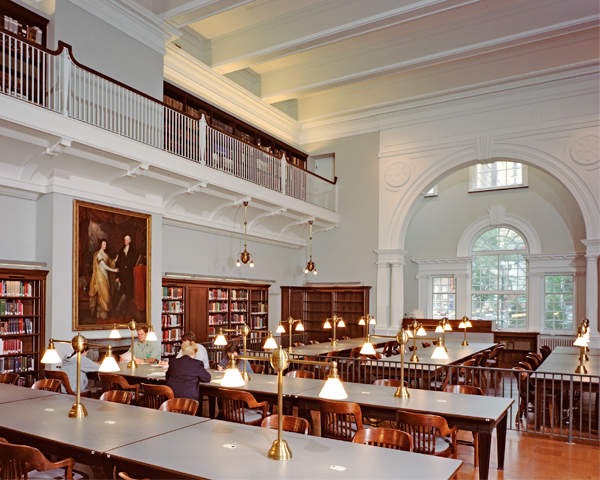
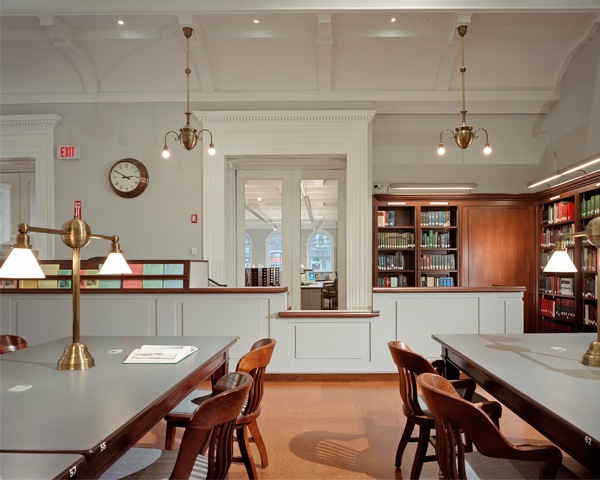
VSBA prepared a phased plan for extensive renovations to assist this venerable Philadelphia institution in achieving its goal: “To be the most important place for studying four centuries of Pennsylvania and family history with the best special collections library in its field.” Earlier additions and renovations resulted in inefficient and inappropriate use of spaces, labyrinthine circulation patterns, unclear separation of back-of-house (staff) and front-of-house (public) spaces, inadequate environmental controls, and historically compromised interior spaces.
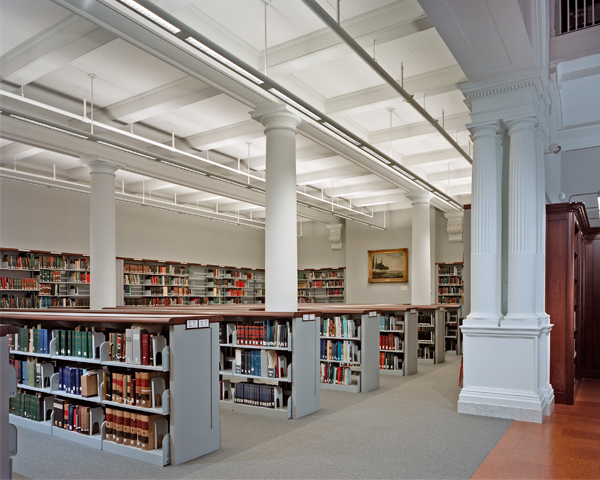
We moved public functions — reader services, the reading room, browsing stacks, and microform study — from the second floor to renovated and restored spaces on the ground floor. The original balconied assembly room, largely demolished when interfloored in the 1970s, was restored as a reading room. Collection storage capacity has been significantly increased by fully utilizing available space and adding compact shelving. Patrons can now use OPAC terminals for catalogue searches and computer data terminals are available at every seat in the reading room.
Renovated public spaces and collection storage areas are served by a new chilled water plant and humidity control system designed to maintain environmental conditions within strict ranges needed for collection conservation. UV shielded lighting and fire suppression equipment were added to renovated areas, and the security system was upgraded throughout.
Future work includes improvements to collection storage, work areas, and other spaces made available by the relocation of public functions to the ground floor, plus extension of the new environmental control systems to those spaces.
April 19th, 2017

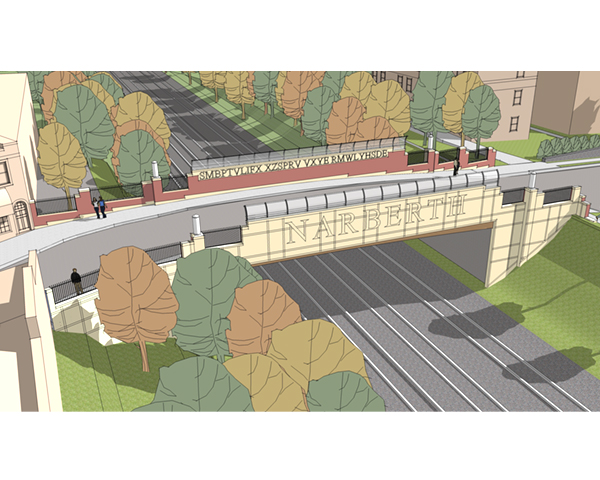
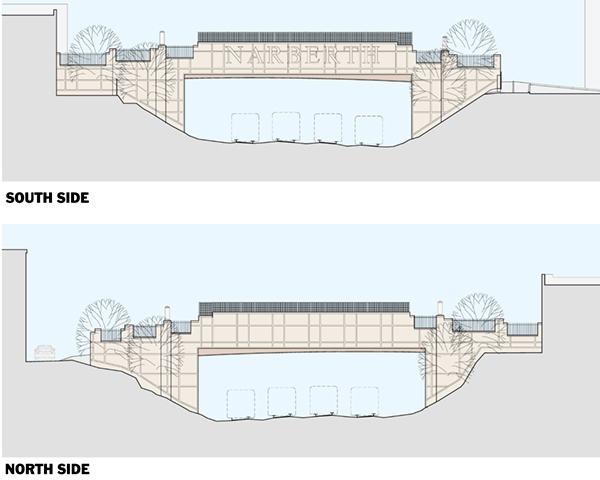
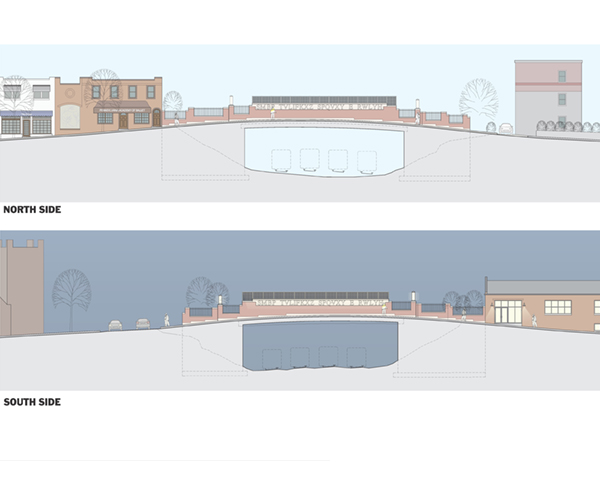
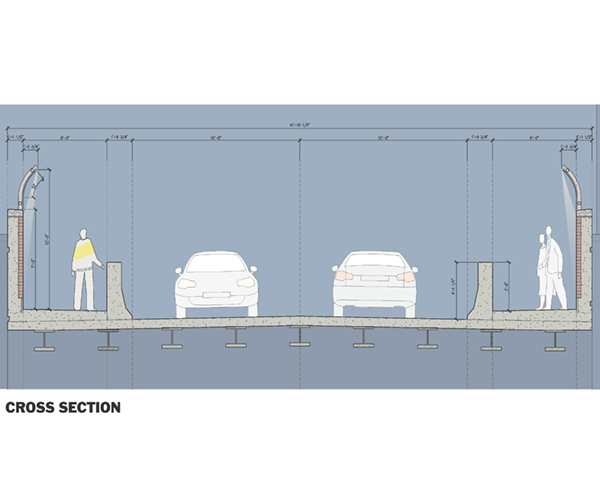
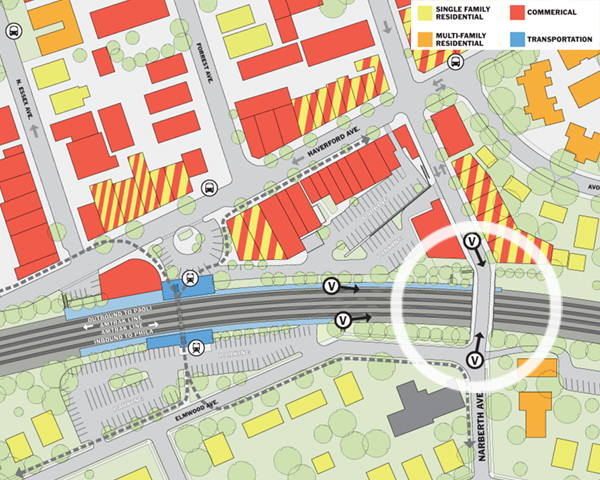
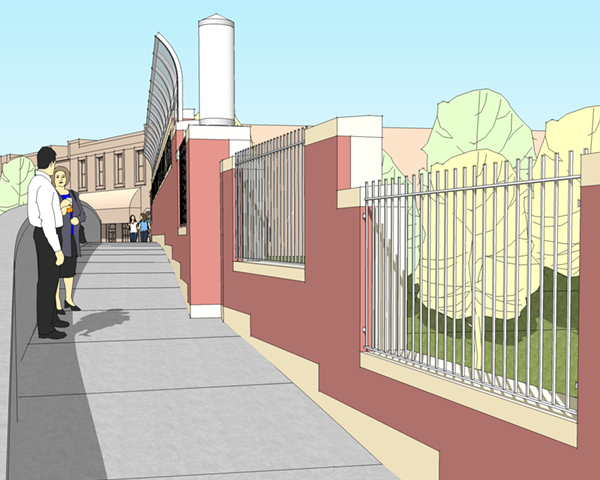
VSBA is working with engineers Pennoni Associates on designs for replacing the Narberth Avenue Bridge in Narberth, PA, a borough just outside Philadelphia. The bridge crosses the Main Line commuter and Amtrak rails, connecting the lively downtown to a residential neighborhood.
We began by mapping areas around the bridge to understand its relationship to uses and activity patterns within the community. We envisioned the bridge both as a connector between the downtown and residential neighborhood and as a gateway between them — as well as an opportunity to enhance the borough’s identity.
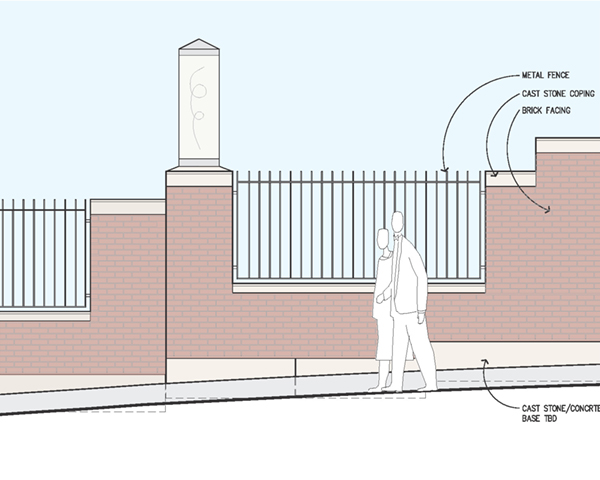
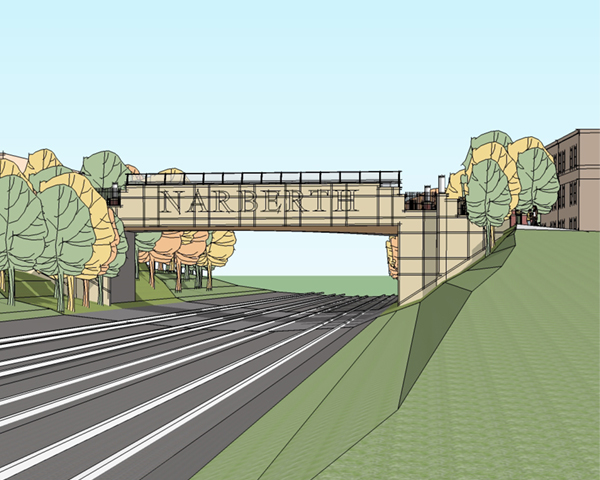
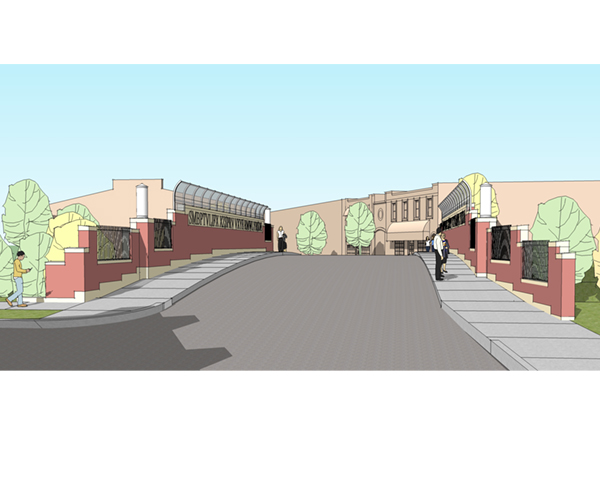
From the pedestrian perspective, our design is conceived as masonry wall segments, with openings for views, that provide a sense of continuity with facades of buildings leading up to the span. The walls and openings step and angle in response to the different slopes and sidewalk conditions at each approach to the bridge. The central span is defined by piers surmounted by lights at each quadrant. The necessarily solid central portion of the span features a frieze-like inscription that links the two sides of the bridge. From the outside, the bridge and abutments are concrete with a pattern of reveals providing scale and texture appropriate for distant views — the large “NARBERTH” scaled to be seen from the train station platform.
April 19th, 2017

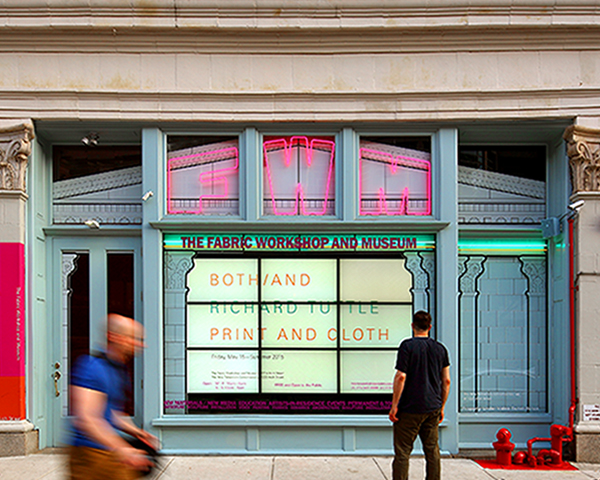
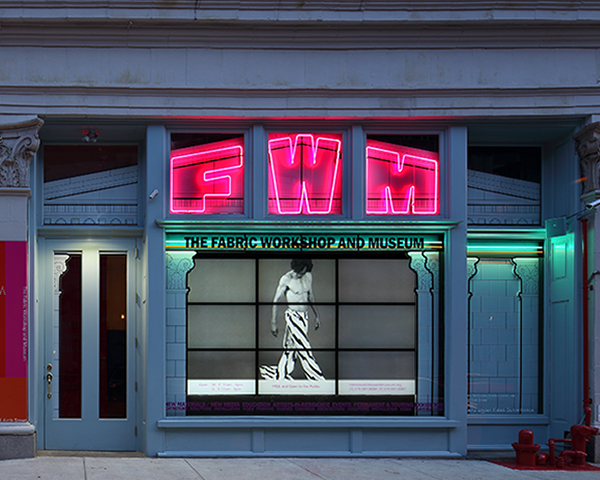
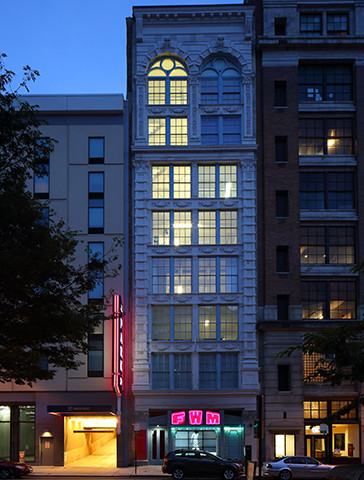
Since the 1970s, the Fabric Workshop and Museum (FWM) has been a world-renowned gallery and studio for artists working in all media.
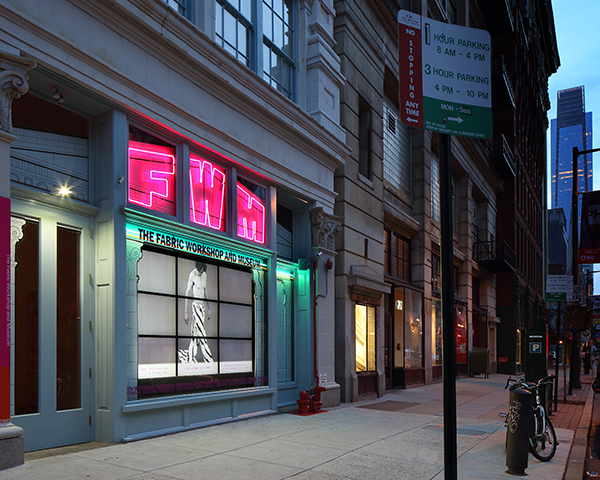
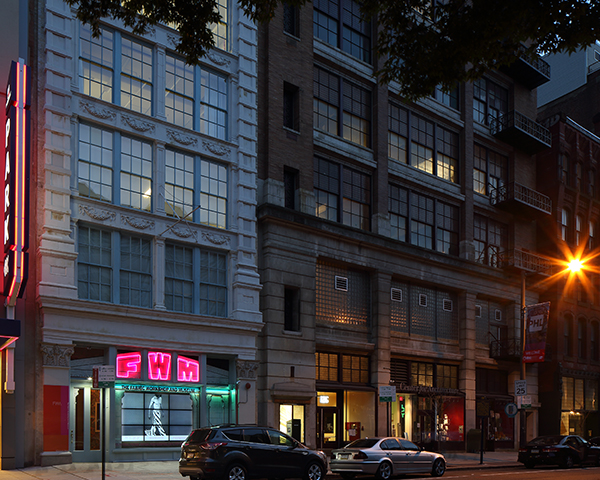
After relocating to an historic building adjacent to the Philadelphia Convention Center and the Reading Terminal Market, FWM retained us to create a permanent storefront display. But for an arts institution offering ever-changing exhibitions, as well as public events and a museum shop, how could any “permanent” display adequately serve? Moreover, the FWM also operates several other storefronts along the same block; the institution wanted a display that somehow helped to identify and unite them all.
VSBA’s solution was to create a multimedia installation incorporating state-of-the-art display technology, static signage, colorful lighting, and more. To enable the most flexibility for changing content, we filled the main museum building’s windows with an array of high-definition digital displays capable of showing video, text, still images, and ornamentation on an huge scale. The display’s web-based programming interface allows FWM artist-collaborators around the world to design the window.
As a static counterpoint, we framed the displays with Sintra panels depicting Classical Greek columns and pediment — riffing on the historic building’s Corinthian elements. (A portion of the signage even playfully extends into the main entrance’s doorway — so visitors symbolically pull apart and step through the Classical façade.)
We also incorporated two bright stripes of neon across the top of the window, with bright pink vinyl lettering at top and bottom identifying the institution. To unite the other storefronts, the Greek order and neon were extended from window to window, while leaving ample space for changing art and merchandise displays.
VSBA has created the new public face of the Fabric Workshop — at once contextual and contemporary — bold, nuanced, and playful. The new storefront has brought an important new focus and excitement to the Museum.
April 19th, 2017

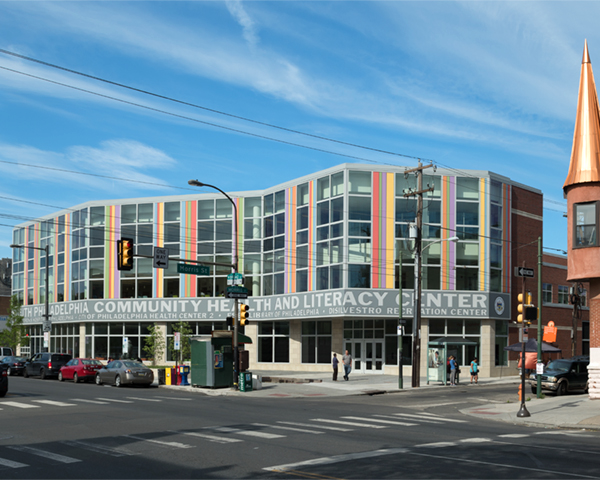
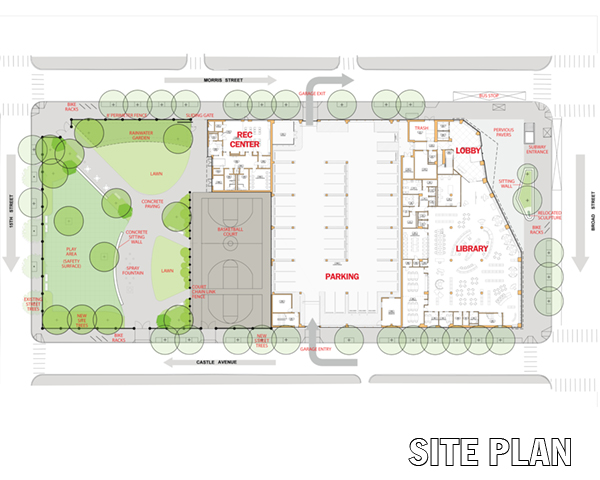
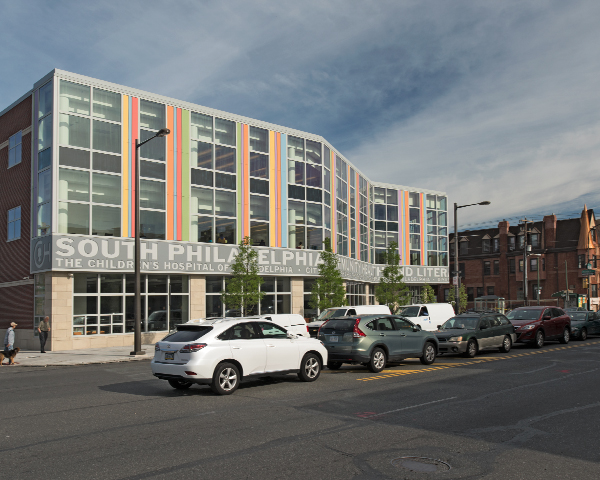
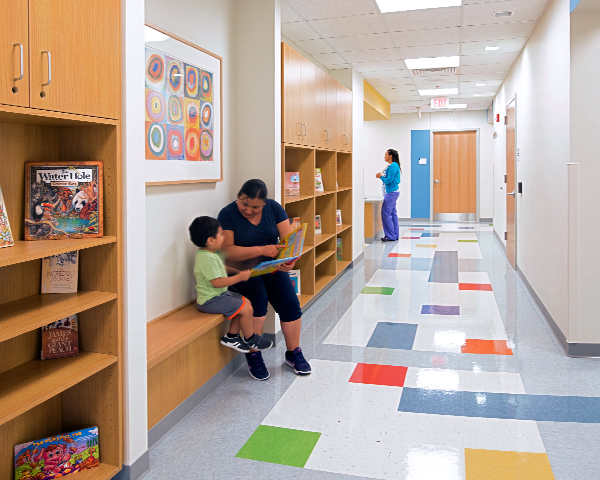
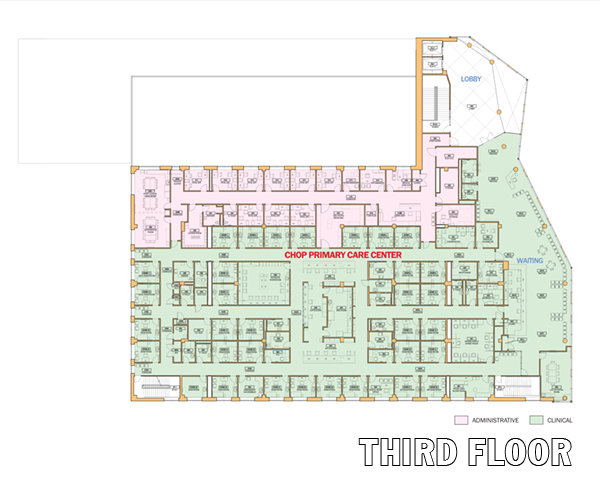
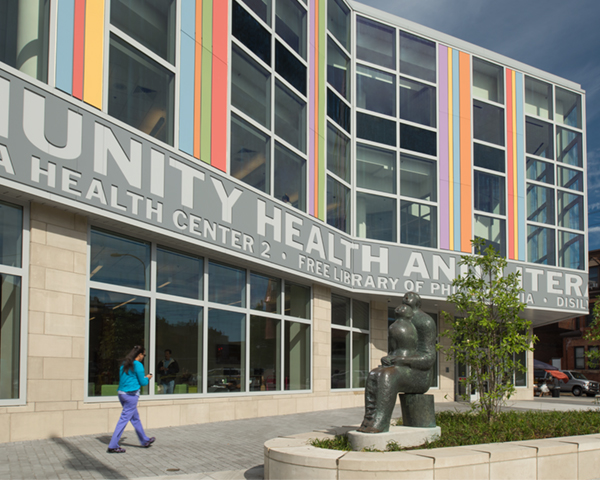
The Children’s Hospital of Philadelphia (CHOP) joined with the City of Philadelphia in a public-private partnership to create the new South Philadelphia Community Health and Literacy Center. This innovative facility combines a City Health Center, a CHOP primary care practice, a branch of the Free Library, and a City recreation center with playground. The Center serves an ethnically diverse population from the surrounding communities, many of whom are recent immigrants. The mix of uses enables joint wellness programs combining health education, clinical treatment, and physical activity. The project is LEED Silver certified.
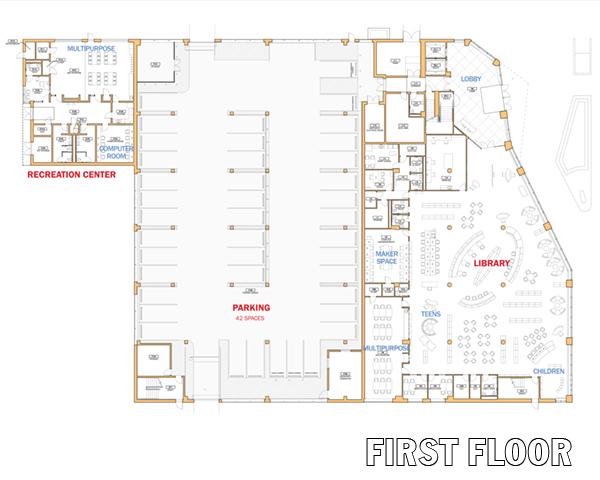
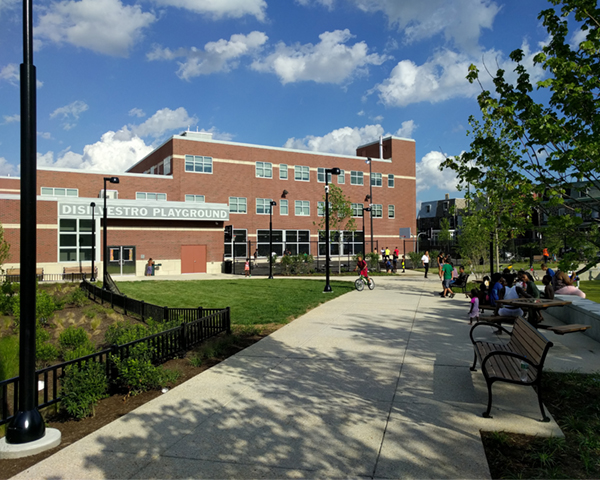
The site — extending from Broad Street to 15th Street and from Morris Street to Castle Avenue — is surrounded on three sides by 19th century townhouses. Broad Street is characterized by a vibrant mix of activities and uses. Originally lined with grand houses, it’s evolving as home to commercial activities and institutions that benefit from the high visibility and proximity to transit. The Center angles back at the corner of Broad and Morris to form an entry plaza, with a sitting wall and planting bed extending from an entrance to the Broad Street subway. “See the Moon,” a sculpture of mother and child by Evelyn Keyser, sits at the south end of the bed and addresses pedestrians on Broad Street. Enclosed parking is provided on-site for staff.
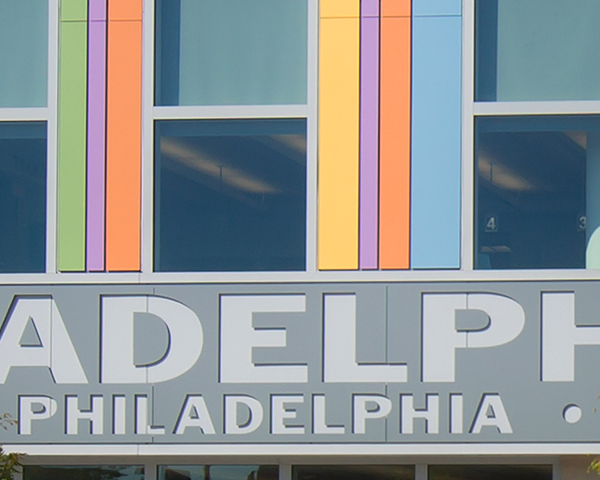
The Broad Street façade is highly transparent to engage passersby. The upper two stories containing the clinical spaces are cantilevered slightly to disengage from the column grid, enabling a rhythmic array of vertical glazed curtainwall units and striped metal panels. The panels display rainbow colors in an animated mix, suggesting the vibrant multicultural nature of the community. A continuous aluminum plate signband with punched-out letters identifies the building while adding a contrasting horizontal element. At street level, large windows between cast stone piers give views to and from the library. Together, these elements bring civic scale, individual and collective identity, and a touch of fun. Meanwhile, facades facing the residential streets combine more traditional red brick and punched window openings. A cast stone base and belt courses provide horizontal accents.
Inside, a common circulation core serves the library and clinical spaces.
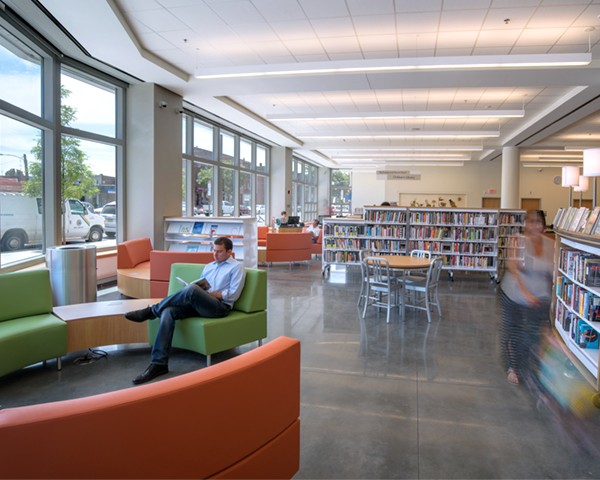
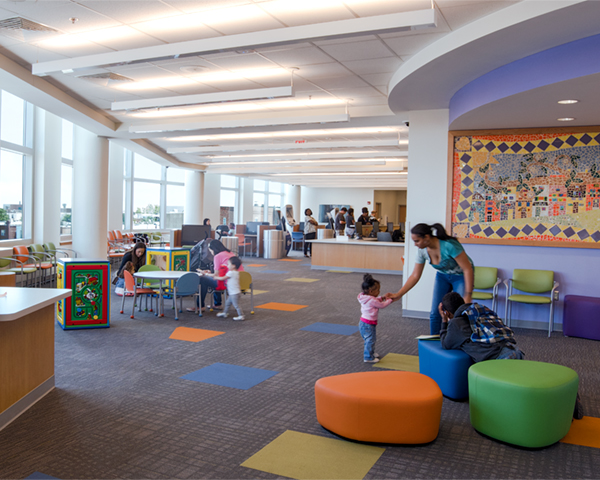
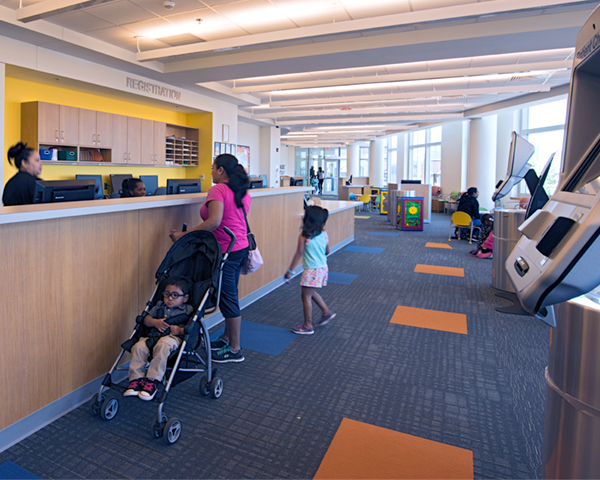
The Library is the first of the City’s Building Inspiration: 21st Century Libraries Initiative, whose goals are to reestablish the Library as a key resource and “portal to learning, public services, economic opportunity, recreation, and community engagement.” The library has general seating arrayed along the Broad Street side as well as clusters of flexible seating and collections defining areas for different age groups and activities. Enclosed spaces include a dividable multi-purpose room and a combination computer lab and “maker space.”
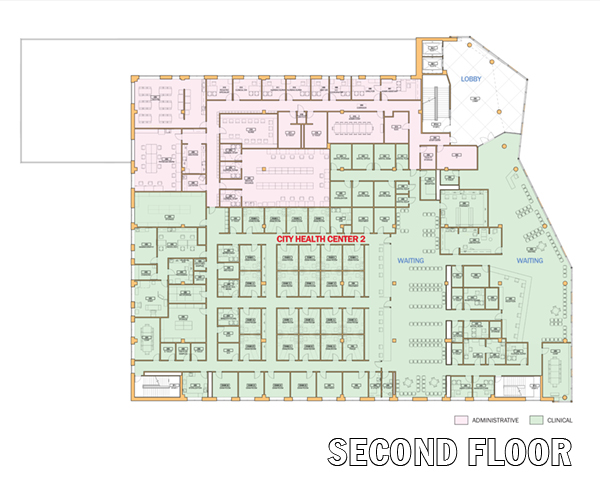
The clinical floors above are served from lobbies connected by a double-height space overlooking Broad Street. Waiting areas also overlook Broad Street with services organized along color-coded corridors extending from the waiting areas. Staff areas have discreet entrances from the lobbies and are separated from patient areas.
The City Health Center includes a pharmacy, dental suite, and radiology suite in addition to exam rooms and counseling spaces. Patients, often walk-ins, are screened in the outer waiting area and then directed to the appropriate section of the inner waiting area.
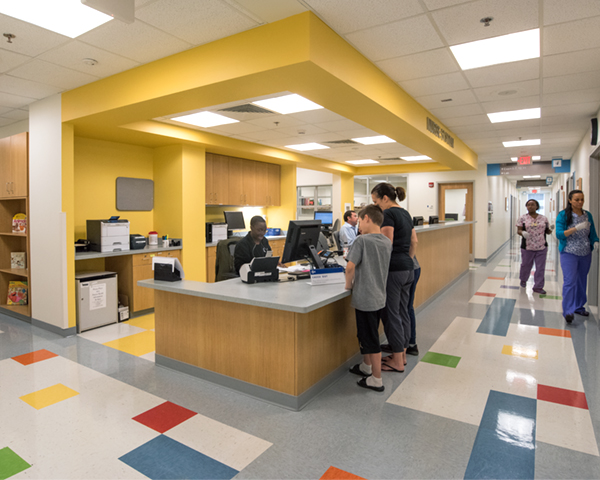
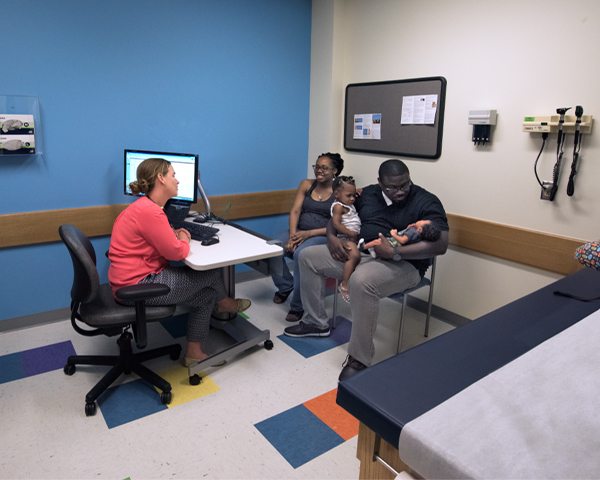
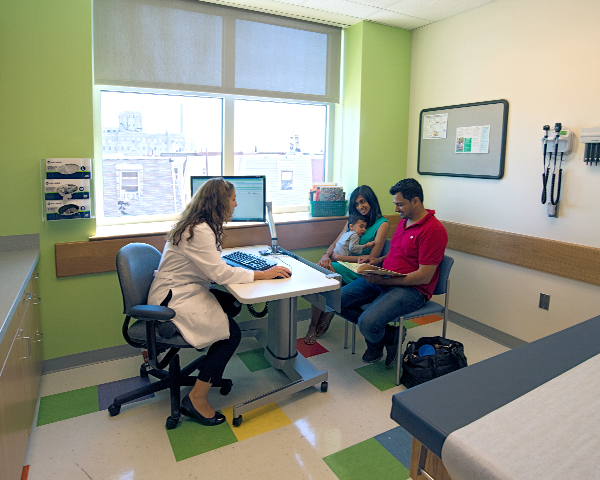
The upper CHOP floor contains exam rooms with a central nurse station. Patients are received in a single waiting area and then escorted to the appropriate exam room.
The recreation center houses a multipurpose space and computer room used by students in afterschool programs. The rec center, basketball court, and playground engage the surrounding residential neighborhood.
Photos and drawings by VSBA Architects and Planners